At a glance
- Duration
- 3 days / 2 nights
- Start
- Foum Zguid
- Vehicle
- Private 4x4 with driver-guide
- Nights
- Bivouac in the Erg Chigaga dunes
- Meals
- Dinner and breakfast at the bivouac
- Route
- Usually via the Iriki basin, confirmed when planningconfirmed when you plan
- End point
- Agreed when you bookconfirmed when you plan
- Price
- On request
Stops
How the trip unfolds
Timings are approximate and adapted to the season and the state of the pistes.
Day 1: From Foum Zguid to the dunes
Morning departure from Foum Zguid by private 4x4. The usual route runs across the Iriki basin, confirmed when you plan the trip, with a midday break in the shade before the drive on to Erg Chigaga. Late afternoon in the sand, dinner and the first night at the bivouac.
Day 2: A full day in Erg Chigaga
No long drive today. Sunrise from the dunes, breakfast, then a walk through the erg at your own pace, a long rest through the heat of the day and a second walk as the light softens. Camel ride or sandboarding on request. Dinner and the second night at the bivouac.
Day 3: Sunrise and the way back
A last sunrise over the dunes and breakfast at the bivouac before the drive out. The return route and the end point are agreed when you book.
Why take three days
On a 2-day trip the desert is something you arrive in and leave. On three days it becomes somewhere you stay. The difference is the middle day: no long drive, no packing up, just the dunes of Erg Chigaga from first light to dark, at whatever pace suits you.
This tour suits travellers who want time rather than mileage. It works well for families, for photographers who want more than one sunrise, for anyone who finds a single bumpy driving day plus one night a bit rushed, and for people who simply want a couple of quiet days away from screens and traffic. No desert experience is needed: your driver-guide drives, navigates and makes every call on safety.
If your time is tighter, the 2-day tour via Lake Iriki covers the same ground with one night at the bivouac.
Day 1: from Foum Zguid to the dunes
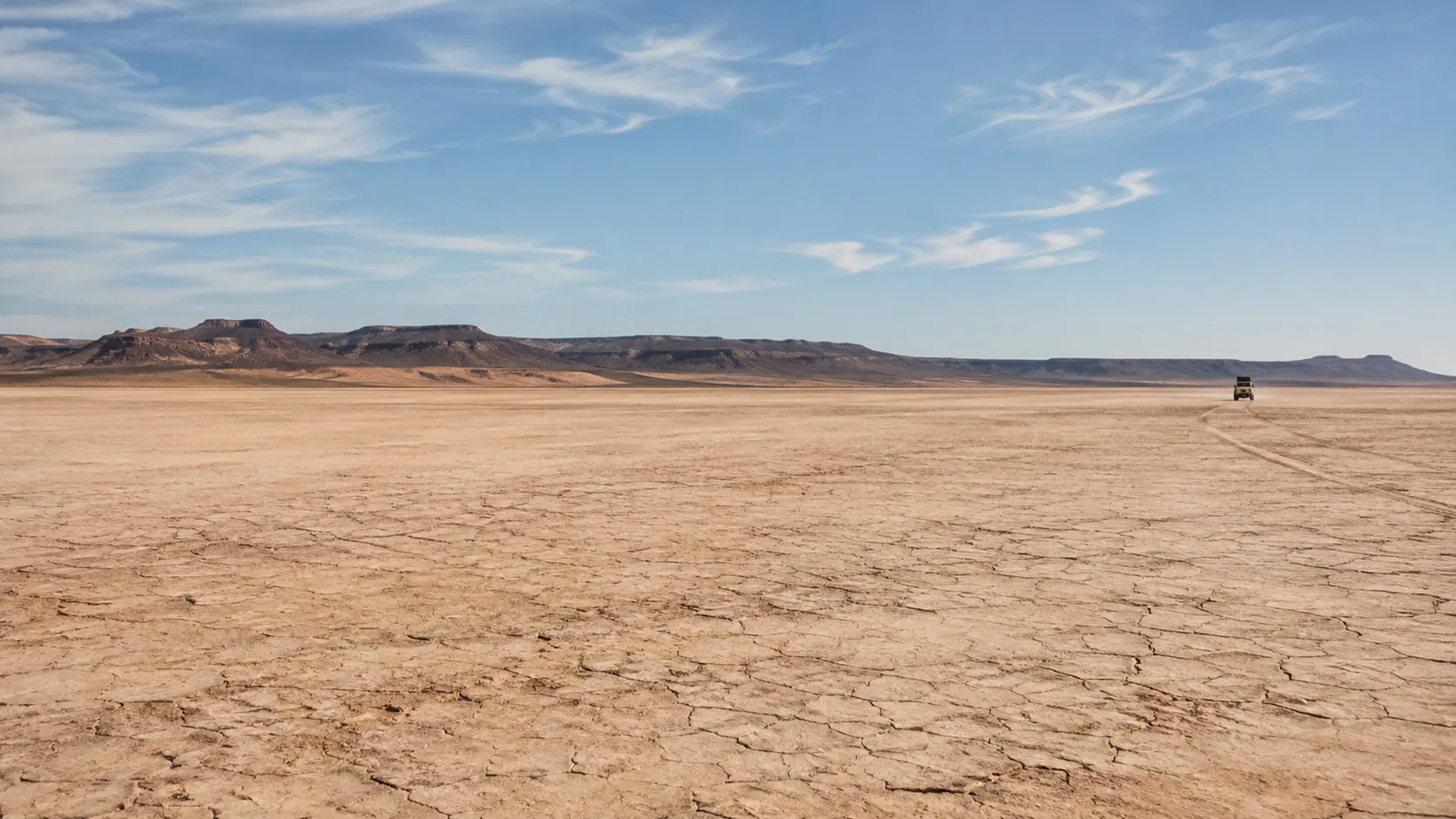
You leave Foum Zguid in the morning by private 4x4. The usual route crosses the Iriki basin, the wide bed of an ephemeral lake that has been dry for most of recent decades, and we confirm the exact line when we plan your trip. Heavy rain in September 2024 sent water into the basin, and after rain some sections can be soft, so your guide always decides on the day what is safe to cross. Before you travel, ask us for a current report.
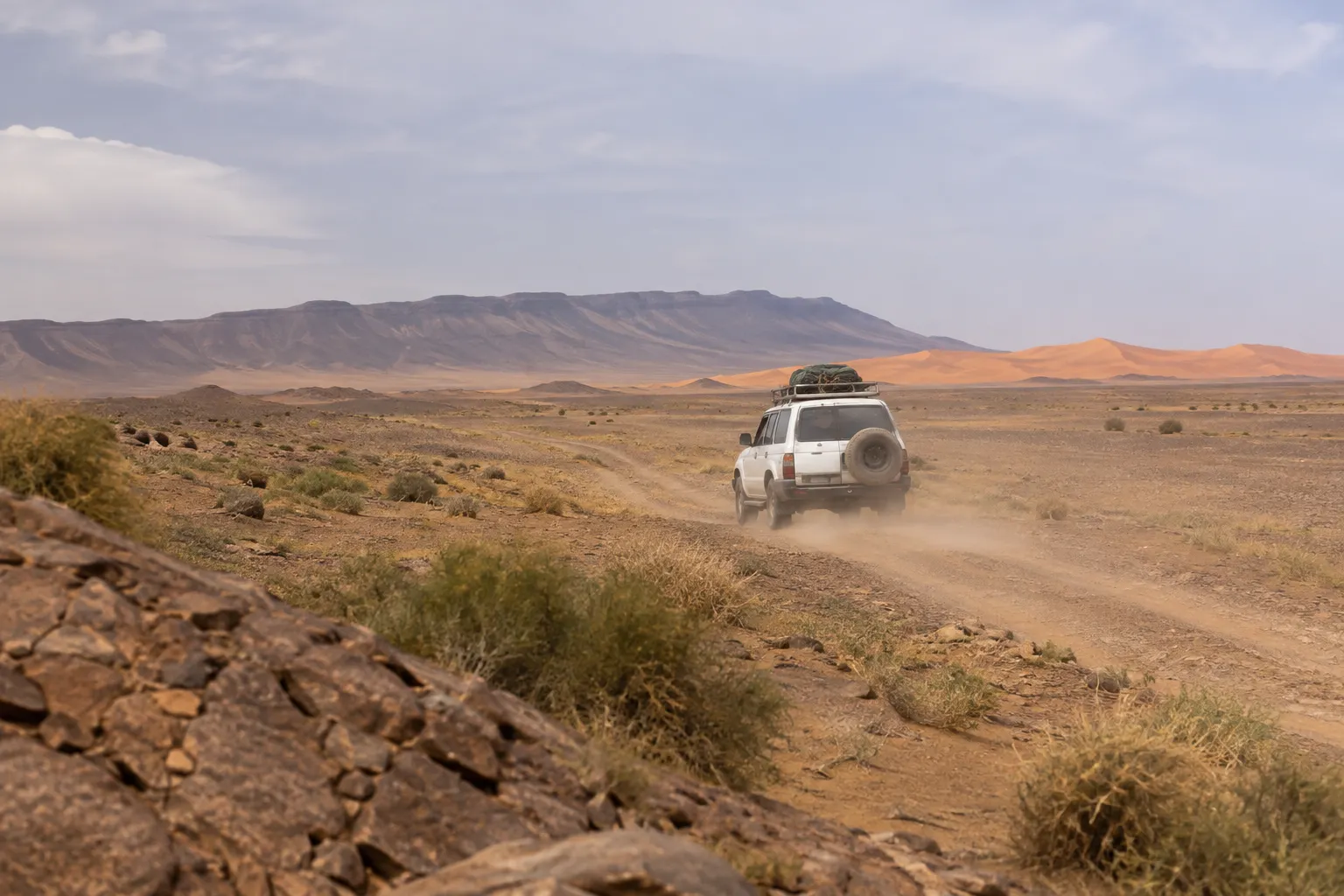
The first part of the drive crosses stony, open country on piste, with stops whenever you want them. A midday break in the shade carries you through the hottest part of the day. In the afternoon the landscape shifts from gravel and scrub to sand, and then to the dunes. Arriving in the late afternoon gives you time to settle in, climb a ridge and watch the light go. Dinner is served at the bivouac, where you spend the first night.
For the geography of the crossing, see our route guide from Foum Zguid to Erg Chigaga and our Lake Iriki guide.
Day 2: a full day in Erg Chigaga
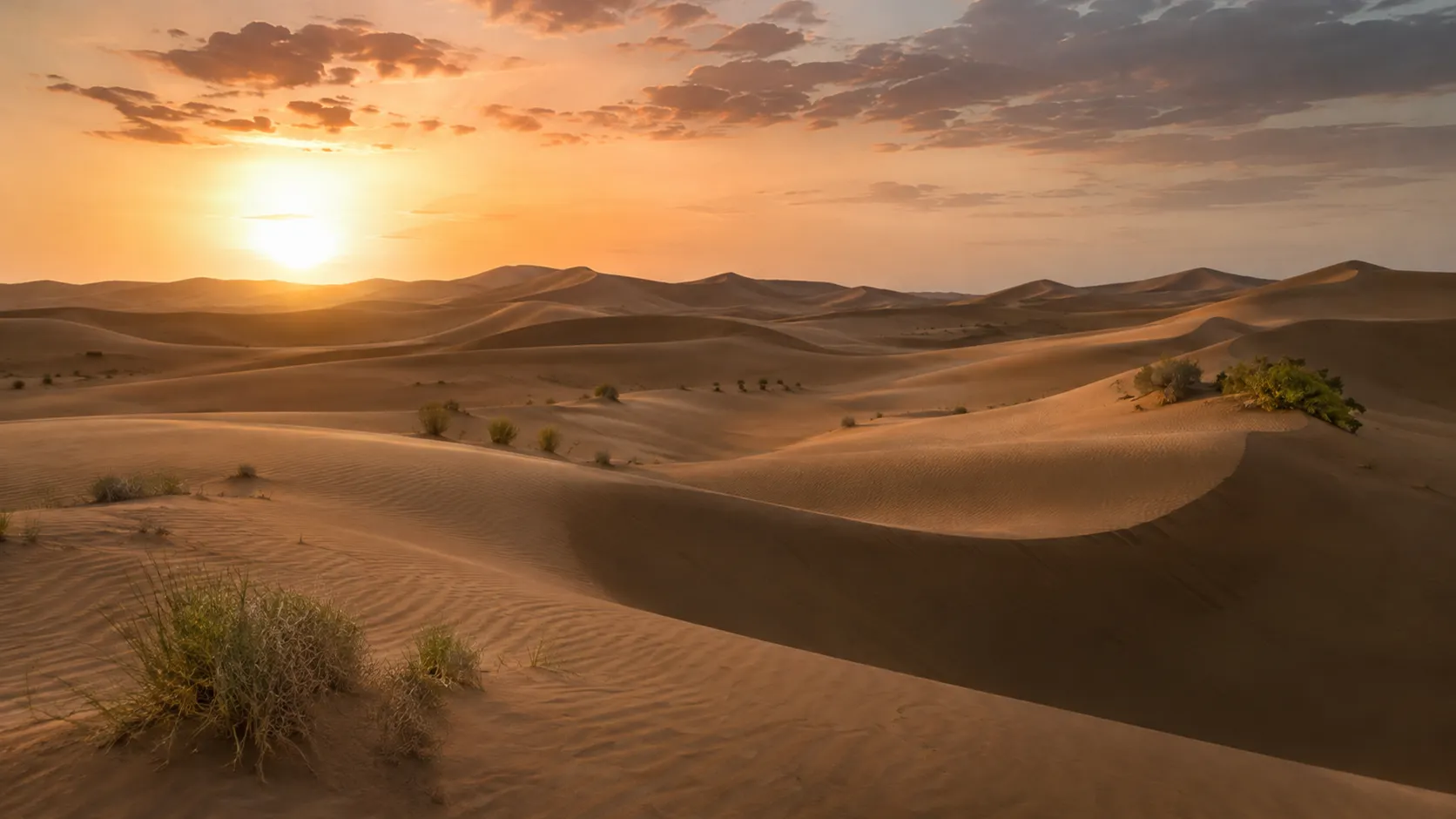
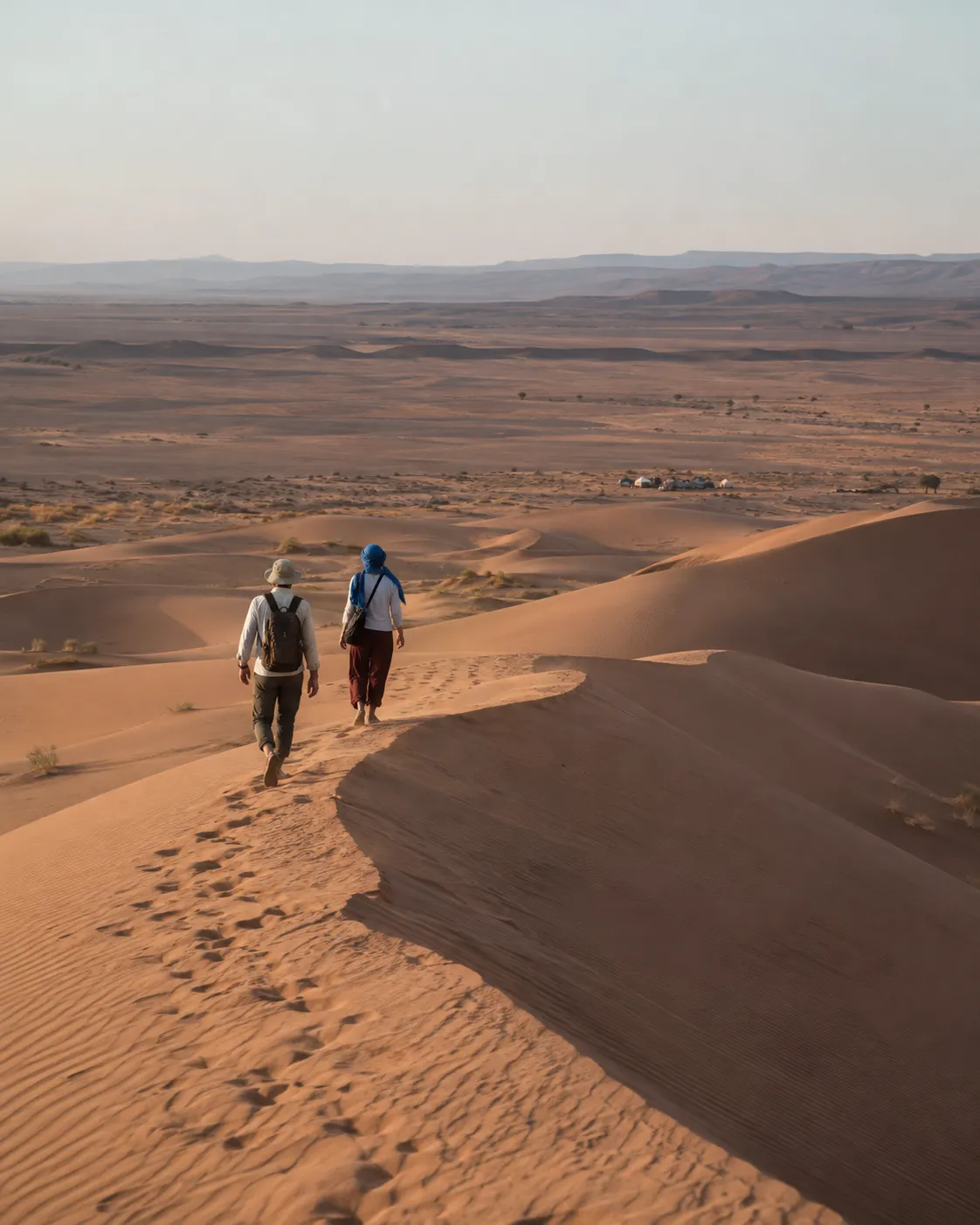
This is the day the tour is built around. Get up for sunrise, when the sand is cool and every ripple casts a shadow. After breakfast, walk out into the erg. There is no set route; you can climb a high dune, follow a ridge line, or sit still and watch the wind move the sand.
As the heat builds, retreat to the shade and rest. The middle of the day in the dunes is for reading, sleeping, talking and tea. When the light softens in the late afternoon, head out again for a second walk and the sunset.
Two activities are popular here, and both are on request rather than automatic:
- A camel ride through the dunes.
- Sandboarding on a suitable slope, for those who don’t mind sand in every pocket.
Tell us in advance if either interests you. Your written quote confirms whether they are available on your dates and on what terms.
Dinner and the second night are at the bivouac. With a whole day behind you, the evening tends to be slower, and the night sky has time to take over. Walk a little way from the camp lights to let your eyes adjust.
Read more about the dunes themselves on our Erg Chigaga page.
Day 3: sunrise and the way back
A last sunrise, a last breakfast at the bivouac, and then the drive out. The return route and the end point are agreed when you book: tell us where you need to be afterwards, and we will plan the day around it.
The two nights at the bivouac
Both nights are spent at a bivouac in the Erg Chigaga dunes, with dinner and breakfast. Whether you stay at the same spot both nights is confirmed when we plan your trip.
We would rather give you comfort details in writing than in adjectives. Your quote confirms the type of tent and bed, the bedding, toilet and washing arrangements, whether there is hot water, whether you can charge a phone, and how private your tent is. Two nights is long enough for these details to matter, so raise anything important when you ask. Our page on bivouacs and places to stay around Lake Iriki has a checklist of questions worth asking.
Season and weather
Autumn, winter and spring are generally the most comfortable seasons. Days are mild to warm, and the nights in the dunes can be cold, especially in winter. In summer the daytime heat is intense; the middle day then becomes even more about early and late walks with a long rest in between.
Wind can lift the sand at any time of year. It rarely lasts all day, but a scarf for your face and a cover for your camera are worth bringing.
What to pack
- A small overnight bag, so you don’t unpack everything at the bivouac.
- Warm layers, a hat and thick socks for evenings and early mornings.
- Sun hat, sunglasses and high-factor sunscreen.
- Long, light, loose clothing; closed shoes for the drive and sandals for soft sand.
- A head torch.
- A scarf or buff against wind and dust.
- Personal medication, toiletries, a small towel and wet wipes.
- A power bank or two, since charging is confirmed in your quote rather than assumed.
- A book, a notebook or a pack of cards for the quiet middle of the day.
- Some cash for tips and small purchases.
Children, fitness and comfort
The 3-day format is often the better choice for families. With no long drive on day 2, children have time to play in the sand and rest when they need to. Tell us their ages when you ask for a quote, so that child seats can be confirmed and the guide can plan stops around them.
You don’t need to be especially fit. Walking on soft sand is tiring, but you choose how far and how high you go. If you have back problems, are pregnant or have reduced mobility, mention it; the pistes are bumpy in places and your guide can adjust the pace. Dietary needs, including vegetarian meals, should be raised with your request so they can be confirmed in writing.
Leaving no trace
The Iriki basin lies within Iriqui National Park, and the dunes are fragile too. Stay on the tracks your guide uses, leave stones, fossils and plants where they are, take all rubbish back with you, and keep noise down at night. Ask before photographing anyone you meet on the way.
How to request this tour
Every tour is arranged directly with our family team in Foum Zguid; there is no instant booking. Use Plan my trip or WhatsApp and tell us your preferred dates, how many adults and children are travelling (with ages), where you are coming from and where you need to finish, whether you would like a camel ride or sandboarding, and anything that matters for your comfort. We reply with a written quote covering the price, the route, what is included and the practical details.
Included
- Private 4x4 with a driver-guide for all three days
- Two bivouac nights in the Erg Chigaga dunes
- Dinner and breakfast at the bivouac
Not included
- Tips (always at your discretion)
- Drinks other than tea and water
Confirmed in your written quote
We list these separately because we only promise what we can confirm for your dates.
- Route on day 1, including the crossing of the Iriki basin
- Meeting point and morning departure time in Foum Zguid
- Lunch on each day: whether it is provided and what it includes
- Whether both nights are spent at the same bivouac
- Camel ride on day 2: availability and terms
- Sandboarding on day 2: availability and terms
- Tent type, bed and bedding at the bivouac
- Toilet, washing facilities and hot water at the bivouac
- Electricity or phone charging at the bivouac
- Whether your tent is private and how close other guests are
- Maximum number of travellers per vehicle
- End point of the tour and return route
- Vegetarian or other dietary options
- Child seats or boosters for young children
- Deposit, payment and cancellation terms
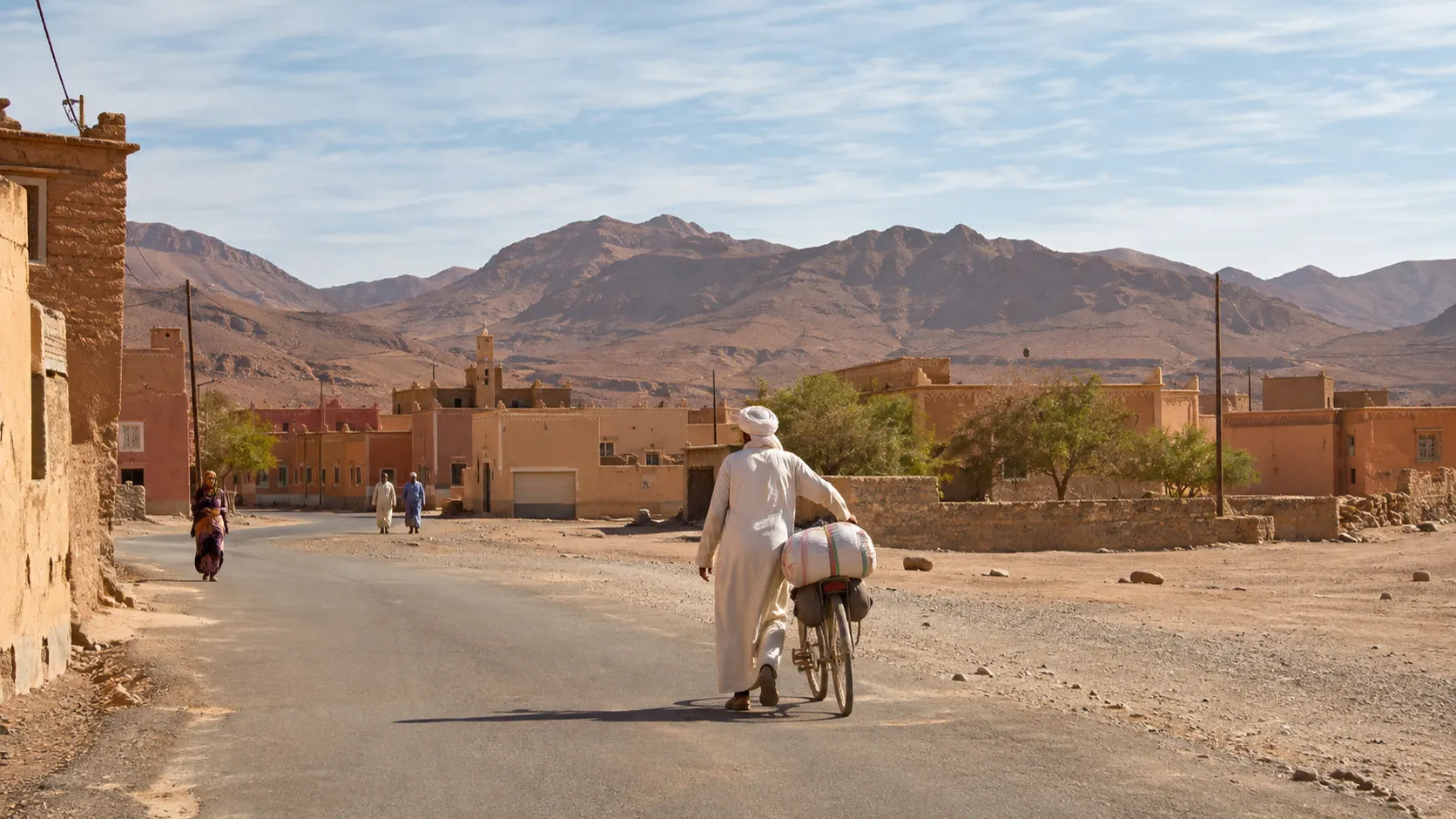
Gateway town at the Jbel Bani gap
Ephemeral lake basin, Iriqui National Park
Great dune sea, bivouac nights
Questions travellers ask
Does the 3-day tour go via Lake Iriki?
The usual route from Foum Zguid to Erg Chigaga runs across the Iriki basin, and we confirm the exact route when we plan your trip. Lake Iriki (also spelled Iriqui) is an ephemeral lake that has been a dry basin for most of recent decades; after rain, such as the heavy rain of September 2024, sections can be soft, so the route depends on conditions at the time.
What do you actually do on the middle day?
As much or as little as you like. Most people walk in the dunes early and late, when the light is low and the sand is cooler, and rest in the shade through the middle of the day. A camel ride or sandboarding can be arranged on request; your quote confirms availability and terms.
Is the 3-day tour better for families?
Often, yes. With a full day in the dunes and no long drive on day 2, children have time to play in the sand and rest, and the pace is easier for everyone. Tell us the children's ages so we can confirm child seats and plan the days around them.
How cold are the nights at the bivouac?
From late autumn to early spring, nights in the dunes can be genuinely cold. Bring warm layers, a hat and socks, and ask what bedding is provided; it is confirmed in your written quote.
How much does the 3-day Erg Chigaga tour cost?
The price is given on request, in a written quote based on your dates, the number of travellers and any extras such as a camel ride. We don't publish fixed prices on this site.
Sources
Facts on this page were checked against the sources below. Conditions in the desert change — ask us for a current report before you travel.
- A Deluge for the Sahara — NASA Earth Observatory, consulted 11 November 2026
First published ·Last updated