At a glance
- Direction
- West to east: Foum Zguid, Iriki basin, Erg Chigaga
- Start
- Foum Zguid, Tata province
- Lake crossing
- Our 2-day Erg Chegaga route crosses the Iriki basin
- Night
- Bivouac in the Erg Chegaga dunes
- Suggested length
- 2 or 3 days
- Driving times
- Given by your guide for the season and the state of the pistesconfirmed when you plan
- Finish in M'Hamid
- On requestconfirmed when you plan
Gateway town at the Jbel Bani gap
Ephemeral lake basin, Iriqui National Park
Great dune sea, bivouac nights
A west-to-east crossing
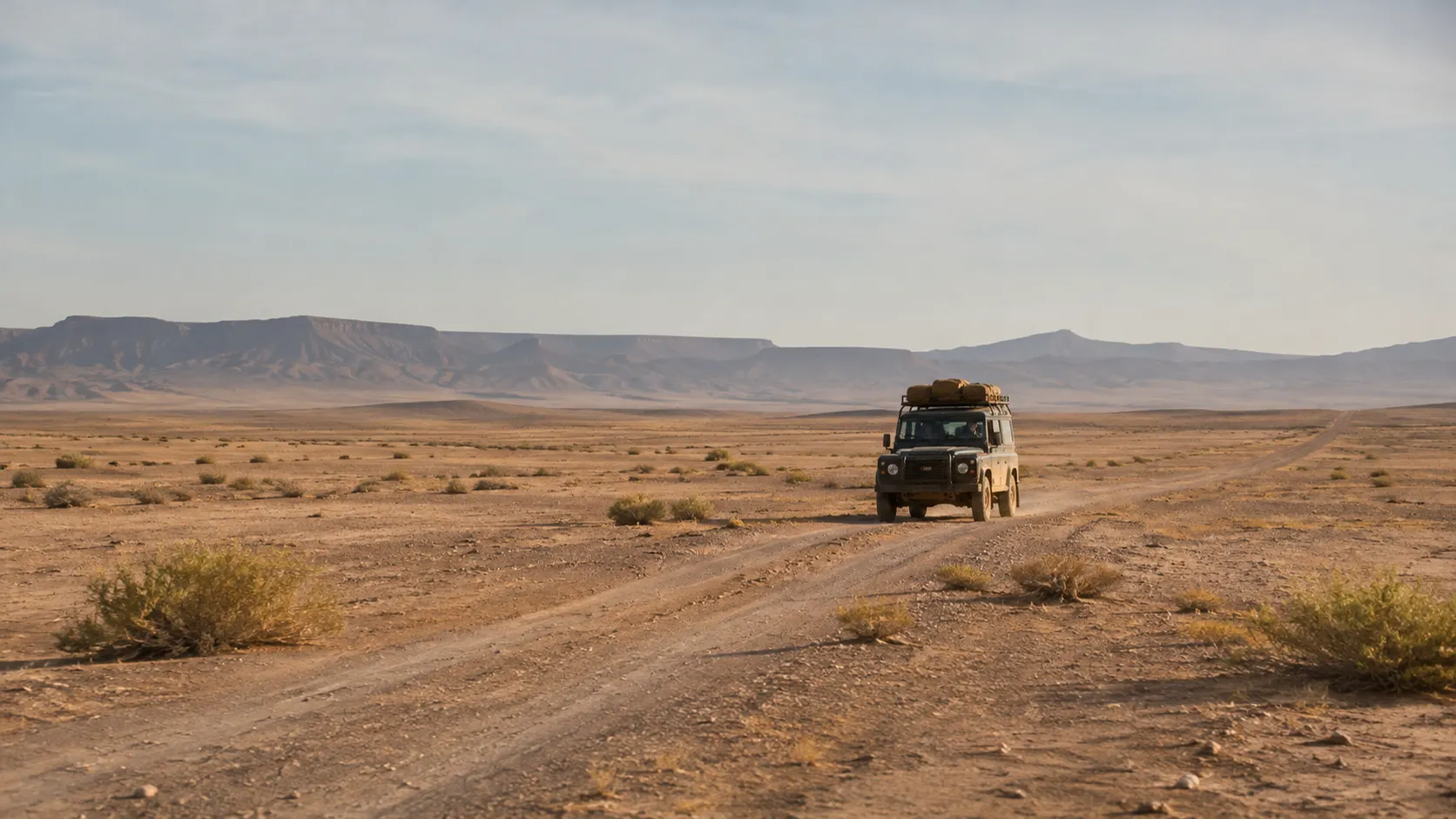
Between Foum Zguid and Erg Chigaga, the desert reads like a sequence of chapters. You start in a small town in Morocco’s pre-Saharan south, pass through the long rock barrier of the Jbel Bani, enter the vast, flat basin of Lake Iriki, and then watch the sand gradually take over until the big dunes rise ahead. It is the region’s classic crossing, and it is the one our tours follow: our two-day Erg Chegaga route crosses the Iriki basin, by private 4x4 with a driver-guide.
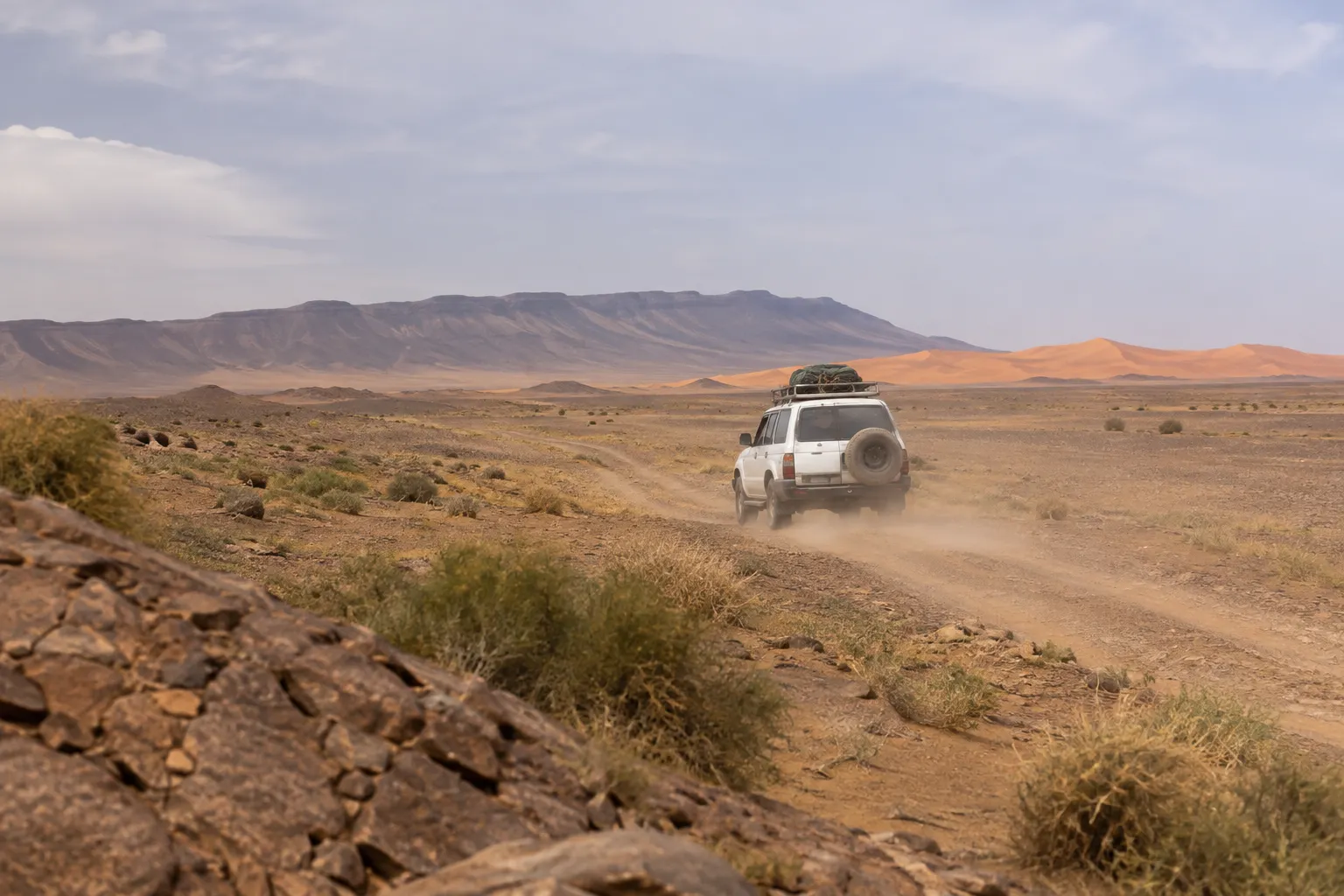
There is no tarmac on this stretch. You travel on gravel, dirt and sand pistes that change with the season and the last rain. To understand the terrain and read our route diagram, see the Lake Iriki map and access guide. This page tells the journey itself, stage by stage.
We deliberately don’t give distances or driving times: they vary with the piste chosen, the state of the ground and the rhythm of your stops. Your guide gives you realistic timings for the season when you plan the trip.
Stage 1: leaving Foum Zguid through the Jbel Bani
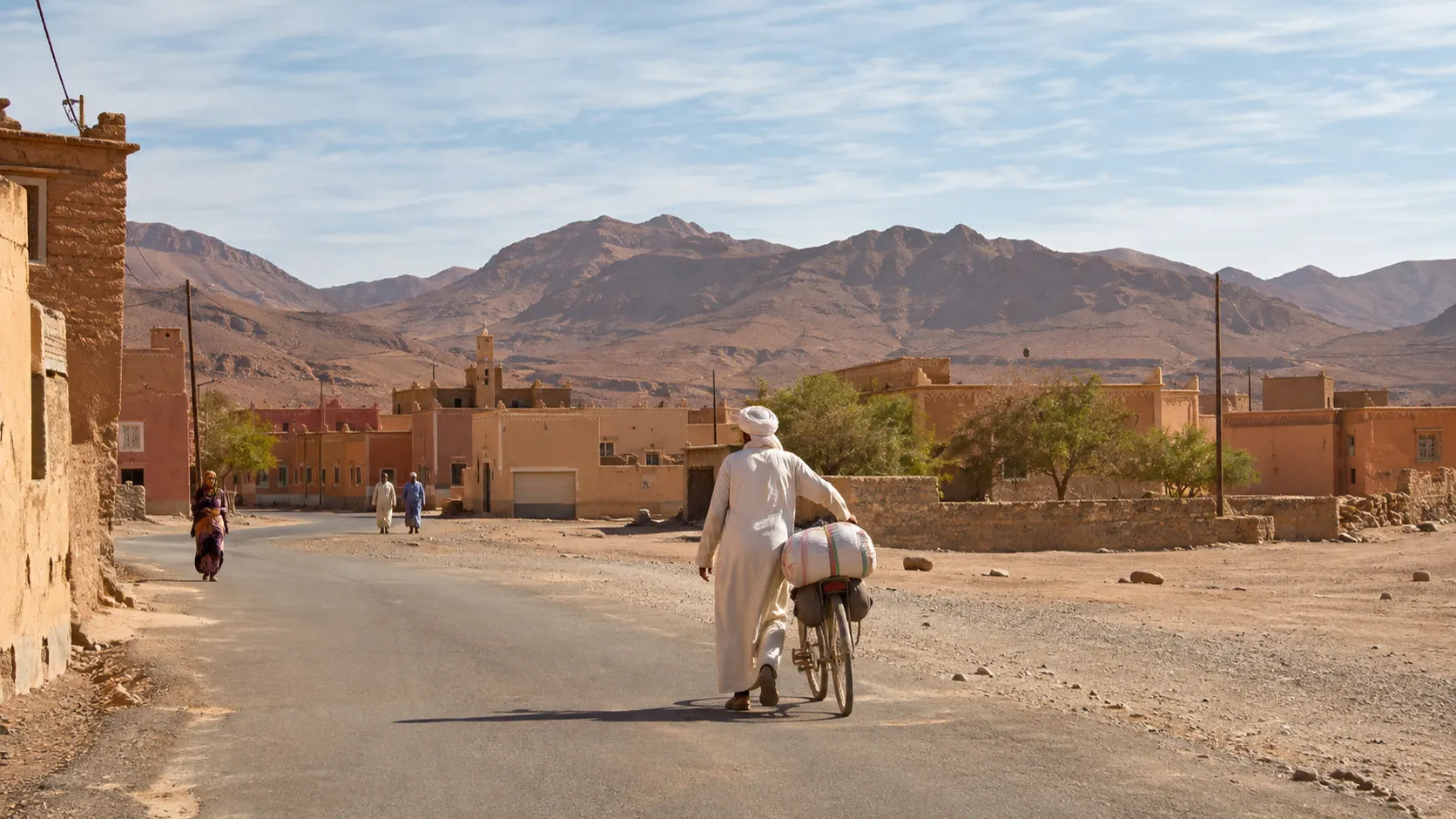
You usually set off in the morning from Foum Zguid. The town’s name points to a “mouth”: it sits where a gap opens in the Jbel Bani, the long, low, dark ridge that runs across the pre-Saharan south. Going through that gateway feels like stepping into another world.
Beyond the last houses and gardens, the piste threads between outcrops of bare rock burnished by the sun. The palette is mineral: black, brown, ochre. Then the ridge falls away in the mirror and the landscape opens onto stony plains, cut by dry wadis where a few trees of the arid savanna hold on. You may pass a herd, a nomad tent, a well.
This is often the stage where you get the measure of the vehicle and the piste: corrugations, wadi crossings, the first tracks splitting off. It is a good moment to ask your guide about the region and the day ahead.
Stage 2: the open basin of Lake Iriki
Little by little the relief fades and you come out onto the Lake Iriki basin, the heart of Iriqui National Park, created in 1994. It is one of the most striking moments of the crossing: a plain so flat the horizon seems to curve, a surface of cracked clay sometimes whitened with salt, and mirages that make distant hills float.
Lake Iriki is ephemeral. For most of recent decades it has been a dry basin. In September 2024 heavy rain sent water into it, visible in NASA satellite imagery from 10 September, and press reports described it as the first water there in several decades. What you see therefore depends on the year and the season: ask for a recent report before you go, and let the place surprise you.
Crossing the basin is often the moment for a break, around the middle of the day, to walk on the clay crust, photograph the emptiness and listen to the silence. Your guide picks the track according to the ground: after rain, some areas turn soft and are skirted around. If you only want to see the lake, without going on to the dunes, look at our Lake Iriki 4x4 day trip.
Stage 3: approaching the Erg Chigaga dunes
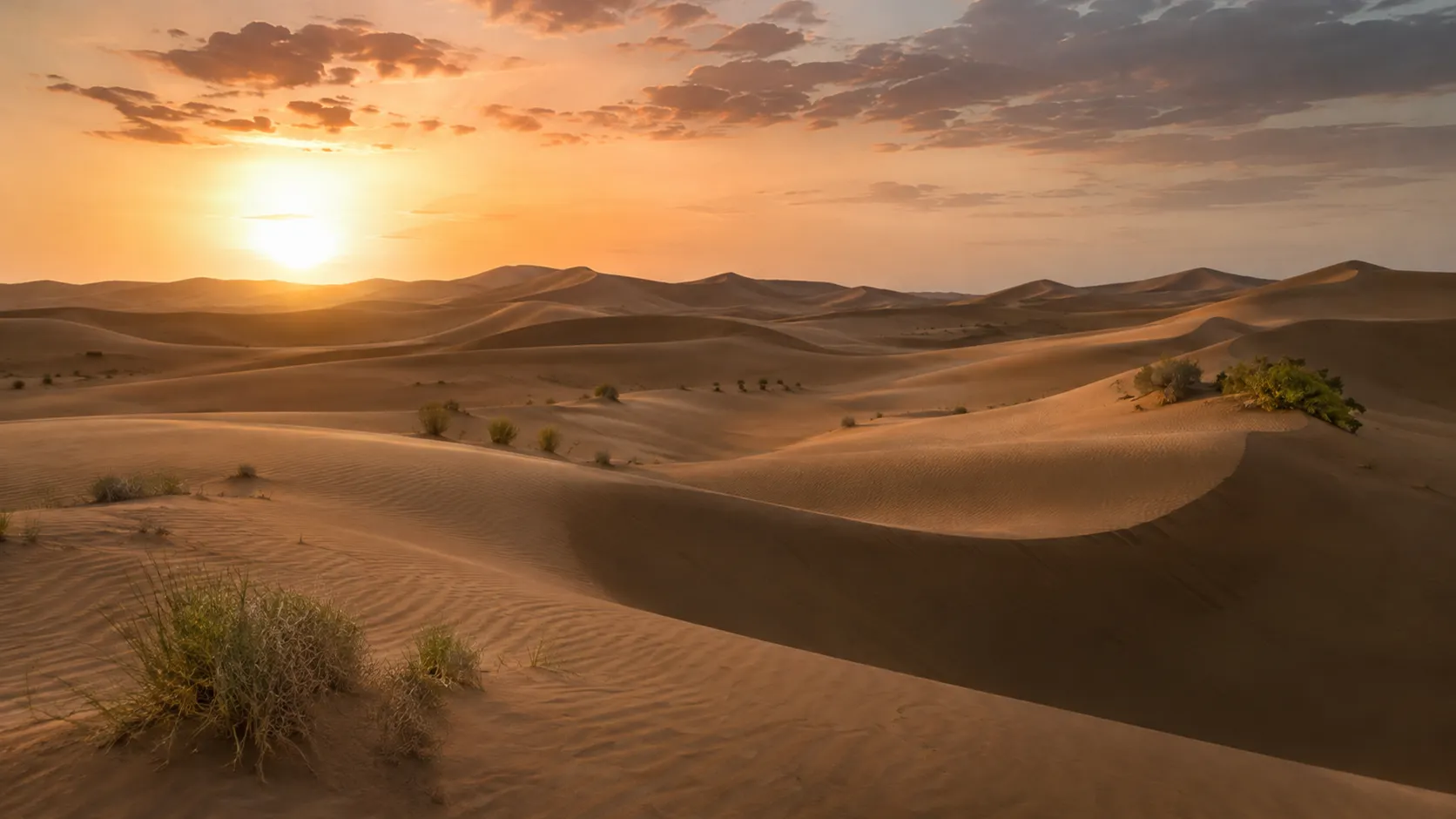
East of the basin, the sand takes over. First come tongues of sand across the piste, then lines of low dunes, and finally, on the horizon, the golden mass of Erg Chigaga, one of Morocco’s great dune seas, lying west of M’Hamid. The driving changes: lower tyre pressures, steady momentum, hollows to read. This is where the driver’s experience counts.
You usually arrive in the late afternoon, in time to climb a dune and watch the light drop across the sand. The night is spent in a bivouac camp in the Erg Chegaga dunes, with dinner and breakfast. Next morning, sunrise over the crests is often one of the strongest memories of the whole trip.
Why most travellers take two or three days
In theory you could do the crossing in one push, but you would spend most of the time driving, miss sunset and sunrise on the dunes, and arrive tired. Two days let you live the route at its own pace: the piste and the basin on day one, the night in camp, then the morning in the dunes before heading back or moving on.
Three days add breathing room: more time in the basin and the dunes, a second night in the desert, shorter driving days, and the flexibility to adjust if a piste is in poor shape after rain. It is the better choice if you travel with children, love photography or simply want to slow down. The exact plan for each day is confirmed in your written quote.
One way or return
Where you finish is worth deciding from the start.
- Back to Foum Zguid. The simplest option if your car is waiting in town or you are heading on towards Tata, Agadir or Ouarzazate. The return crosses the basin again, sometimes on a different track from the way out, which gives you a second look at the lake.
- One way to the east. If your trip continues into the Drâa valley, finishing on the far side saves retracing your steps. You then need to plan what comes next: transport, accommodation, and possibly getting back to a car left in Foum Zguid.
Either way, mention your plans when you send your request: the choice changes how the days are organised.
Continuing to M’Hamid
Beyond Erg Chigaga, the pistes reach M’Hamid, at the end of the paved road that runs down the Drâa valley from Zagora. Finishing the tour in M’Hamid can be arranged on request, for travellers continuing to the Drâa valley, Zagora or Ouarzazate. Say so in your request: your guide will tell you whether it works for your dates and how the onward leg is organised.
Which tour covers this route
- Our Foum Zguid to Erg Chigaga 2-day tour is the most direct way to make the crossing, with one night in a dune camp.
- The 3-day tour takes its time: two nights in the desert and more room for the lake and the dunes.
- If you only have one day, the Lake Iriki 4x4 day trip shows you the basin from Foum Zguid, without going on to the erg.
Inclusions, lunches, travellers per vehicle and terms are confirmed in your written quote.
Preparing for the crossing
A few practical tips for an easy journey:
- Clothing: light, covering clothes for the day and a warm layer for the night in the dunes, which can be cool, even cold in winter.
- Sun: hat, sunglasses, sunscreen, and a scarf against dust and wind.
- Day bag: a small bag with a water bottle, snacks, personal medication, a head torch and a power bank.
- Signal: phone coverage can be patchy or absent for part of the way; let family know.
- Respect: stay on the tracks, take nothing from the national park, and ask before photographing people.
- Weather: after heavy rain, some pistes can be impassable for a few days; your guide adapts the route or the dates if needed.
Questions travellers ask
Can you do Foum Zguid, Lake Iriki and Erg Chigaga in a single day?
You can cross, but you spend most of the day driving and reach the dunes without enjoying the sunset or the night there. That is why most travellers choose at least two days, with a night in a desert camp.
How much driving time should I expect?
It depends on the piste chosen, its condition, the season and how often you stop. Your guide gives you a realistic estimate when you plan the trip, and adjusts it if conditions change.
Will there be water in Lake Iriki?
Lake Iriki is ephemeral: it has been a dry basin for most of recent decades, and water reached it after heavy rain in September 2024. Nobody can promise it in advance, so ask for a recent report before you go.
Does the tour return to Foum Zguid?
The end point is agreed with you. Returning to Foum Zguid is simplest if your car or onward travel is waiting there; finishing in M'Hamid can be arranged on request.
Do I need to be fit for this crossing?
No, almost all of it is by 4x4. What matters most is being comfortable with long hours on the piste, heat and bumps. Climbing a dune takes a little effort, at your own pace.
What is the best season for this route?
The cooler months, from autumn to spring, are the most comfortable. In summer, heat makes long days on the piste hard going. After heavy rain, some pistes can be impassable for a few days.
Sources
Facts on this page were checked against the sources below. Conditions in the desert change — ask us for a current report before you travel.
- A Deluge for the Sahara — NASA Earth Observatory, consulted 11 November 2026
- In half a century: rare Saharan floods fill dry lake beds in Morocco — Morocco World News, consulted 11 November 2026
- Iriqui National Park — Wikipedia, consulted 11 November 2026
- Iriqui National Park — Lonely Planet, consulted 11 November 2026
First published ·Last updated