At a glance
- What 'luxury camp' usually means
- A fixed camp with larger tents, real beds and more private facilities; not a regulated category
- Access to any camp in the dunes
- 4x4 piste, on foot or by camel; no paved road
- Our overnight format
- Bivouac in the Erg Chegaga dunes, with dinner and breakfast
- Our trips
- Private 4x4 with a driver-guide
- Tent, bathroom, hot water and power at our bivouac
- Confirmed in your written quoteconfirmed when you plan
What “luxury camp” usually means in Erg Chigaga
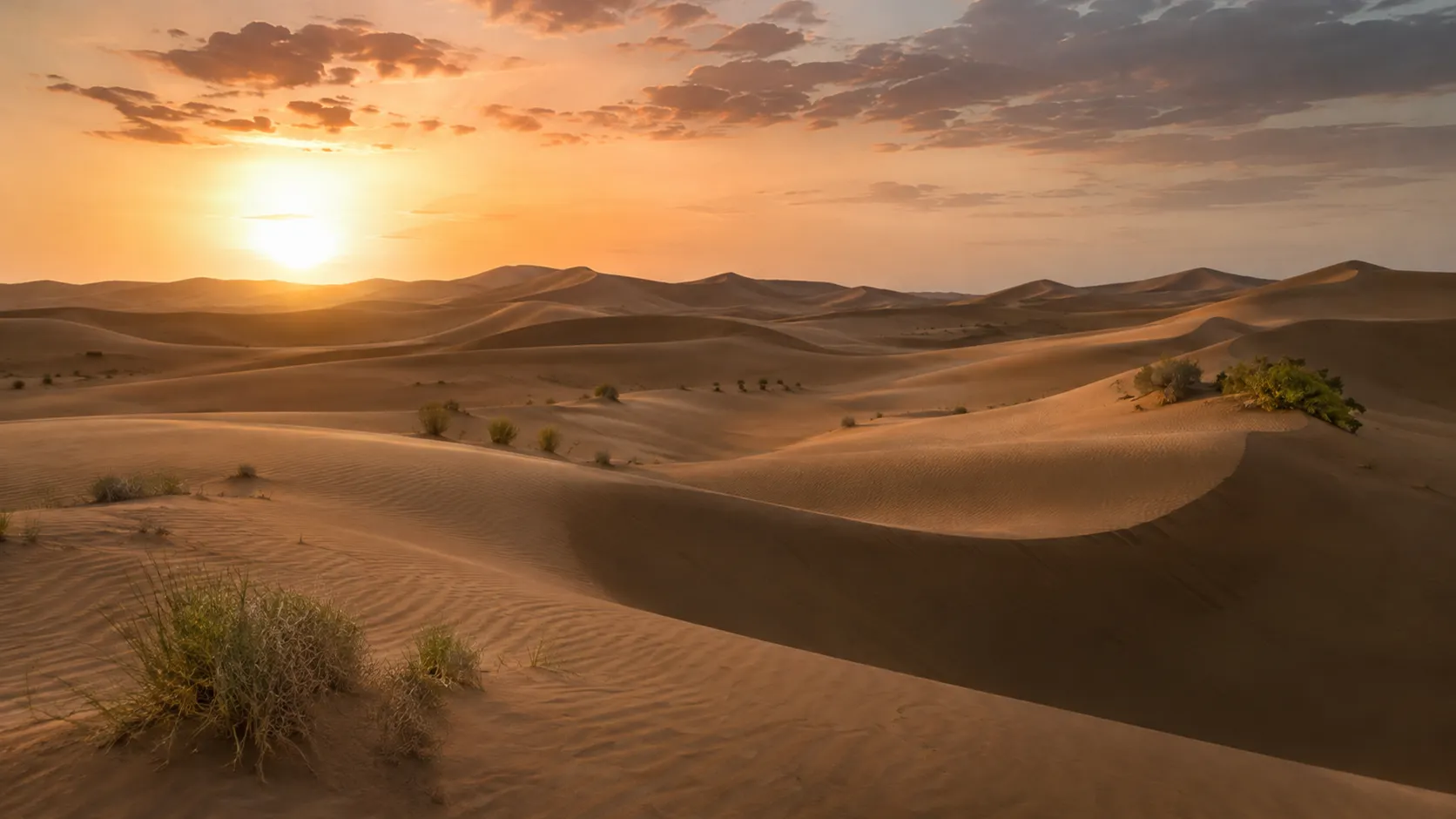
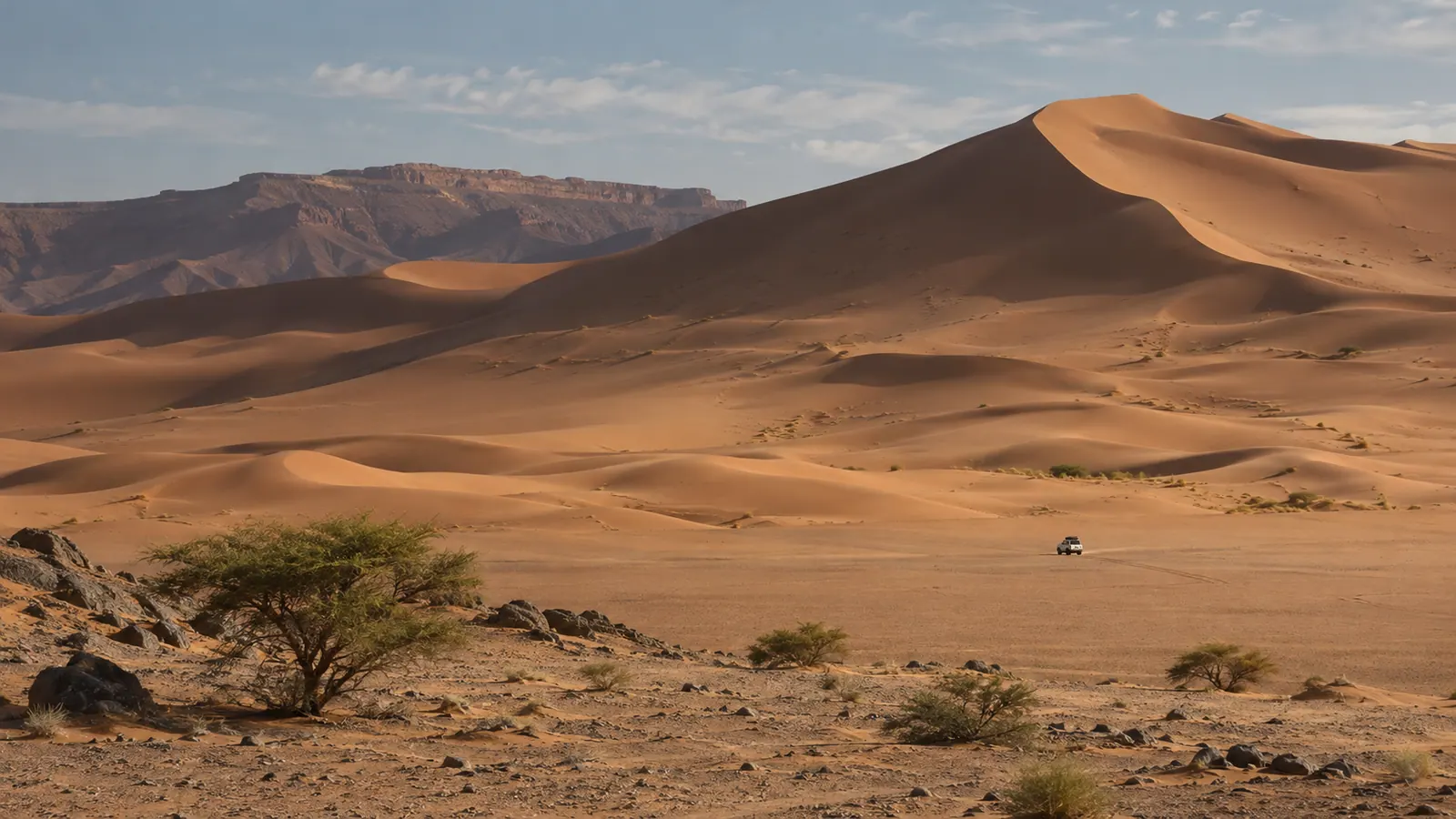
Erg Chigaga is one of Morocco’s largest dune seas and one of the most remote. There is no village in the dunes and no road to them, so every camp there, from the simplest to the most comfortable, depends on 4x4 pistes for its water, food, fuel and guests. That shapes what “luxury” can mean.
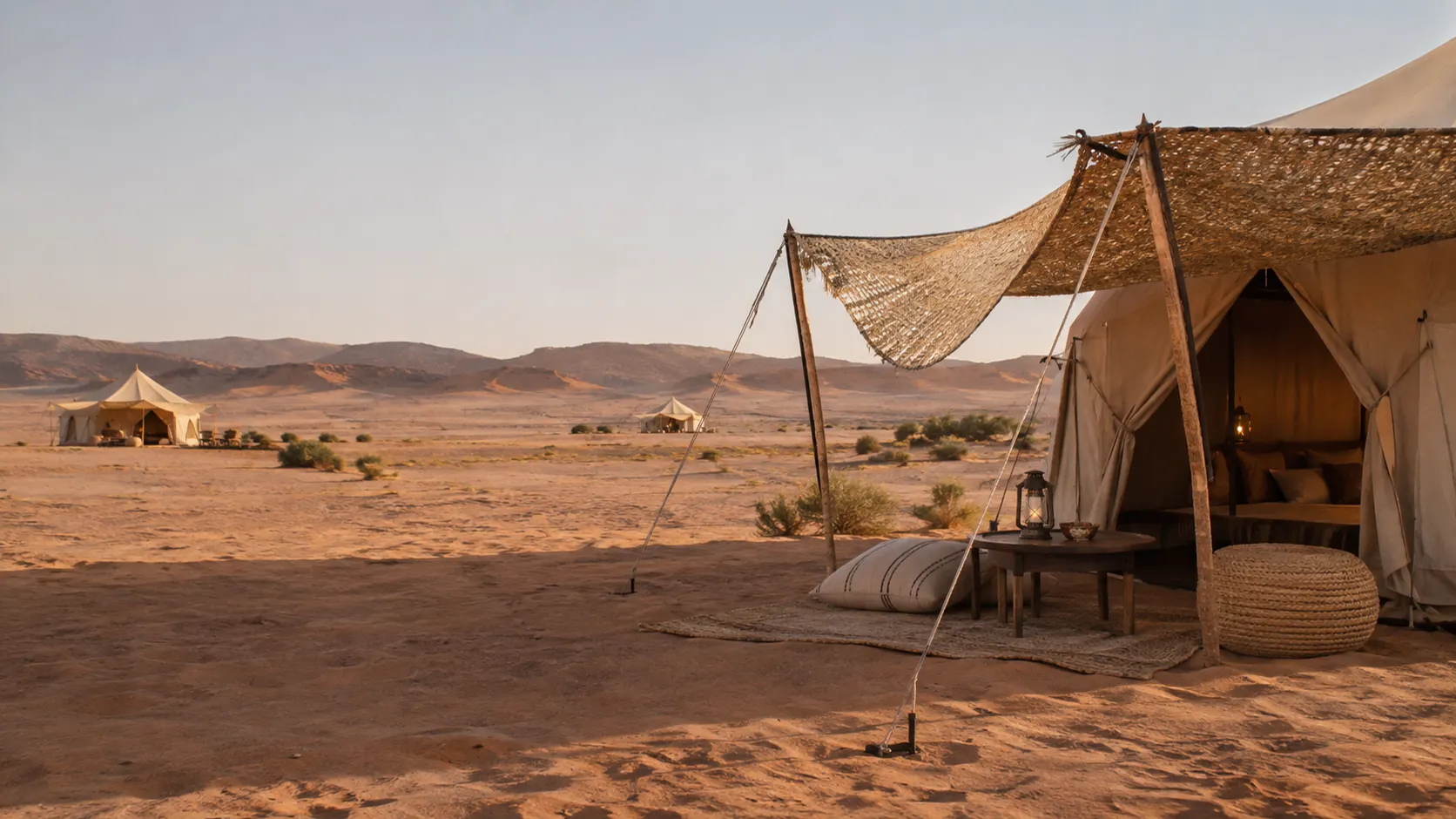
In practice, travellers and camps tend to use the word for a fixed camp that stays in place through the season and offers some combination of:
- Larger tents that you can stand up and move around in, often with a proper bed frame rather than a mattress on the ground.
- More private facilities, ideally a bathroom inside or attached to your tent, sometimes a private toilet and shower in a separate structure nearby.
- Hot water, which may mean a running shower, or warm water provided on request.
- Some electricity, usually limited, for lighting and charging.
- A dining tent or terrace, with fuller meals than a basic bivouac.
- More space between tents, so the night feels quieter and more private.
None of this is regulated. “Luxury camp”, “glamping”, “premium bivouac” and “deluxe tent” are marketing words, and two camps using the same label can be very different on the ground. The only reliable way to compare them is to ask the same specific questions of each one and get the answers in writing.
Where we stand
We should be clear about our own position before going further. We are a family business based in Foum Zguid running private 4x4 trips with a driver-guide. On our overnight trips, the night is spent at a bivouac in the Erg Chegaga dunes, with dinner and breakfast. We do not run a luxury camp, and we do not represent, rate or book anyone else’s.
This page is a buyer’s guide, not an advert. Use the questions below with any camp you are considering, including ours. When you send us a request, we answer each point in your written quote, so you can see exactly what our bivouac offers and decide whether it suits you or whether you would rather look for a higher-comfort camp.
Tent types: what you might actually sleep in
Photos of desert camps can make very different tents look alike. Ask what yours is made of, how big it is, and whether it is yours alone.
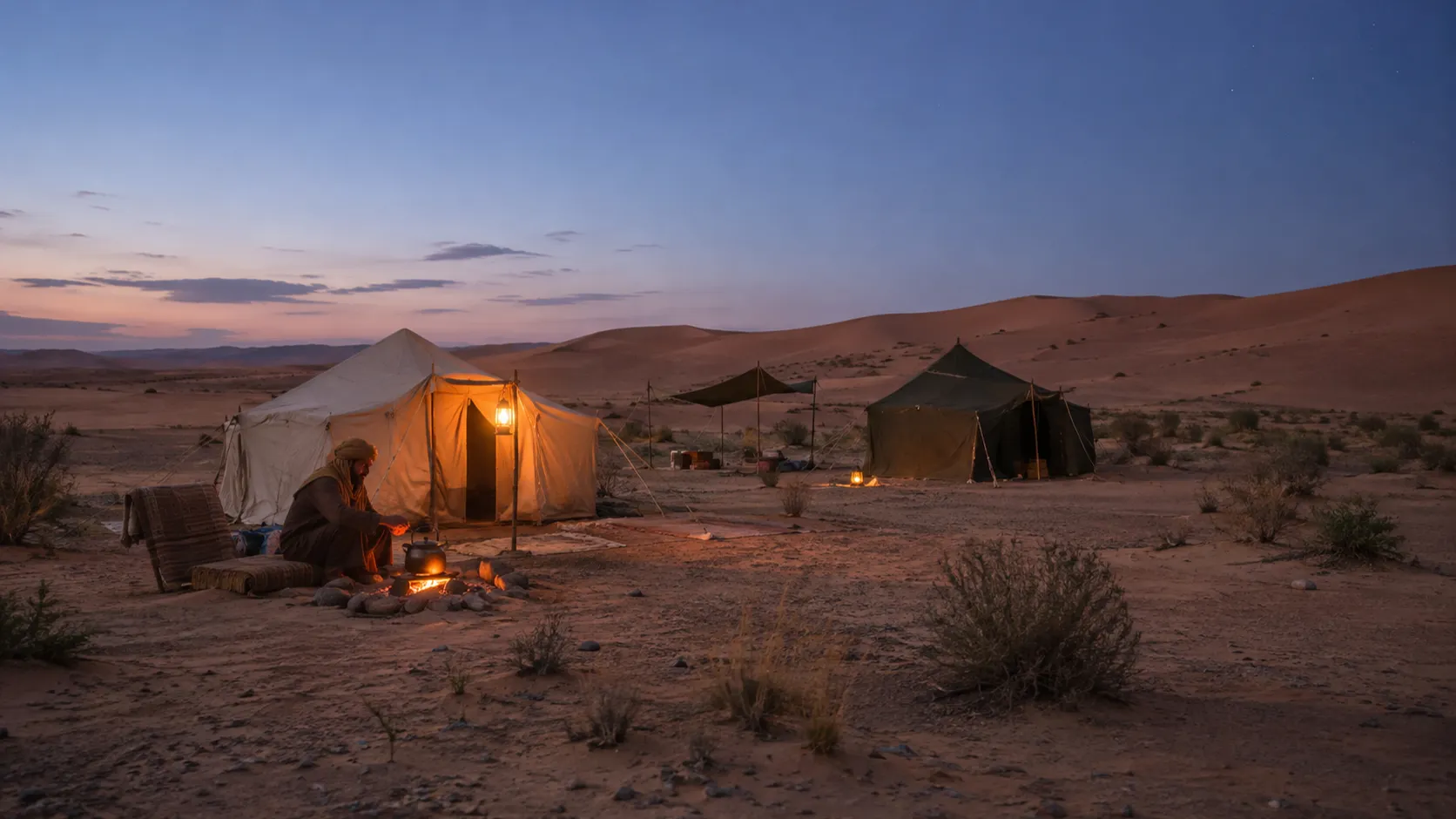
- Traditional woven or khaima-style tents. Heavy fabric, often dark, with rugs on the floor. They hold warmth well and feel rooted in the place. Quality and size vary a lot.
- Canvas or safari-style tents. Lighter-coloured, often taller, sometimes on a raised floor. Common in camps that market themselves as higher-comfort.
- Shared or communal tents. Several guests or groups under one roof. Rarely what people mean by luxury, but worth ruling out in writing.
Inside, check the bed (frame or floor mattress), the bedding (sheets, blankets, pillows), whether there is anywhere to put luggage, and how the tent closes at night against wind and sand.
Bathroom and shower: the questions that matter most
For many travellers, the bathroom is what “luxury” really means. It is also where descriptions are most often vague. “Private bathroom” can describe any of these:
- a toilet and shower inside the tent, behind a partition;
- a bathroom attached to the tent, entered from inside or outside;
- a private toilet and shower in a separate small structure a short walk away;
- a shared block used by several tents.
Then ask how the shower works. Is there running water, and is it hot every evening or only at certain times? Is the toilet a flushing toilet or a dry toilet? Is there a washbasin? In a place where every litre of water arrives by vehicle, it is reasonable for a camp to limit water use; it is also reasonable for you to know exactly what to expect.
Camp spacing, light and noise
Part of the reason to sleep in the dunes is the silence and the dark. Ask:
- How far is your tent from the next one, and from the dining area?
- Is the camp on its own, or are other camps nearby?
- Is there music or a campfire gathering in the evening, and can you skip it?
- Is there a generator, and when does it run?
- How much light is there around the camp at night?
A smaller, more spread-out camp often feels more private than a larger, more “equipped” one. Walk a little way from the lights after dinner and the sky opens up, whatever camp you are in.
Electricity and charging
Power in the dunes is limited. Many camps rely on solar panels, sometimes with batteries, and some may use a generator. Ask whether there are sockets in your tent or only at a shared charging point, whether power is available all night, and whether there is any heating or cooling. Bring a small power bank and a head torch either way, and don’t count on a phone signal.
Food and drink
Higher-comfort camps usually make more of dinner, but menus are rarely published. Ask what is served at dinner and breakfast, whether vegetarian, vegan or other dietary needs can be met, and whether tea and bottled water are included. Drinks policies vary from camp to camp; if it matters to you, ask what is available and whether you may bring your own.
Getting there: the transfer is part of the stay
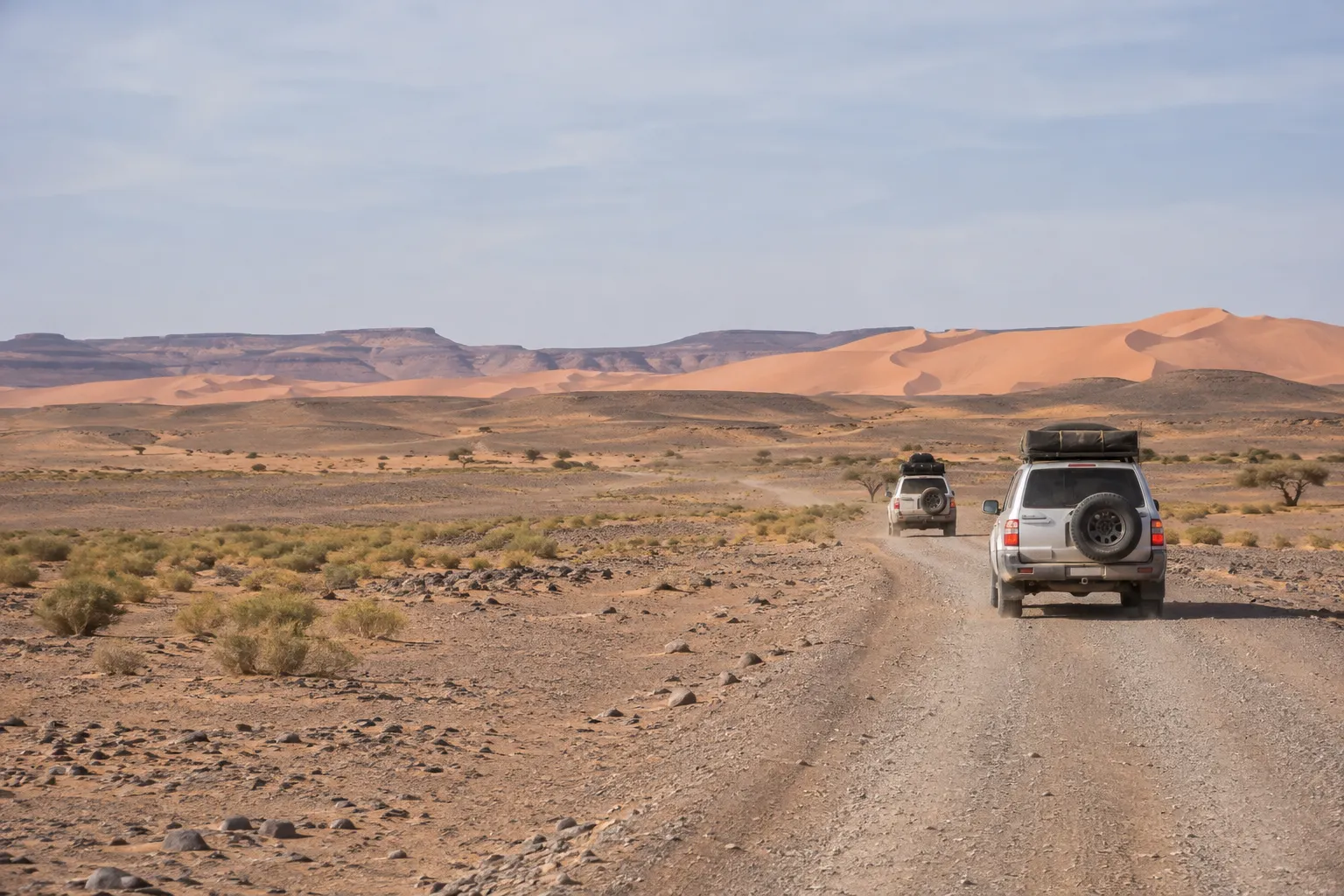
No camp in Erg Chigaga is reached by paved road. Whatever the comfort level, you arrive by 4x4 across desert piste, on foot, or by camel. Before booking, find out:
- Who drives you to the camp, in what vehicle, and from where.
- When you are expected to arrive. Reaching camp before dark is far more comfortable.
- What happens to your luggage. A soft bag travels better than a hard suitcase.
- What happens if conditions change. Rain is rare, but after heavy rain parts of the Iriki basin and the pistes around it can become soft or impassable for a time.
On our trips, the transfer is the trip itself: your driver-guide takes you from Foum Zguid into the dunes in a private 4x4, and the 2-day route crosses the Iriki basin on the way. See the 2-day Erg Chegaga tour and the 3-day tour for how the days flow.
How to compare camps: a question table
Send the same questions to every camp you are considering and fill in the answers side by side. Any good camp will answer them clearly.
| Topic | What to ask | Why it matters |
|---|---|---|
| Tent | What type, what size, and is it private to us? | Photos rarely show scale or who else shares it. |
| Bed | Bed frame or floor mattress? Which bedding is provided? | Comfort and warmth on cold nights. |
| Bathroom | Inside, attached, private but separate, or shared? | “Private bathroom” covers very different set-ups. |
| Shower | Running water? Hot every evening, or at set times? | Hot water depends on how the camp heats it. |
| Toilet | Flushing or dry? How far from the tent? | Matters most at night. |
| Power | Sockets in the tent or a shared point? All night? | Charging cameras, phones, medical devices. |
| Heating and cooling | Anything provided for winter nights or hot evenings? | Desert nights can be cold; afternoons can be hot. |
| Spacing | Distance to the next tent and the next camp? | Privacy, quiet and the night sky. |
| Evening | Music or a fire gathering? Can we opt out? | Some guests want a social evening, others silence. |
| Meals | What is served? Can you meet dietary needs? | Menus are rarely published. |
| Transfer | Who drives, from where, and when do we arrive? | No camp is reachable by paved road. |
| Weather | What happens if wind or rain makes the piste unsafe? | A clear plan B is a sign of a serious operator. |
| Terms | Deposit, payment and cancellation, in writing? | Avoid surprises after booking. |
Who a luxury camp suits, and who it doesn’t
A higher-comfort camp makes most sense if you are travelling as a couple or family and a private bathroom is non-negotiable, if you are staying more than one night and want real rest between days in the dunes, or if someone in your group has mobility or health needs that make a shared block impractical.
A simpler bivouac can suit you just as well if you mostly want the silence, the stars and the sunrise, and you are happy with clean, basic comfort for a night. Our own trips are private, so you travel with your own 4x4 and driver-guide at your own pace; read about private desert trips and our bivouac nights in the dunes.
Before you book
Make a short list of what you cannot do without, then ask every camp about those points first. Get the answers in writing, check recent guest photos, and confirm the transfer and the cancellation terms. If you would like us to answer the same questions for our bivouac, plan your trip and tell us what kind of night you are hoping for.
Questions travellers ask
Is there a luxury desert camp in Erg Chigaga with a private bathroom?
Some fixed camps in the Chigaga area market tents with an ensuite or private bathroom. What that means varies from camp to camp, so ask each one to describe the toilet, the shower and the hot water in writing, and check recent guest photos rather than brochure images.
Do you run a luxury camp?
No. Our overnight trips spend the night at a bivouac in the Erg Chegaga dunes, with dinner and breakfast. We don't describe it as a luxury camp. Tell us what comfort matters to you and we will say honestly, in your written quote, what our bivouac does and doesn't offer.
Can you book a luxury camp run by someone else for me?
We don't represent, rate or take bookings for other camps. If a specific camp is what you want, contact it directly and use the question table on this page to compare its answers.
Is a luxury camp worth it?
It depends on what you value. If a private bathroom, a proper bed and a hot shower make the difference between enjoying the night and enduring it, they are worth paying for. If you mostly want silence, stars and simple comfort, a well-run standard bivouac can suit you just as well.
Can I drive to a luxury camp in Erg Chigaga in a normal car?
No. There is no paved road into the dunes, whatever the standard of the camp. Access is by 4x4 on desert piste, and the transfer is usually arranged by the camp or the tour organiser. Ask who drives, from where, and what happens if conditions change.
Is there air conditioning or heating in the tents?
Don't assume either. Desert camps run on limited power, often solar. Ask what each camp provides for hot and cold nights, and pack warm layers between late autumn and early spring whatever you book.
Sources
Facts on this page were checked against the sources below. Conditions in the desert change — ask us for a current report before you travel.
First published ·Last updated