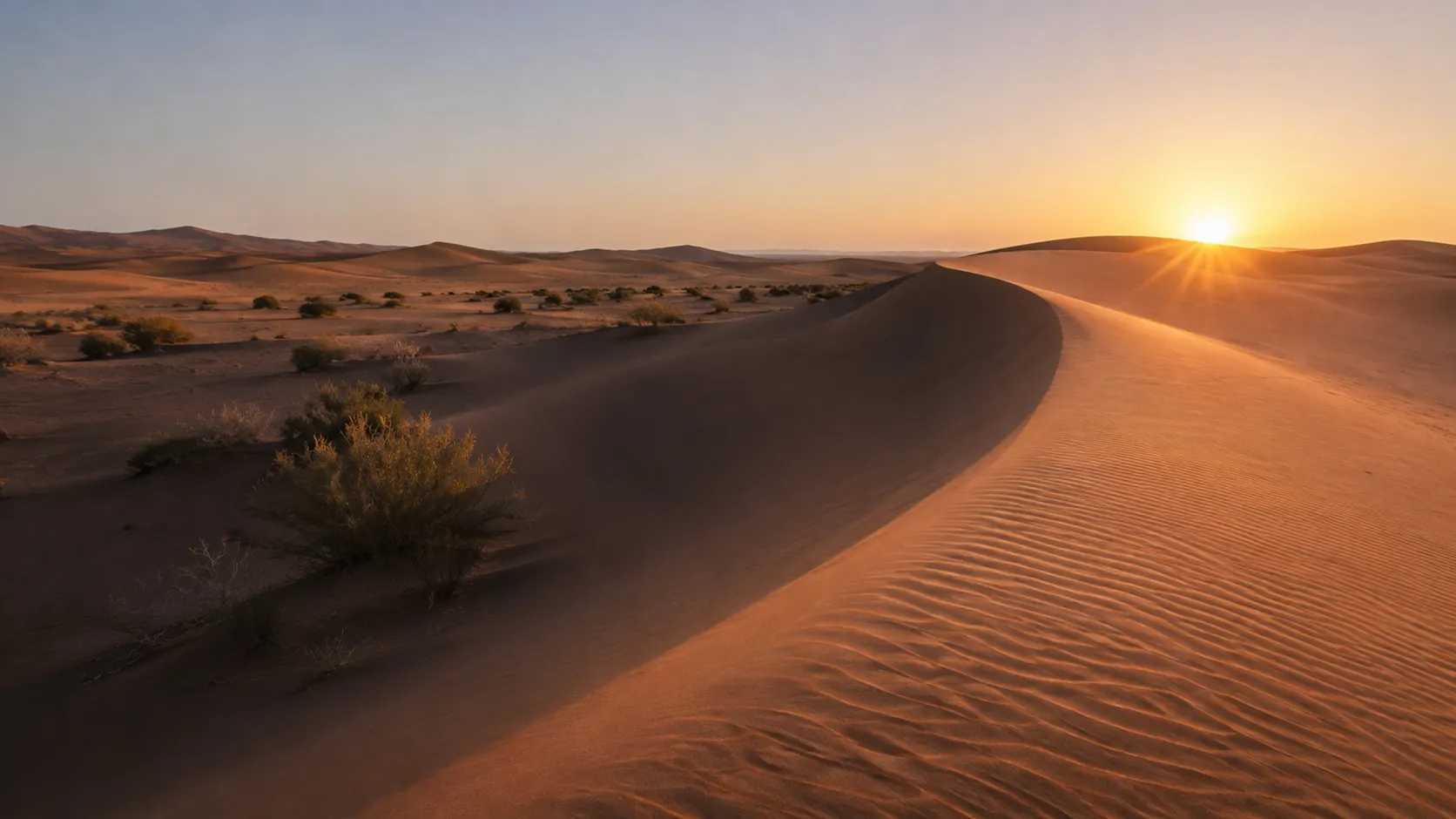
At a glance
- Most comfortable season
- Autumn to spring, for most travellers
- Climate
- Hot desert climate with very little annual rain (Zagora, the nearest town with published averages)
- Summer days at Zagora
- Average highs around or above 40 °C
- January at Zagora
- Average days around 20 °C, cold nights
- Today's forecast and alerts
- Direction Générale de la Météorologie (marocmeteo.ma)
- Water in Lake Iriki
- Depends on recent rain: ask for a current report before you travelconfirmed when you plan
- Conditions on your dates
- Checked by your guide before departureconfirmed when you plan
The short answer
For most people, the most comfortable time to visit Lake Iriki and Erg Chigaga is from autumn to spring, roughly October to April. Days are warm or mild and pleasant for walking in the dunes. Nights are cool in autumn and spring and properly cold in winter.
Summer is very hot and calls for a slower trip built around the cool hours. Spring often brings wind, and rain, though rare, can close pistes for a while.
Live weather and climate are not the same thing
This page describes what each season is usually like. It is not a forecast. For today’s weather and any warnings, check the Direction Générale de la Météorologie (DGM), Morocco’s national weather service, at marocmeteo.ma, or a forecast app you trust. The DGM issues the official forecasts and weather alerts for the country. Forecast apps may model a point that does not quite match the dunes, so look at the trend over several days rather than a single figure.
Before every departure, your guide checks the conditions: the forecast, any recent rain and the state of the pistes. If storms or strong wind are expected, we talk to you before you set off, and the route or timing can be adjusted.
A word on the figures. Zagora, in the Drâa valley, is the nearest town with published climate averages. According to those averages (Wikipedia and Climate-Data.org), summer daytime highs are around or above 40 °C, January days are around 20 °C, winter nights are cold, and annual rainfall is very low. Foum Zguid, the open Iriki basin and the Chigaga dunes are different places and can differ from Zagora, sometimes noticeably: bare sand and flats heat up quickly in the sun and lose that heat quickly after dark. Read these numbers as a rough guide, never as a promise.
Season by season
Autumn (September to November)
September often still feels like summer, with hot days and warm nights. It is also the month when late-summer storms are most likely to break, as they did in September 2024. By October the heat eases and walking weather returns. November is, for many, one of the nicest months: clear light, comfortable days and nights that cool down fast.
Winter (December to February)
Winter days are usually mild, sunny and clear, pleasant for walking at any hour, though the sunset comes early. Nights are the coldest of the year, especially in a desert camp. With the right clothing this is a lovely season.
Spring (March to May)
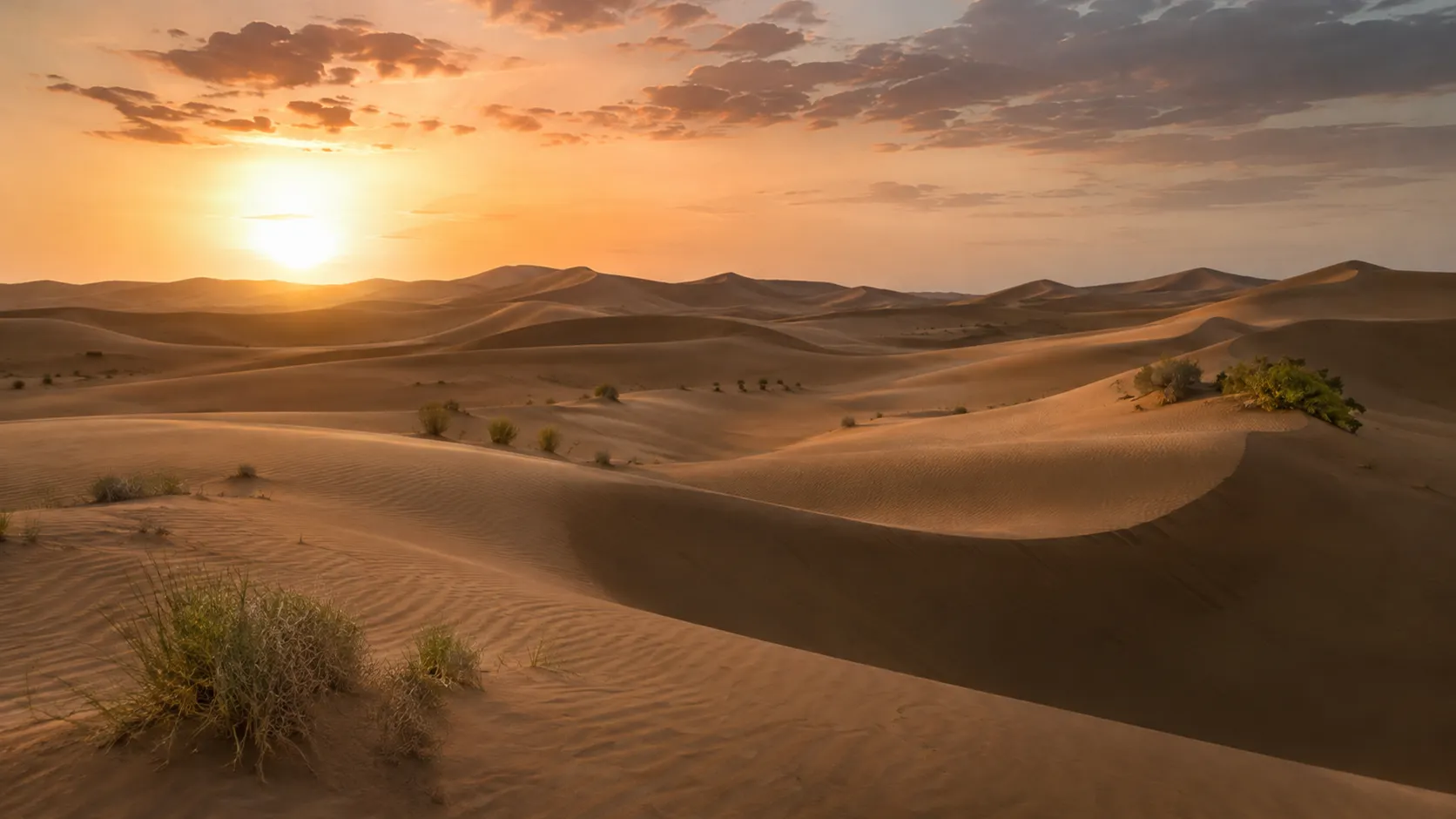
March and April bring warm days and mild nights, and spring is commonly reported as the windiest time of year. Some days are clear and calm; on others, sand and dust hang in the air and soften the horizon. By May the heat is building and the middle of the day in open terrain becomes tiring.
Summer (June to August)
Summer is the hot season. Midday heat in the dunes and on the basin can be dangerous, the sand burns underfoot, and nights stay warm. Travel is still possible for people who handle heat well, with a carefully adapted programme.
Month by month at a glance
| Month | Days | Nights | What to expect | Good for |
|---|---|---|---|---|
| January | Mild, sunny | Cold | Clear skies, short days, among the coldest nights of the year | Dune walks at any hour, stars, if you pack warm |
| February | Mild, warming | Cold | Much like January, gradually softer | Multi-day trips, walking |
| March | Warm | Cool | Wind becomes more frequent | Most trips; bring a scarf |
| April | Warm to hot | Mild | Windy spells and dust haze possible; heat building | Most trips, with a midday break |
| May | Hot | Mild to warm | Midday in the open becomes tiring | Early starts, shorter outings |
| June | Very hot | Warm | Strong midday heat | Heat-hardy travellers, adapted timing |
| July | Very hot, usually among the hottest | Warm | Midday heat can be dangerous | Only with an adapted programme |
| August | Very hot | Warm | As July; isolated storms possible | Only with an adapted programme |
| September | Hot | Warm | Heat easing late in the month; storms and flash floods possible | Flexible travellers |
| October | Warm | Mild to cool | Walking weather returns | Most trips |
| November | Mild to warm | Cool to cold | Pleasant days, nights cooling fast | Most trips, bivouac nights with layers |
| December | Mild | Cold | Short days, cold nights, holiday period | Dunes and stars, with warm sleeping layers |
Heat, and how trips adapt to it
Heat is the main constraint in this desert. Even in spring and autumn the sun is strong, and there is little natural shade on the basin or in the dunes.
When it is hot, a sensible day follows the sun: set off early, cross the open ground in the cooler hours, rest in the shade at midday and go back onto the dunes in the late afternoon, when the sand cools. Climbing a high dune at midday in summer is not worth the risk.
If summer is your only window, say so when you get in touch. Your guide can suggest a lighter programme, and whether a summer departure suits your group is confirmed in the written quote. Whatever the season, drink often, cover your head and shoulders, and tell your guide straight away if you feel dizzy, sick or unusually tired.
Wind and sand
Wind is part of desert life here. Spring is commonly reported as the windiest season, though a windy day can come at any time of year. In summer a hot, dry wind from the east, often called the chergui in Morocco, can make the heat feel heavier.
On a windy day sand stings the legs, gets into everything and can blur the horizon to a pale haze. It is uncomfortable rather than dangerous for most people, but it changes the day: dune walks are shorter, photos are softer and dinner may move inside the camp. A cotton scarf or chèche over nose and mouth, close-fitting sunglasses and a zip bag for your phone and camera make a real difference.
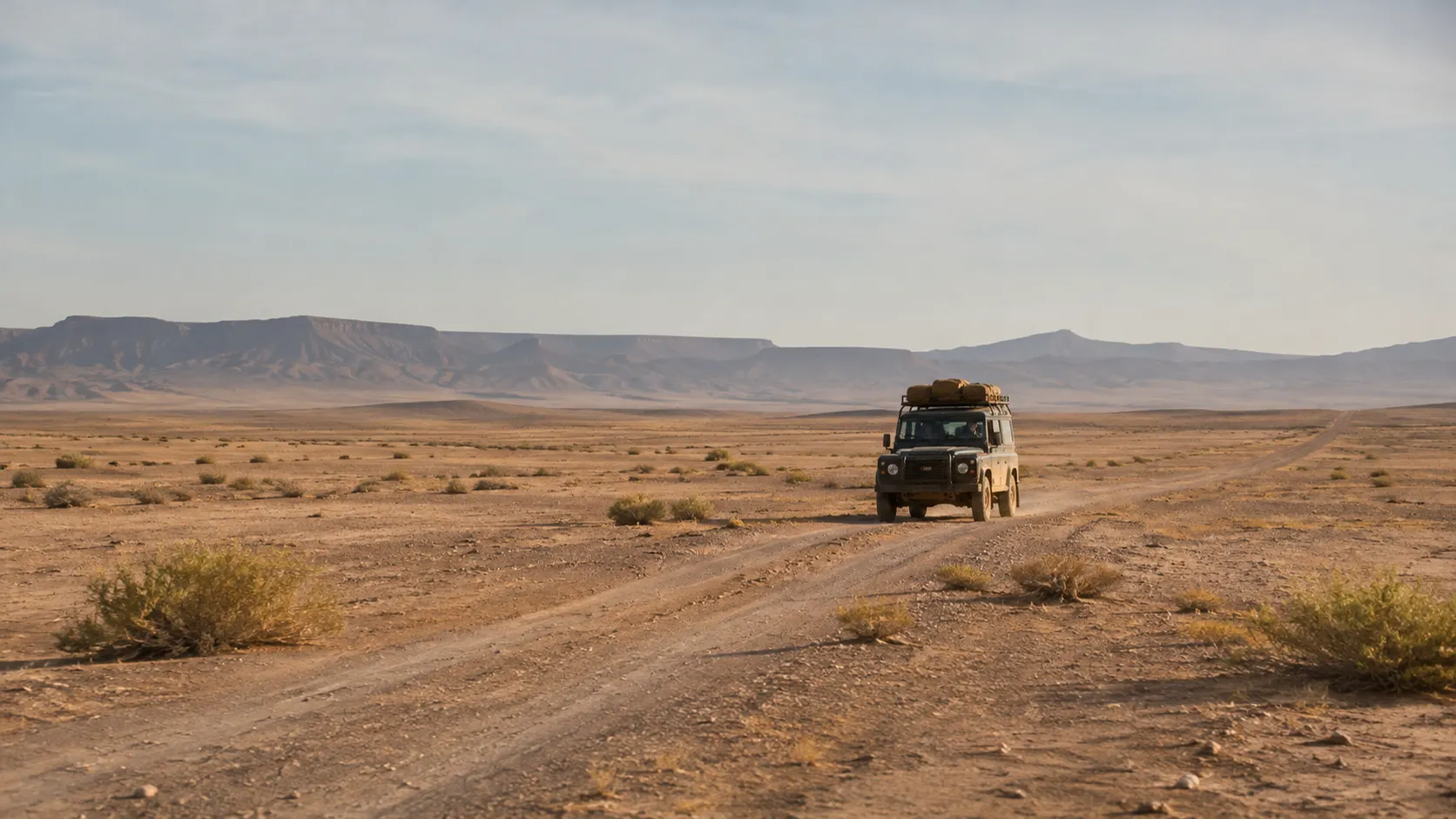
Strong wind can also shift sand across the pistes. Your guide reads this as part of the drive, and the timing may change.
Rain and flash floods
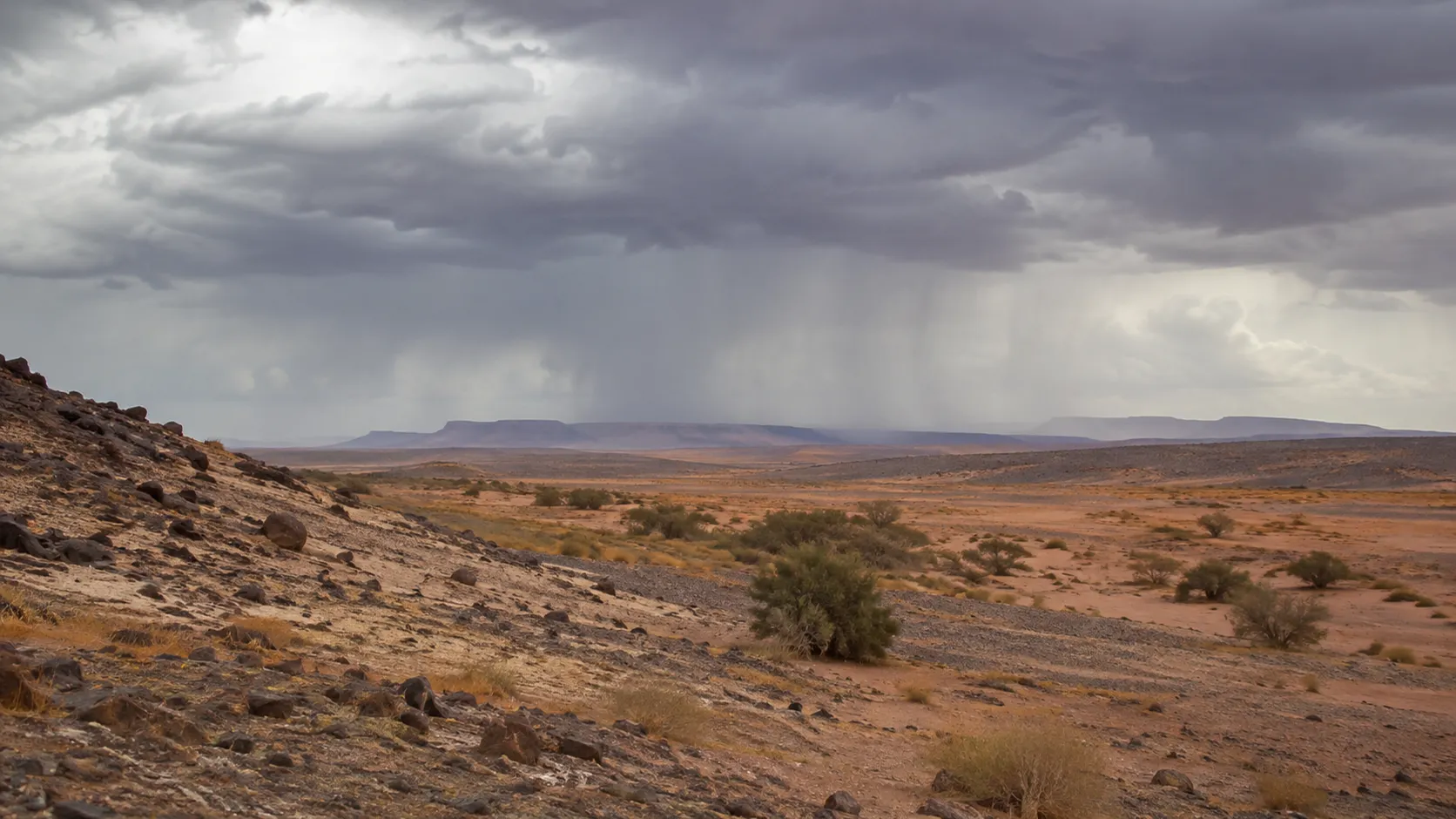
Annual rainfall in this part of the pre-Saharan south is very low, and most visitors never see a drop. But rare storms can be heavy. In September 2024, heavy rain sent floodwater across the region, and NASA satellite imagery from 10 September 2024 showed water in the Iriqui basin.
When it rains, the desert changes fast. Dry riverbeds (oueds) can carry fast, muddy water, sometimes hours after a distant storm, and the lakebed clay turns to sticky mud. Some pistes can become impassable or be closed for a while, and an itinerary may need to wait or take another line.
If rain is forecast around your dates, your guide will tell you what it means for the route. Keep a little flexibility in your plans; waiting half a day is better than getting stuck. Our map and access guide explains what to expect on the pistes after rain.
Cold desert nights in winter
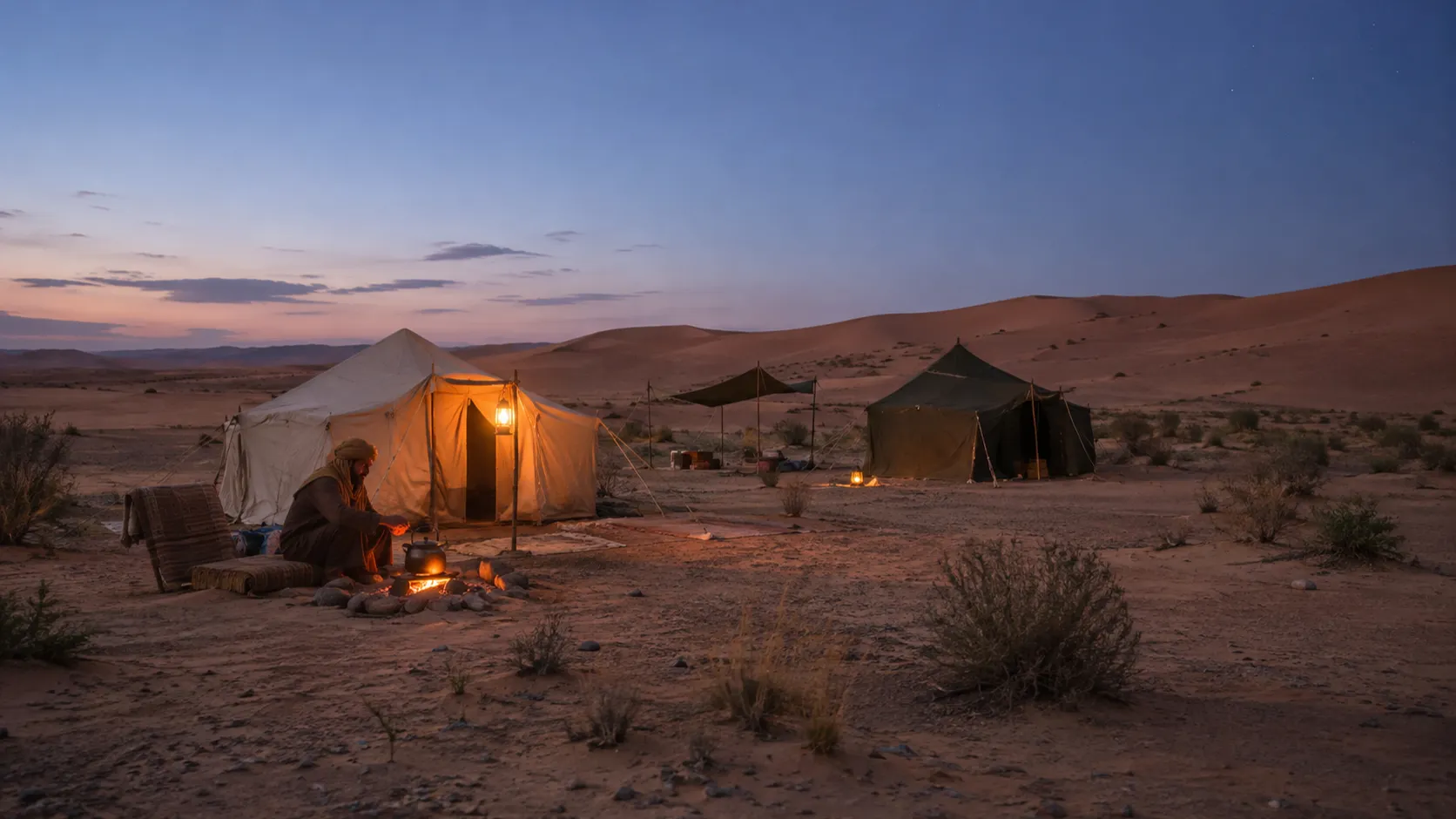
Visitors often pack for the Sahara as if it were hot around the clock, and winter nights catch them out. Zagora’s averages show mild January days but cold nights, and in the dunes, under clear dry skies, the day’s warmth drains away soon after sunset.
The answer is simple: layers. A warm fleece or down jacket, a hat, gloves, warm socks and something comfortable to sleep in. Ask what bedding the camp provides and whether extra blankets are available. Our Iriki bivouac page explains what a night at camp usually looks like. The reward is the sky: long, dark winter nights are among the best for stars.
What to pack, season by season
All year: sun hat or chèche, sunglasses, high-factor sunscreen and lip balm, a reusable water bottle, a head torch, shoes that cope with sand, a small bag to protect electronics from dust, and cash for tips and extras.
Autumn and spring: light, covering clothes for the day; a fleece or light jacket for evenings; a scarf for windy days, especially in spring.
Winter: everything above, plus a warm jacket, hat, gloves, warm socks and warm sleepwear.
Summer: loose, long, light-coloured clothing rather than shorts and vest tops, which protect less from the sun; a wide-brimmed hat; electrolyte sachets if you use them; and a willingness to rest through the middle of the day.
If you plan to drive yourself to Foum Zguid, our route and map guide has a practical checklist for self-drivers.
The lake changes with the rain
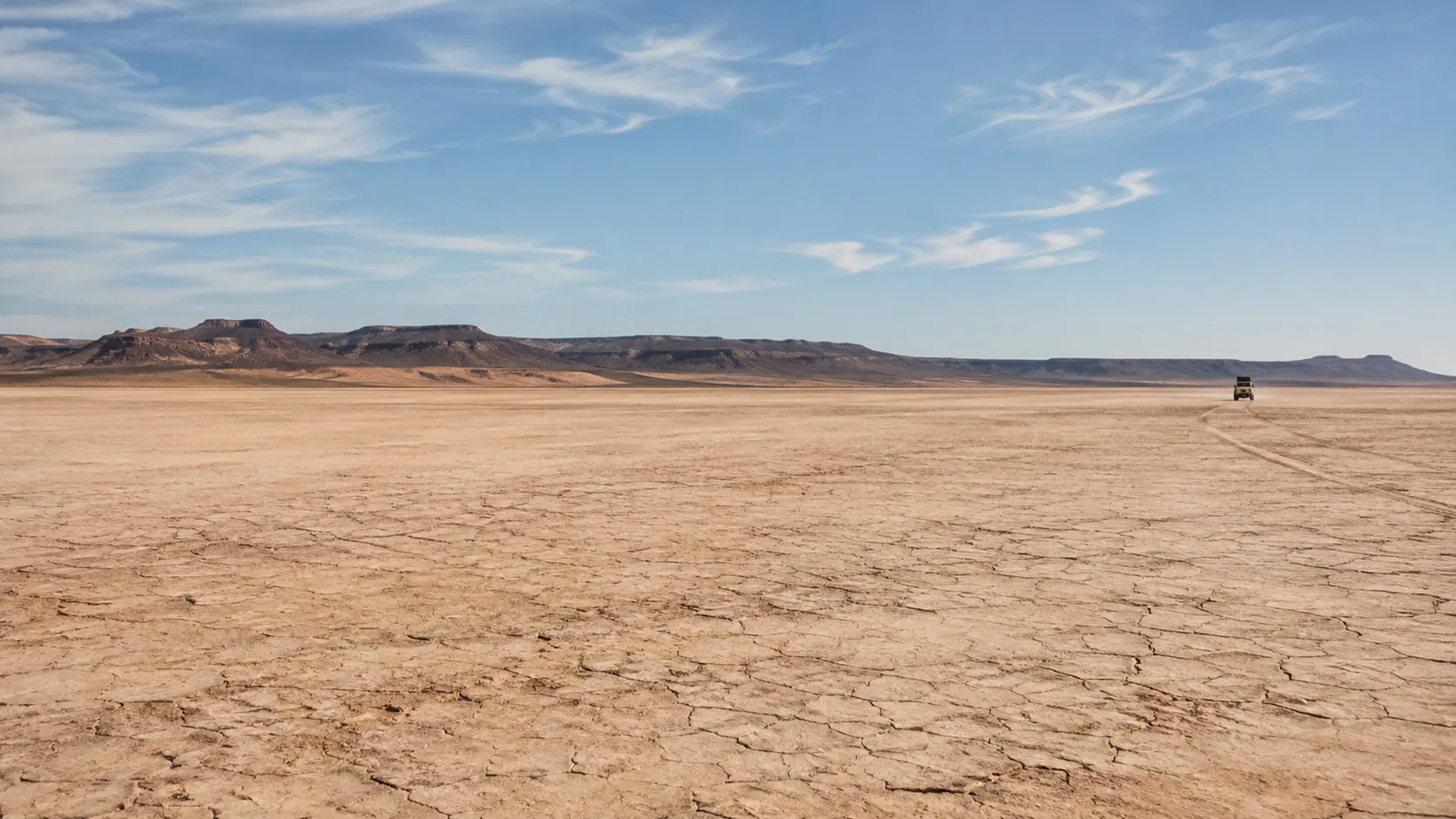
Lake Iriki is an ephemeral lake. For most of recent decades it has been a dry basin: a wide, pale clay flat ringed by dunes and low hills. The September 2024 rains showed that it can still fill, at least for a time.
No season guarantees water. Whether there is any, how much, and for how long depends on rain that may have fallen far upstream, and things can change quickly. If seeing water matters to you, keep your dates flexible and ask for a recent report before you travel. Our Lake Iriki guide tells the longer story of the basin and how it has changed.
Busy periods and holidays
In general, the most comfortable months are also the busiest across Morocco’s desert areas, and school holidays, Easter and the end-of-year period tend to draw more travellers. The western side of Erg Chigaga, reached from Foum Zguid, is remote, so even then it rarely feels crowded, but it is wise to get in touch early if your dates are fixed.
Ramadan moves earlier each year in the Gregorian calendar. Desert trips can usually go ahead, though opening hours in towns may change; your guide will tell you what to expect if your trip falls during it.
Choosing your dates
If you can choose freely, aim for autumn or spring, or winter if you do not mind cold nights. Then pick the trip that fits your time. The two-day trip from Foum Zguid to Erg Chegaga crosses the Iriki basin and spends a night in the dunes; the three-day trip gives a slower pace and more room to adapt to weather. Our Erg Chigaga guide describes the dunes themselves, and the Foum Zguid page the town where our tours begin.
When you are ready, tell us your dates and how flexible you are. We will reply with what to expect for that season and a written quote.
Questions travellers ask
What is the best month to visit Erg Chigaga and Lake Iriki?
There is no single best month, but for most travellers the period from October to April is the most comfortable. October, November, March and April usually combine warm days with nights that are cool rather than cold. December to February bring mild, clear days and cold nights, which suits people who pack well and enjoy starry skies. Summer is very hot and needs an adapted programme.
What is the weather like in Foum Zguid today?
This guide describes the seasons, not today's weather. For the current forecast and any weather alerts, check the Direction Générale de la Météorologie, Morocco's national weather service, at marocmeteo.ma, or a forecast app you trust. Your guide also checks conditions before you set off and will tell you if the route or timing needs to change.
Is it too hot to visit the Sahara in Morocco in summer?
It is very hot. Published averages for Zagora, the nearest town with climate data, put summer daytime highs around or above 40 °C, and the open basin and the dunes can feel harsher. Some travellers still go, with early starts, a long rest in the shade through the middle of the day and time in the dunes only around sunrise and sunset. Whether a summer departure suits your group is discussed when you plan, and confirmed in the written quote.
How cold are desert nights in winter?
Cold enough to plan for. Zagora's averages show mild January days but cold nights, and in the dunes the temperature drops quickly once the sun has set. Bring a warm jacket, a hat, gloves and warm sleepwear, and ask what bedding the camp provides. Around the fire after dinner, most people are glad of an extra layer.
Does it rain in the Moroccan Sahara?
Rarely. Annual rainfall in this part of the pre-Saharan south is very low. But when storms come they can be heavy, as in September 2024, when NASA satellite imagery showed floodwater reaching the Iriqui basin. After heavy rain, dry riverbeds can flood and some pistes become impassable for a while, so the route may change.
Is there water in Lake Iriki at the moment?
That depends on recent rain and can change from one season to the next. Lake Iriki is an ephemeral lake that has been a dry basin for most of recent decades; heavy rain in September 2024 sent water into it. Ask for a current report before you travel rather than relying on photos found online.
Sources
Facts on this page were checked against the sources below. Conditions in the desert change — ask us for a current report before you travel.
- Zagora, Morocco — Climate — Wikipedia, consulted 12 November 2026
- Climat Zagora (Maroc) — données climatiques — Climate-Data.org, consulted 12 November 2026
- Direction Générale de la Météorologie — prévisions et vigilance — Direction Générale de la Météorologie (Maroc), consulted 12 November 2026
- A Deluge for the Sahara — NASA Earth Observatory, consulted 11 November 2026
First published ·Last updated