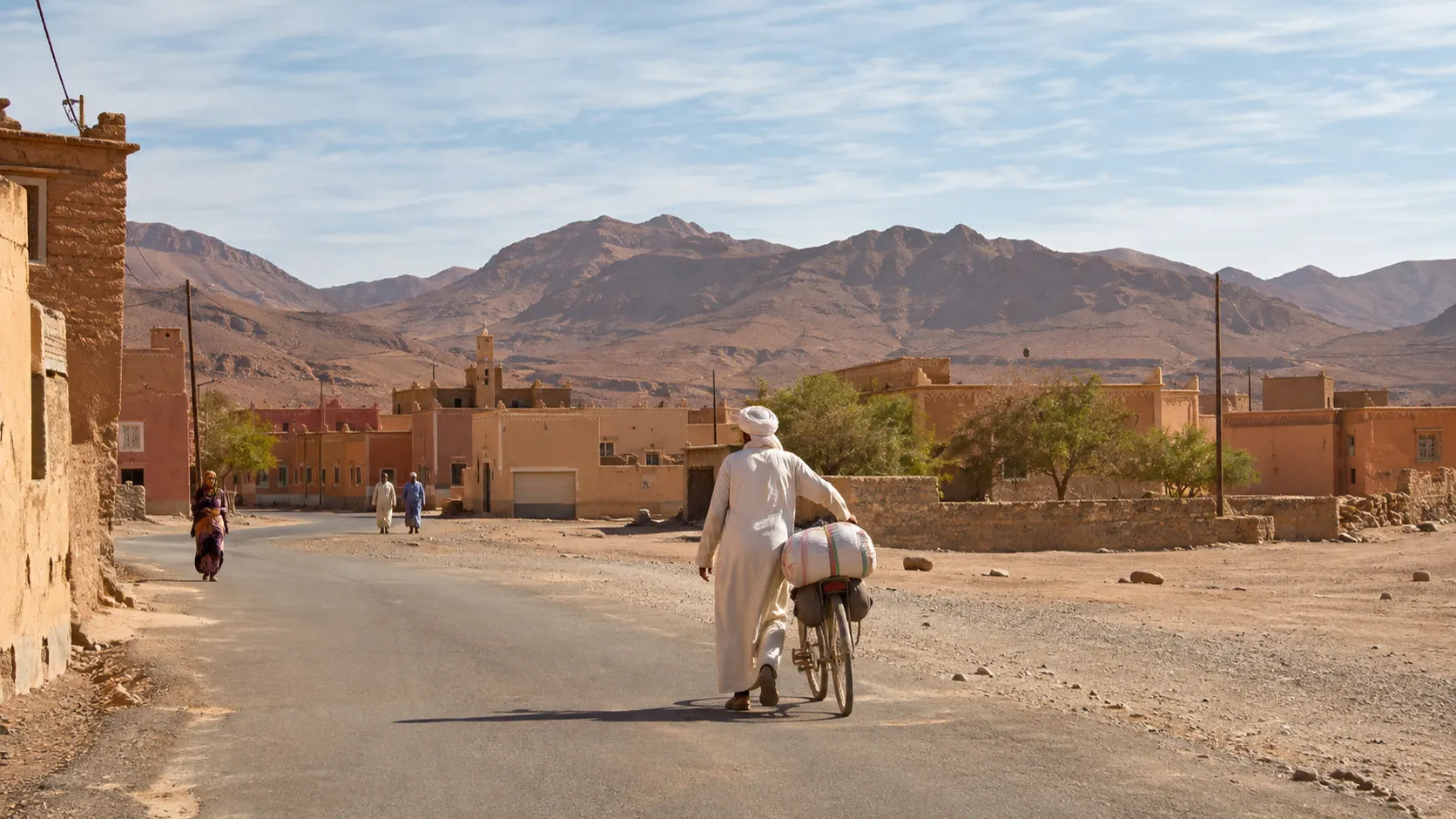
At a glance
- Province
- Tata, southern Morocco
- Setting
- At a gap in the Jbel Bani ridge, on the edge of the pre-Saharan south
- Gateway to
- Lake Iriki, Iriqui National Park and the western approach to Erg Chigaga
- Our tours
- Family business based in Foum Zguid; private 4x4 with a driver-guide
- Driving times from other cities
- Confirmed when you plan your tripconfirmed when you plan
Where Foum Zguid is
Foum Zguid is a small town in Tata province, in the south of Morocco, at the point where the stony country below the Anti-Atlas gives way to the open pre-Saharan plains. To the north lie Tazenakht, Ouarzazate and, beyond them, the High Atlas. To the south and south-east the land flattens and empties towards the Lake Iriki basin, Iriqui National Park and, further east, the dunes of Erg Chigaga.
It is not a place most people pass through by accident. You come to Foum Zguid because you are heading somewhere beyond it, and that is exactly what makes it useful: it is the last proper town before the desert on this side.
A gap in the Jbel Bani
The Jbel Bani is a long, low ridge of dark rock that runs across much of Morocco’s pre-Saharan south. It is not high, but it is continuous enough to act as a wall, and for centuries the places where it could be crossed mattered. In Arabic, foum means “mouth”, and several towns along the ridge carry the word in their name because they sit at one of these openings.
Foum Zguid is one of them. Driving in from the north, you see the ridge ahead as a dark line across the horizon, and the town has grown up around the opening where road and valley pass through it. Look south from here and you understand the name: on one side, the folded hills you have just crossed; on the other, a wide, pale country that keeps going.
That position is why Foum Zguid works as a starting point. The pistes that lead to the Iriki basin and on towards Erg Chigaga begin here, and the ridge itself is a good first lesson in desert geography: the landscape is organised in long bands, and each band changes the light, the ground and the way you travel.
What you will find in town
Foum Zguid is a working town rather than a resort, and it is worth arriving with that expectation. In general terms, you can count on:
- Fuel. Fill up here before any trip into the desert. If you are travelling with us, your driver-guide takes care of the vehicle, but it is still the place to sort out anything you need for yourself.
- Shops and small cafés. Grocery shops sell water, snacks, fruit and basic supplies. Small cafés serve mint tea, coffee and simple meals.
- Places to stay. A few guesthouses and simple lodgings make it easy to spend a night before or after a trip. Arriving the evening before means you start the desert day rested, without a long drive the same morning.
- Everyday services. As in any Moroccan town of this size, there are mosques, a market area and basic local services. Do not expect the range of a city: bring enough cash from a larger town, and check with your guide what is available locally before you rely on it.
Most of the town’s life happens along the main road and in the streets just off it. A short walk in the late afternoon, when the heat eases and people come out, gives a better feel for the place than any description.
Getting to Foum Zguid
Foum Zguid is reached by road. Paved roads link it to the surrounding towns; the desert pistes only begin once you head south. Travel times depend heavily on your route, the season and how often you stop, so we confirm them with you when you plan your trip rather than quoting figures here.
From Marrakech and Ouarzazate
This is the most common approach. From Marrakech, the road climbs over the High Atlas to Ouarzazate. From Ouarzazate, the usual way south runs through Tazenakht and then down to Foum Zguid. Many travellers coming from Marrakech treat this as a two-stage journey, with a night around Ouarzazate, rather than trying to cross the mountains and start a desert tour on the same day.
From Agadir and Tata
From Agadir and the Souss, roads run inland and east across the Anti-Atlas country towards Foum Zguid; your exact route will depend on where you are coming from and current road conditions. From Tata, to the west, a road follows the line of the Jbel Bani to Foum Zguid, through a landscape of ridges and small oases that is a fine drive in itself.
From Zagora
From the Drâa valley and Zagora, to the east, a road runs west towards Foum Zguid along the edge of the pre-Saharan plains. It is a good option if you have already spent time in the Drâa valley and want to finish your trip on the quieter western side of the desert.
Without a car
Public transport, such as buses and shared taxis, links the towns of the region, but routes, departure points and timetables change. Check locally, as close to your travel date as possible. If you would prefer not to piece this together yourself, say so in your trip request and we will tell you honestly what we can suggest.
Why start a desert trip here rather than M’Hamid
M’Hamid, at the end of the Drâa valley road beyond Zagora, is the best-known gateway to Erg Chigaga. It is a good place to start, and many trips do. But the western approach from Foum Zguid offers something different.
A quieter way in. The western side of the desert tends to see fewer vehicles than the main approach from M’Hamid. You spend more of the journey with the landscape to yourselves, and the arrival in the dunes feels earned.
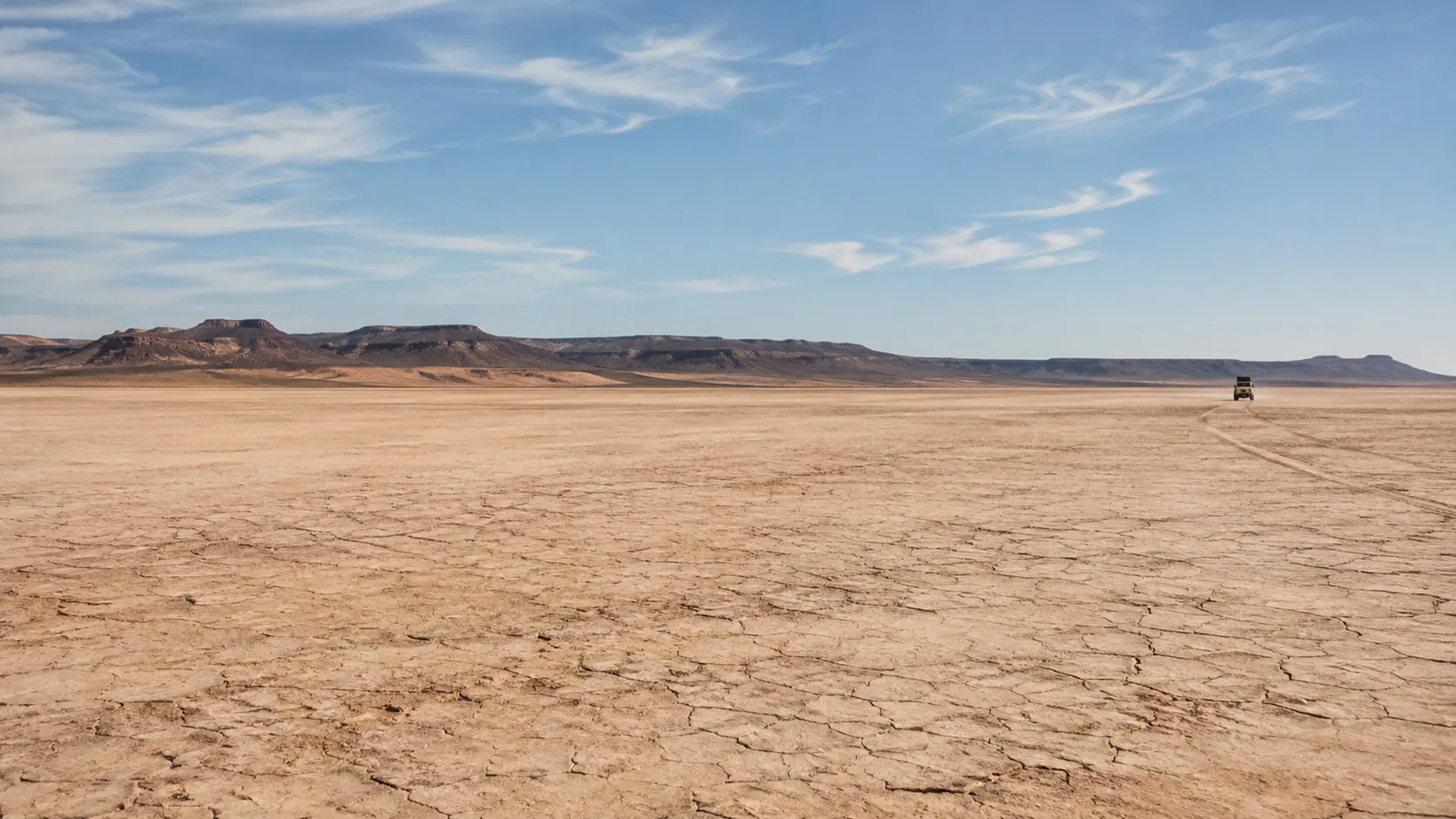
The crossing of the lake basin. This is the real reason. From Foum Zguid, the route to Erg Chigaga crosses the Iriki basin, a vast flat floor that has been dry for most of recent decades and that filled with water after heavy rain in September 2024. Depending on recent weather, you may cross hard, cracked clay, soft ground or the margins of standing water. Either way, it is a part of the desert that the eastern approach largely leaves out.
A sense of sequence. Starting in Foum Zguid, you move through the desert in a logical order: the ridge of the Jbel Bani, the open plains, the basin and its edges in the national park, and only then the dunes. By the time the first sand appears, you have a real sense of the country around it.
If you are planning to continue east afterwards, an overnight tour can be arranged to finish somewhere other than Foum Zguid. Mention it in your request, and the finishing point will be set out in your quote.
From Foum Zguid into the desert
Three destinations make up most trips from Foum Zguid.
Lake Iriki. The basin itself, crossed by pistes and changing with each season. Our Lake Iriki guide explains what it is, how it has changed and how to approach it. The route and access guide covers the pistes in more detail.
Iriqui National Park. Created in 1994, the park protects arid savanna, dunes, salt flats and the temporary wetland of the lake. Read more on our national park page.
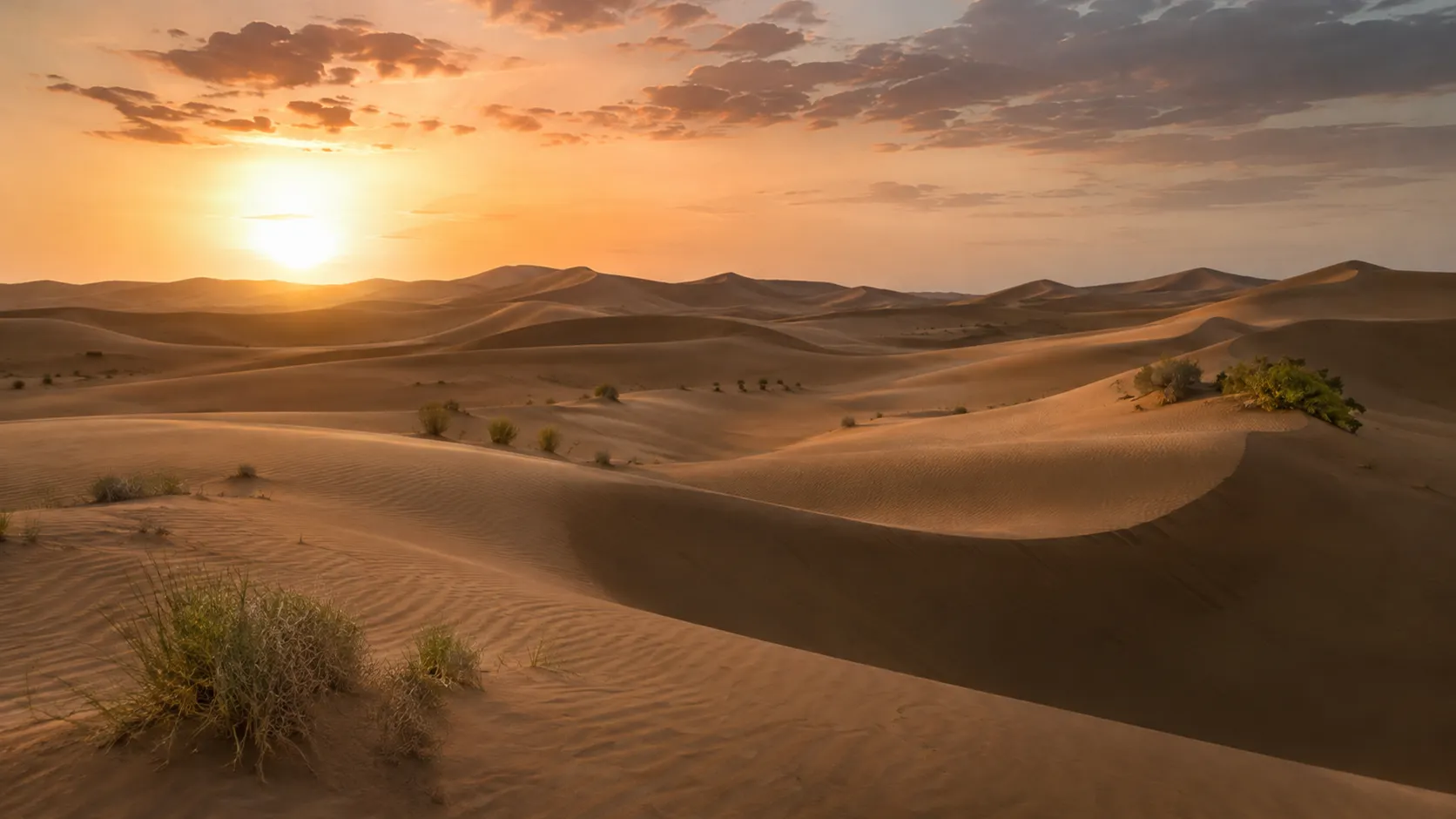
Erg Chigaga. One of Morocco’s great dune seas, reached from Foum Zguid by the western piste across the Iriki basin. See the Erg Chigaga page and the step-by-step Foum Zguid to Erg Chigaga route guide.
You can see the basin in a single day with the Lake Iriki day trip, or continue to the dunes with the two-day or three-day tours, which include a bivouac in the Chegaga dunes.
When to come
Foum Zguid has a pre-Saharan climate. Summers are very hot, and the middle of the day can be punishing on the open plains; winters are mild by day but nights can be cold, sometimes surprisingly so. Spring and autumn are the most comfortable seasons for most travellers, though wind can lift sand and dust, particularly in spring.
Rain is rare but can be heavy when it comes, and it changes the desert quickly: tracks soften, low areas flood and the basin can hold water. If there has been rain in the region, ask us for a current report before you travel. We would rather change the route than have you discover it on the day.
Practical tips before you leave town
- Arrive the day before if you are coming from Marrakech or the coast. A rested start makes the desert day far more enjoyable.
- Bring cash. Card payment cannot be relied on in small towns and is not an option in the desert.
- Stock up on what you personally need: sunscreen, any medication, snacks you like, a refillable water bottle. Your guide will tell you what is provided for the day.
- Pack for both heat and cold. Light, covering clothes for the day; a warm layer for the evening and early morning, even outside winter.
- Protect your eyes and head. Sunglasses, a hat or scarf, and something to cover your face if the wind picks up.
- Charge everything. Phone signal becomes patchy and then disappears as you head south.
Respectful travel in a small town
Foum Zguid is a small, traditional community, and a little care goes a long way. Dress modestly in town, with shoulders and knees covered. Ask before you photograph people, and accept a no gracefully. A greeting in Arabic or French, even a simple salam or bonjour, is always appreciated. If you are invited for tea, it is a gesture of hospitality rather than a sales pitch, and taking the time to sit down for a glass is part of the journey.
When you are ready to go further, tell us your dates and we will reply with a written quote.
Questions travellers ask
Where exactly is Foum Zguid?
Foum Zguid is in Tata province, in Morocco's pre-Saharan south. It sits at a gap in the long, low Jbel Bani ridge, with Ouarzazate and the High Atlas to the north and the open desert, including the Lake Iriki basin, to the south and south-east.
How long is the drive from Marrakech or Ouarzazate?
It depends on your route, stops and the season, so we confirm it when you plan the trip. Most people driving from Marrakech break the journey around Ouarzazate, which is the most common approach to Foum Zguid from the north.
Can I reach Foum Zguid without a car?
Public transport links the region's towns, but services and timetables change, so check locally close to your travel date. If you would rather not organise it yourself, mention it in your trip request and we will tell you what we can suggest.
Is there somewhere to stay in Foum Zguid?
Yes, the town has a few guesthouses and small places to stay. Many travellers spend a night there before heading into the desert, which makes for a relaxed early start.
Why start from Foum Zguid rather than M'Hamid?
M'Hamid is the better-known gateway to Erg Chigaga, on the east side. Starting from Foum Zguid, on the west, means a quieter approach and, above all, a crossing of the Lake Iriki basin on the way to the dunes.
Sources
Facts on this page were checked against the sources below. Conditions in the desert change — ask us for a current report before you travel.
- Iriqui National Park — Wikipedia, consulted 11 November 2026
- Iriqui National Park — Lonely Planet, consulted 11 November 2026
First published ·Last updated