At a glance
- What it is
- A large erg (dune sea), among the largest in Morocco
- Location
- Pre-Saharan south, west of M'Hamid and east of the Lake Iriki basin
- Access
- 4x4 piste only, or on foot / by camel; no paved road
- Approaches
- From M'Hamid (east) or from Foum Zguid across the Iriki basin (west)
- Our route
- The 2-day Foum Zguid → Erg Chegaga tour crosses the Iriki basin
- Overnight
- Our tours include bivouac nights in the Chegaga dunes
- Distance and driving time from Foum Zguid
- Confirmed when you plan your tripconfirmed when you plan
What and where Erg Chigaga is
An erg is a sea of sand: a wide area covered by dunes, as opposed to the stony plains (hamada) and dry basins that make up most of the desert. Erg Chigaga is one of the largest in Morocco, and one of the most remote. It lies in the pre-Saharan south, west of M’Hamid and the end of the Drâa valley road, and east of the Lake Iriki basin that separates it from Foum Zguid.
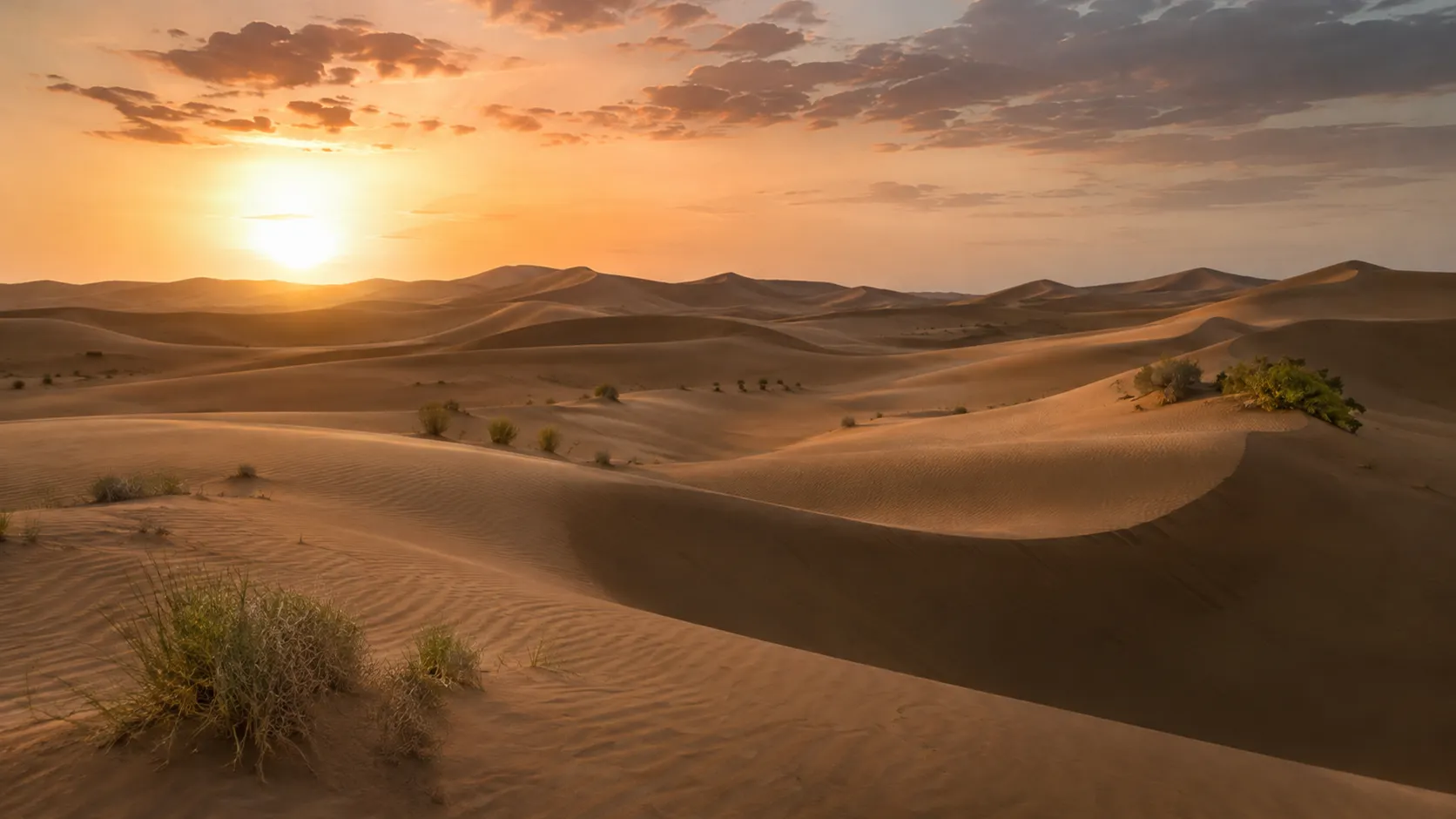
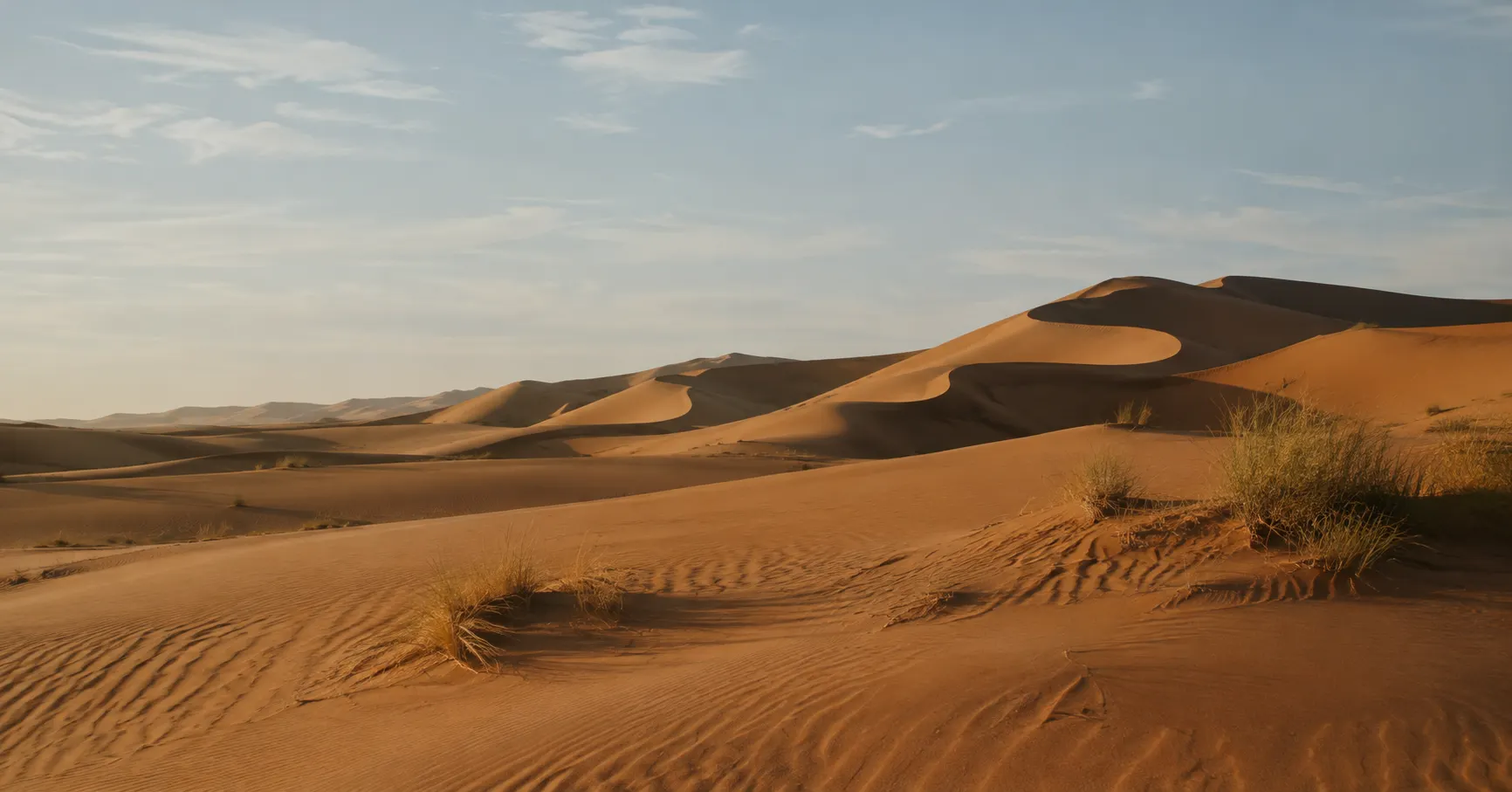
What you see when you arrive is a landscape that changes shape as you move through it. The edges of the erg are low and scattered, with sand piling against scrub and stone. Further in, the dunes gather into long ridges and higher crests, with hollows between them where the wind drops and the sand lies smooth. The colour shifts through the day, pale and flat at midday, then deepening to orange and copper in the late afternoon.
There is no village in the dunes and no road to them. That remoteness is what makes Erg Chigaga feel so different from more accessible dune fields: getting there is part of the journey, and once you arrive, the only sounds are the wind and your own footsteps.
Chigaga, Chegaga, Chgaga: one place, several spellings
You will see the name written in many ways: Erg Chigaga, Erg Chegaga, Erg Chgaga, sometimes Shigaga. The differences come from transcribing a spoken name into Latin letters, and none of them is more correct than the others. They all point to the same dunes.
On this site, we use Erg Chigaga for the place and keep Chegaga in the names of our tours. If you are searching maps or guidebooks, try more than one spelling.
Getting there: by piste only
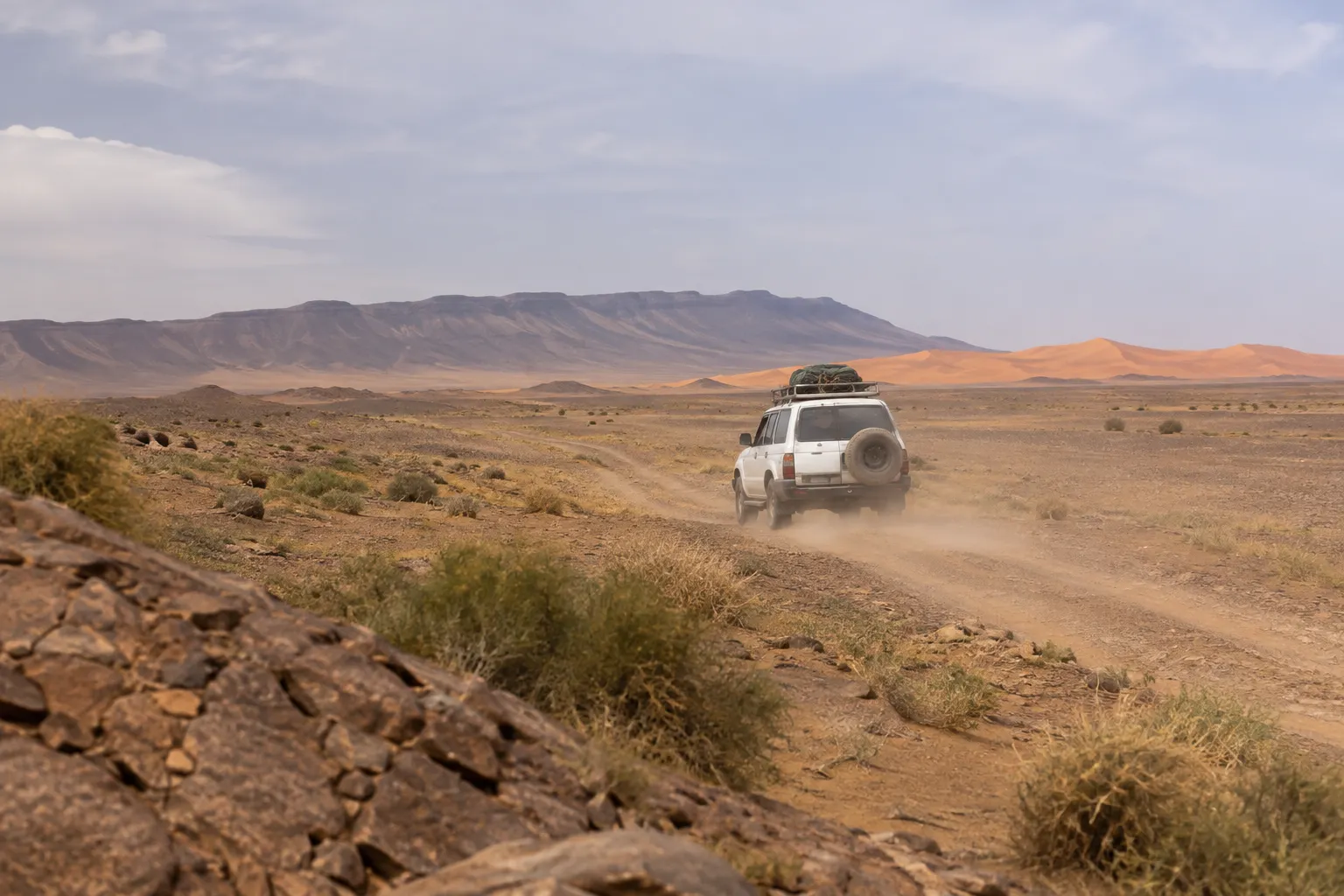
Every approach to Erg Chigaga ends on desert tracks. These pistes cross stony ground, dry riverbeds, patches of soft sand and, depending on the year, damp or muddy low areas. Conditions change with the seasons and especially after rain, and tracks shift as drivers find firmer lines. This is why a 4x4 and a driver-guide who knows the area matter more than the vehicle alone: the right line, at the right time of day, makes the difference between a smooth crossing and a long afternoon digging out.
How long the drive takes depends on your starting point, the state of the tracks and how often you stop. We confirm it with you when you plan the trip.
From M’Hamid, in the east
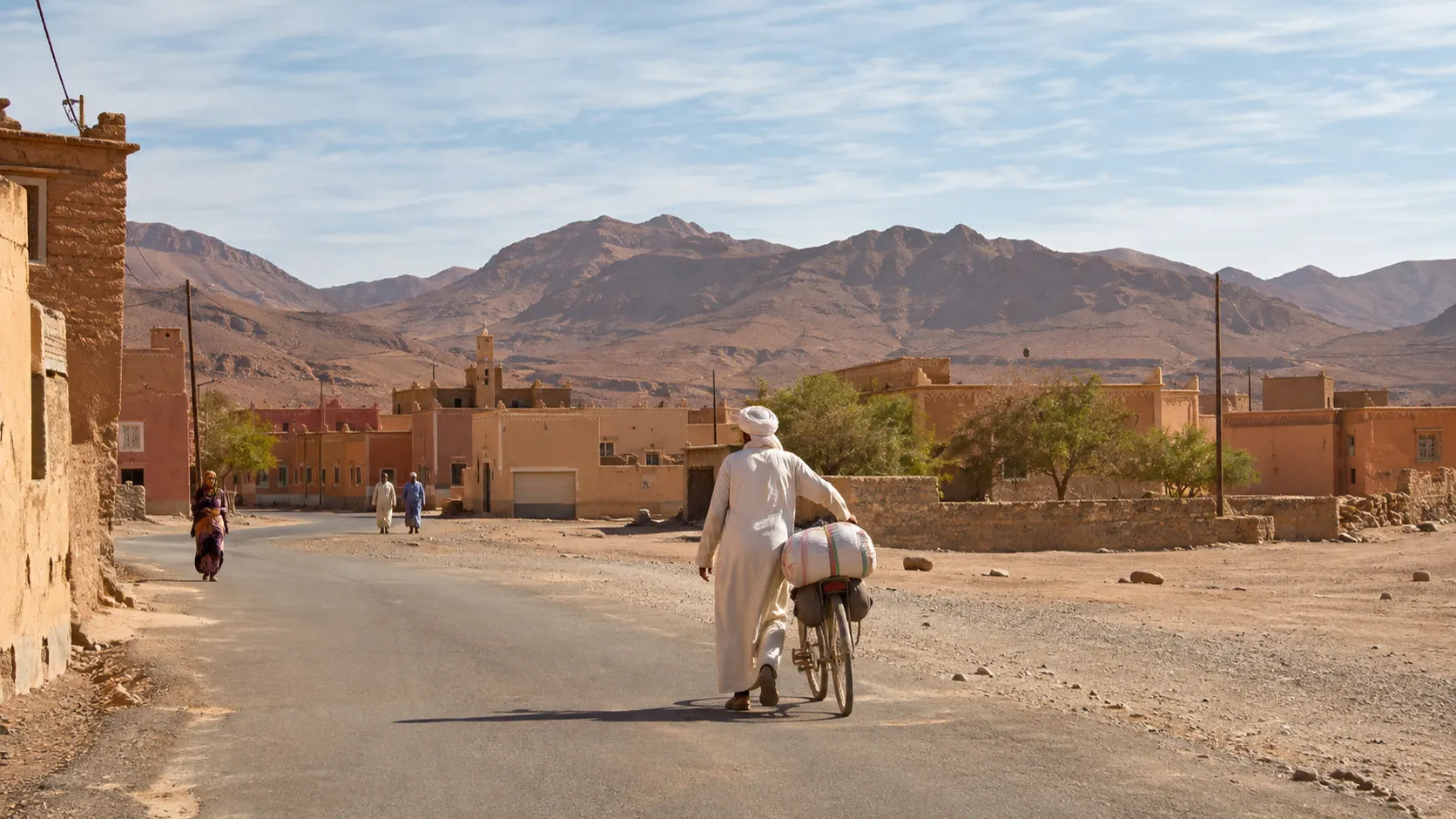
M’Hamid, at the end of the road through the Drâa valley beyond Zagora, is the best-known gateway to Erg Chigaga. From there, pistes head west across the plains to the dunes. It is a well-trodden approach, convenient if you are already travelling through the Drâa valley, and many camps and tours use it.
From Foum Zguid, across Lake Iriki, in the west
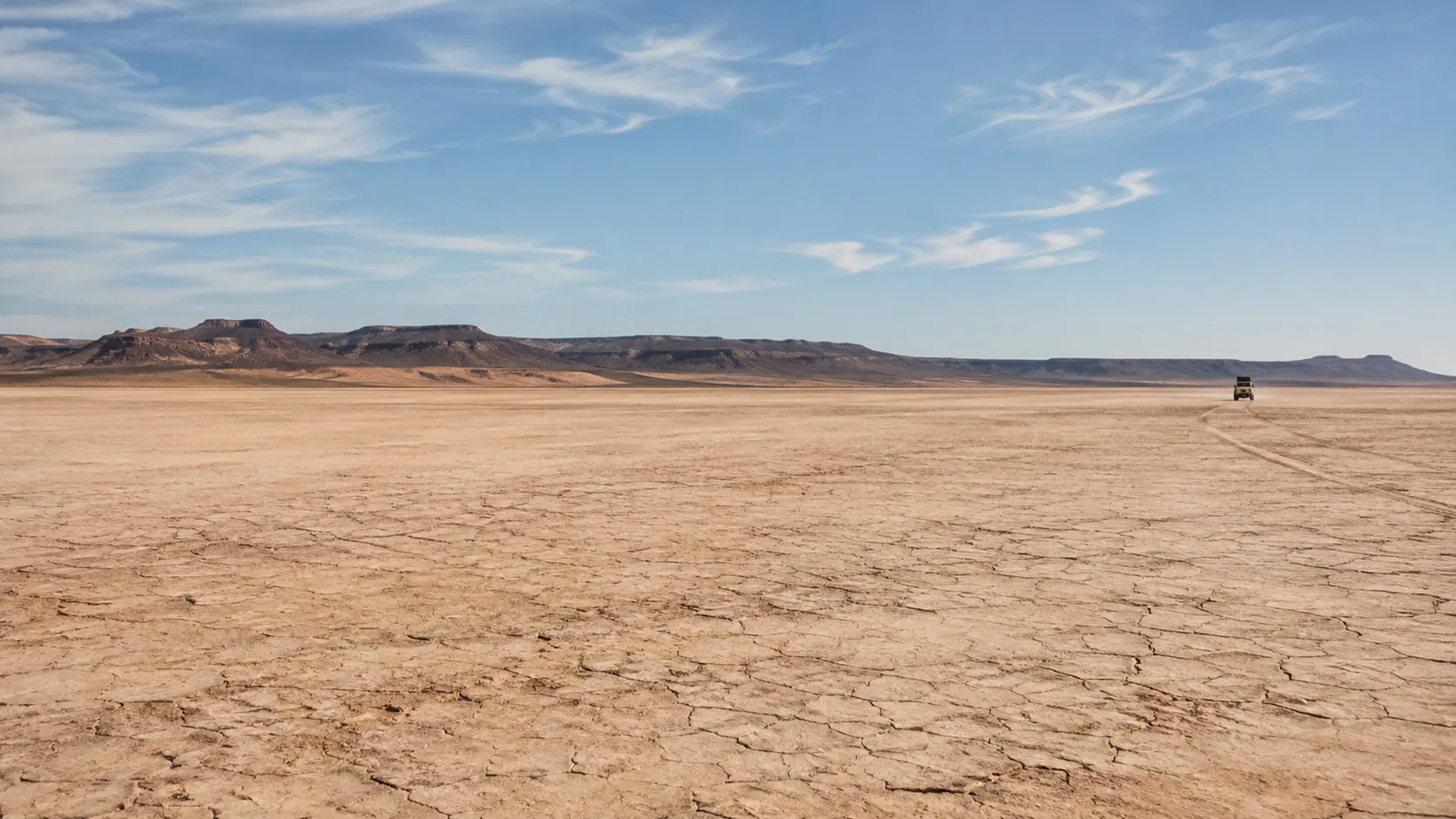
From Foum Zguid, the route runs south and east across the open plains and the Iriki basin before reaching the dunes from the west. This is the approach we use. It tends to be quieter than the eastern side, and it adds something the M’Hamid route largely misses: the crossing of the lake basin itself, a vast flat floor that has been dry for most of recent decades, received water after heavy rain in September 2024, and changes from season to season. Before you travel, ask us how the basin looks at the moment.
Our Foum Zguid to Erg Chigaga route guide describes this approach step by step.
On foot or by camel
The dunes can also be reached the slow way, walking or with a camel caravan over several days. It is a very different experience: you cross the desert at its own pace, camp along the way and arrive on foot. If this interests you, ask us about walking and camel treks; we will tell you honestly what we can arrange.
What you do in the dunes
A night in Erg Chigaga does not need a programme. The best moments come from the light, the silence and the time to enjoy them. A typical stay unfolds like this.
Late afternoon: arrival and the walk up. You reach the dunes as the heat begins to ease. After settling at the camp, it is time to climb. Walking in soft sand is harder than it looks: take your time, follow the firmer side of a ridge and step into the footprints of whoever is ahead. Barefoot is pleasant once the sand has cooled; in warmer months, keep your shoes on until late in the day.
Sunset on the ridges. From the top of a ridge, the dunes stretch in every direction and the shadows lengthen across them. This is the moment most people remember. Find a spot, sit down and watch the colours change; there is no need to hurry back.
Evening and night. After dark, dinner at the bivouac, tea, conversation. Far from any town lights, the night sky is very dark, and on a clear night the stars reach right down to the horizon. Bring a warm layer: the temperature drops quickly once the sun goes down, even when the day was hot.
Sunrise. Get up before the light. The dunes are cool and still, their surfaces often smoothed overnight by the wind. Climbing a nearby crest to watch the sun come up is the perfect counterpoint to the evening before, and well worth the early start.
On a three-day tour, the extra time lets you walk further into the erg, rest in the shade during the hottest hours and enjoy a second evening without thinking about the drive back.
Sleeping in the dunes: camps and bivouacs
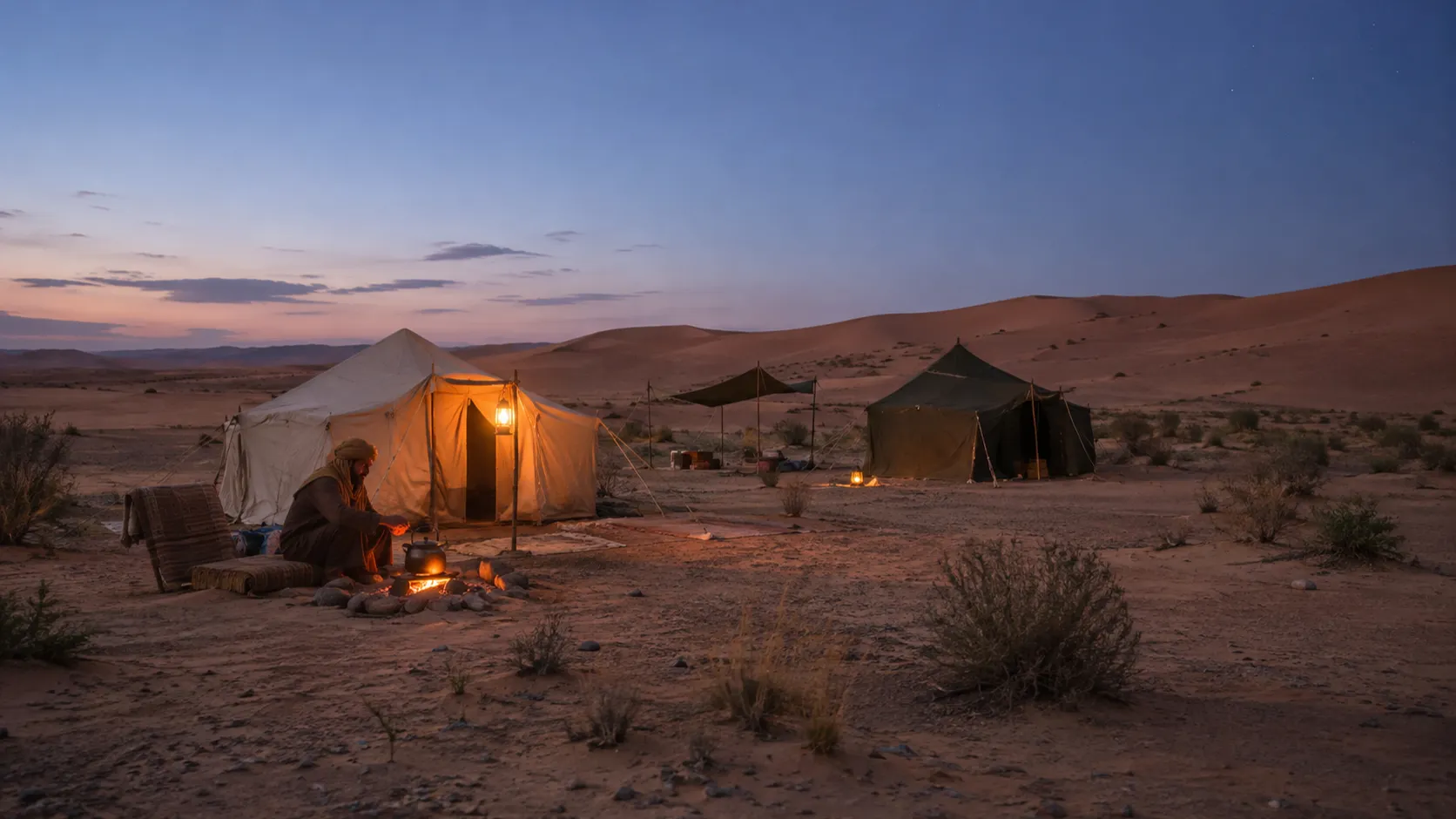
Around Erg Chigaga there are camps of different kinds, from simple bivouacs to more comfortable set-ups. Tents, bedding and washing facilities vary a great deal from one camp to another, so it is always worth asking exactly what to expect rather than relying on a general description.
Our overnight tours include bivouac nights in the Chegaga dunes. The details of the camp, including tent, bedding and bathroom arrangements, are confirmed in your written quote, along with meals. Our desert bivouac page explains how a night in camp works and what to ask before you go.
Whatever the camp, a few things are the same: nights in the desert are dark, quiet and often colder than you expect, and a good warm layer and a small torch make all the difference.
When to go
- Spring and autumn are the most comfortable seasons for most travellers: warm days, cool nights, good light. Wind can lift the sand at any time, but it tends to be more common in spring.
- Summer is very hot. The middle of the day in the open is hard going, and the sand itself becomes hot underfoot. If you come in summer, plan to be active early and late and to rest in between.
- Winter brings pleasant, clear days but cold nights in the dunes. With the right clothing, it can be a wonderful time to visit.
Rain is rare but can transform the tracks. If there has been rain in the region, the route, especially the crossing of the Iriki basin, may need to be adjusted. We will tell you before you leave.
What to bring
- Clothes for heat and cold: light, covering clothes for the day; a fleece or warm jacket for the evening and early morning.
- Head and eye protection: a hat or a scarf you can wrap around your face, and sunglasses.
- Sun cream and lip balm, even in winter.
- Comfortable shoes that you do not mind filling with sand, plus sandals for camp if you like.
- A small torch or headlamp for moving around camp at night.
- A refillable water bottle. Your guide will tell you what water is provided.
- A bag to protect your camera and phone from fine sand. Do not count on phone signal in the dunes.
- Cash for anything not covered in your quote, such as tips.
Safety in the sand
The desert is safe when it is treated with respect.
- Drink regularly, before you feel thirsty, especially when walking on the dunes.
- Avoid the hottest hours in summer; rest in the shade and walk when the light softens.
- Stay within sight of the camp when you walk alone, and tell someone where you are going. Dunes look alike, and it is easy to lose your bearings, especially at dusk.
- Take care on the steep faces. Sand can slip under your feet; go down slowly, at an angle.
- Follow your guide’s advice on wind, heat and the state of the tracks. If they suggest changing the plan, there is a good reason.
- Do not set off into the desert alone by car. The pistes are not marked like roads, and help can be a long way off.
Travelling responsibly
Erg Chigaga’s appeal is its emptiness, and that depends on how visitors behave.
- Stay on established tracks. Vehicles should follow existing pistes rather than cutting new lines across the desert.
- Pack out all your litter, including small items like cigarette butts and tissues. Nothing breaks down quickly in this climate.
- Keep noise down at night, out of respect for others and for the silence itself.
- Leave the sand, stones and plants where they are.
- Ask before photographing people, including camp staff and anyone you meet along the way.
Choosing your trip
- Two days from Foum Zguid to Erg Chegaga: the classic crossing of the Iriki basin, an evening and a bivouac night in the dunes, sunrise.
- Three days from Foum Zguid to Erg Chegaga: the same route at a slower pace, with two nights in the desert.
- Route guide: Foum Zguid, Lake Iriki and Erg Chigaga: how the western approach unfolds, stage by stage.
- A night in a desert bivouac: what to expect from camp life.
When you have chosen, send us your dates. We will reply with a written quote setting out the itinerary, what is included and the conditions.
Questions travellers ask
Is it Erg Chigaga or Erg Chegaga?
Both. The name comes from a spoken word that has been written in Latin letters in several ways: Chigaga, Chegaga, Chgaga and others. They all refer to the same dunes. We use Erg Chigaga for the place and keep Chegaga in the names of our tours.
Can I drive to Erg Chigaga in a normal car?
No. There is no paved road to the dunes. The approaches are desert pistes with soft sand, stony stretches and, after rain, mud. They need a 4x4 and, above all, someone who knows the tracks. Travelling with a driver-guide is by far the safest way to go.
Is Erg Chigaga better approached from Foum Zguid or from M'Hamid?
Both work. M'Hamid is the better-known gateway on the east side. Foum Zguid, on the west, tends to be quieter and adds the crossing of the Lake Iriki basin on the way. If you are coming from Ouarzazate or Agadir, Foum Zguid is often the natural start.
Is one night in the dunes enough?
One night gives you the essentials: the late afternoon light, sunset from a ridge, a night under the stars and sunrise. Two nights let you slow down, walk further into the dunes and simply enjoy being there rather than arriving and leaving.
What is the best time of year to visit?
For most people, spring and autumn are the most comfortable. Summer is very hot in the middle of the day; winter days are pleasant but nights in the dunes can be cold. Wind can lift the sand in any season, more often in spring.
Are camel rides and sandboarding included?
Not by default. If either matters to you, mention it in your request and we will say in your written quote what is possible on your dates.
Sources
Facts on this page were checked against the sources below. Conditions in the desert change — ask us for a current report before you travel.
- A Deluge for the Sahara — NASA Earth Observatory, consulted 11 November 2026
First published ·Last updated