At a glance
- Where you sleep on our trips
- A bivouac in the Erg Chigaga dunes, on our 2- and 3-day tours
- Darkest nights
- Around the new moon; check a moon calendar for your dates
- Brightest part of the Milky Way
- Generally better placed in the warmer months than on winter evenings
- Clear sky on your night
- Never guaranteed: dust, wind and cloud can all intervene
- Telescope or astronomy guide
- Ask us; confirmed in your written quoteconfirmed when you plan
The short answer
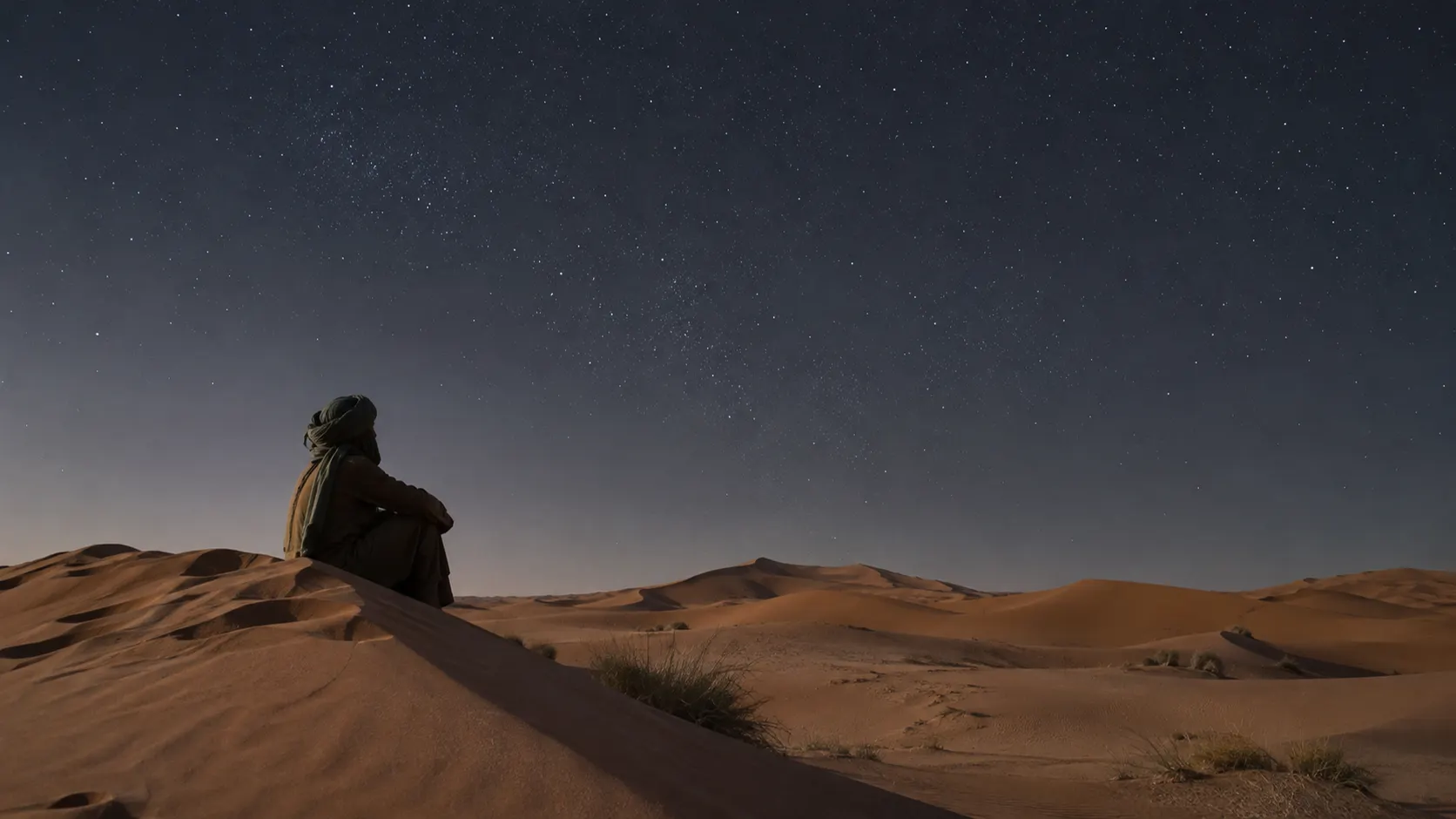
For the best chance of a sky full of stars in Erg Chigaga, three things matter more than anything else: little or no moon, clear and calm air, and some distance from lights, including your own. Aim for dates near the new moon, choose a season that suits you (autumn to spring is the most comfortable for most travellers), and once you are at camp, walk a short way out into the dark and give your eyes time.
Nothing about the weather can be promised. Dust, wind or cloud can soften the sky on any given night. But when the conditions line up, a night in the dunes is one of the simplest and most striking things you can do in the Moroccan desert.
Why the dunes feel so dark
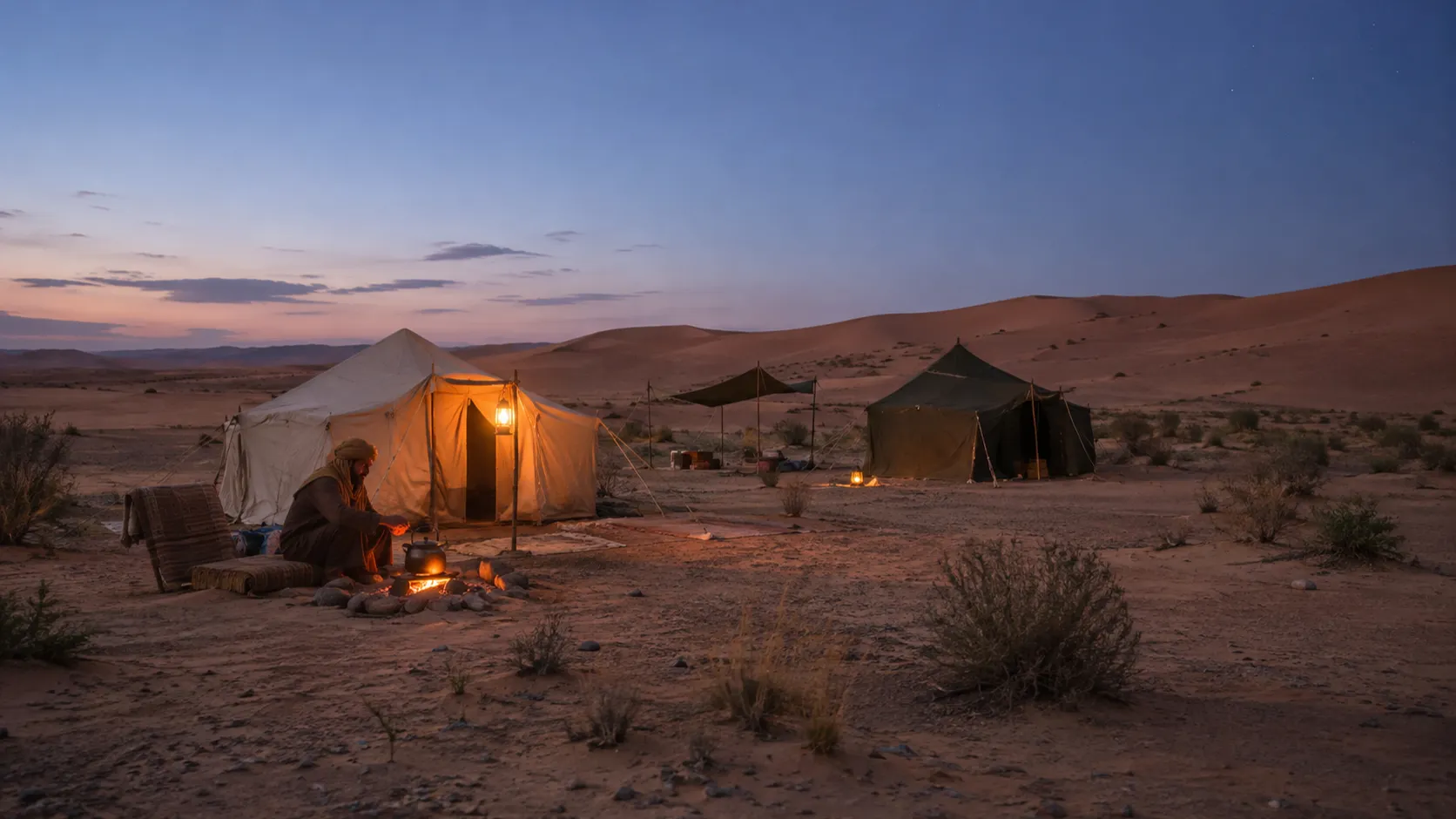
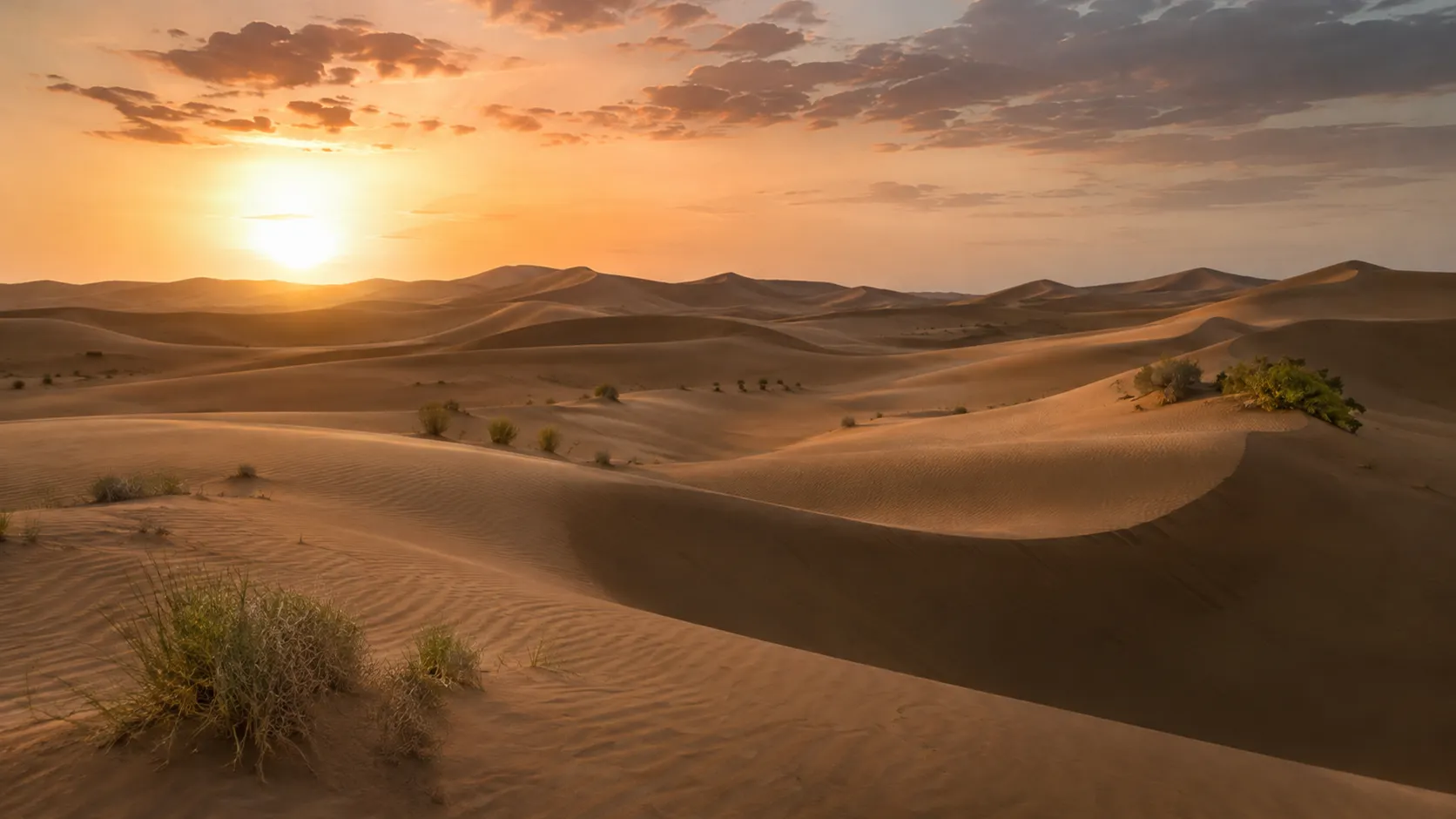
Erg Chigaga is a remote dune sea with no village inside it and no paved road leading to it. Towns are far off, and the few lights in the area belong to camps and the occasional vehicle. Over open sand, with a low, unbroken horizon, the sky simply has very little competition.
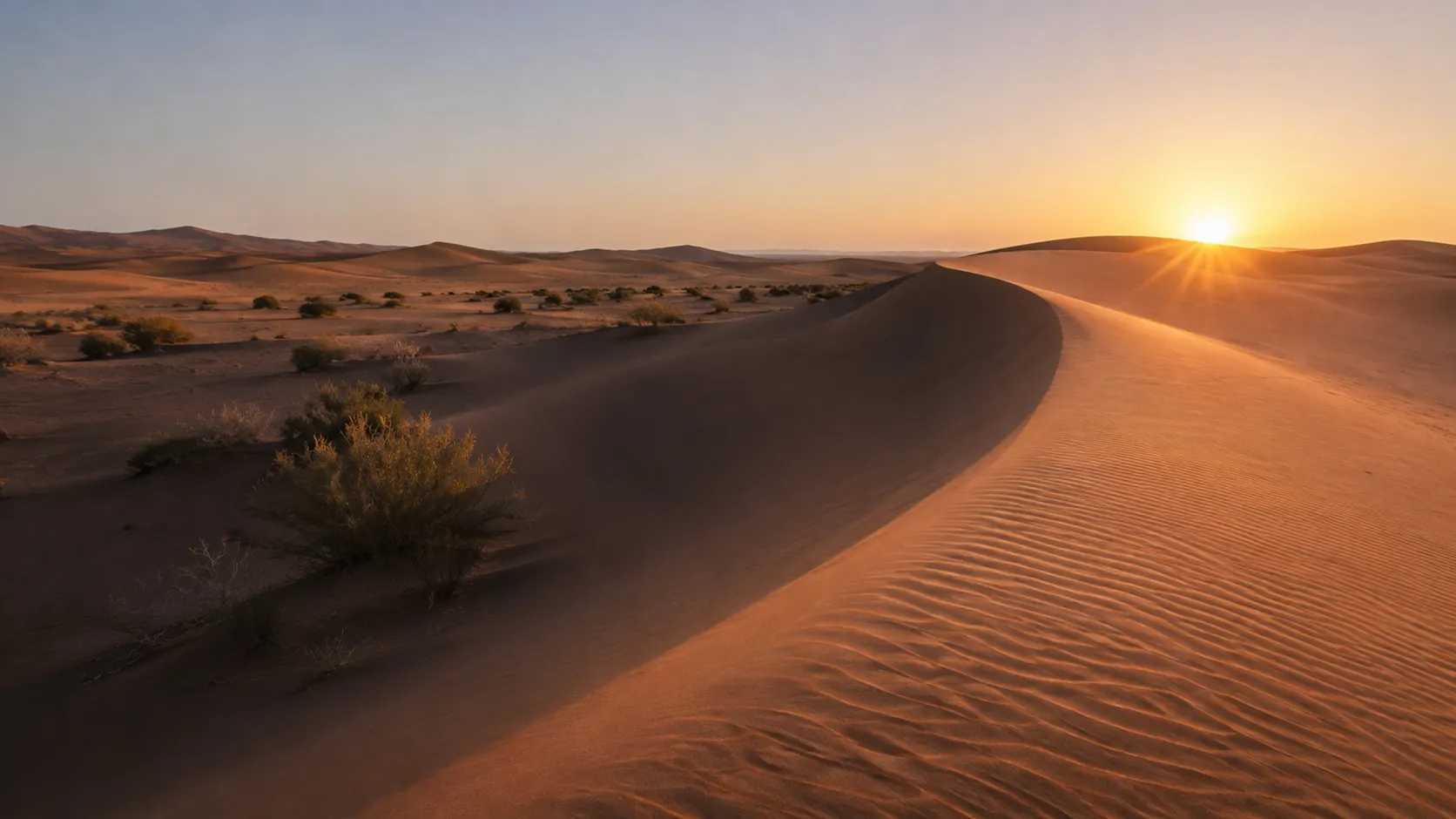
The desert air also tends to be dry, which helps on clear nights. And the landscape itself plays a part: from the top of a ridge you see a wide sweep of sky, right down to the horizon in most directions. Our Erg Chigaga guide explains where the dunes are and how they are reached.
Moon phase: the one thing you can plan
The moon is the brightest object in the night sky, and it changes everything. When it is full or nearly full, its light spreads across the whole sky and washes out the fainter stars. Around the new moon, the sky is at its darkest all night long.
Between the two, the timing matters. A waxing moon (growing towards full) is in the sky in the evening and sets later in the night, so the darkest hours come after it sets. A waning moon rises later in the night, so the evening is darker and the moon appears towards the early hours. A thin crescent near either side of the new moon barely affects the view.
Moon phases follow a regular cycle and are published well in advance. Check a moon calendar for your dates before you book. If dark skies are your main reason for coming, tell us, and we can talk about which of your possible dates looks best.
The full moon has its own beauty
A full moon night is not a wasted night. The dunes turn silver-grey, the ridges cast sharp shadows and you can often see the shape of the land far around you. Only the brightest stars and planets remain, but the landscape itself becomes the show. Many people find it one of their favourite nights in the desert.
The sky through the seasons
The stars overhead shift through the year, and so do the conditions for watching them. Our best time to visit guide covers the weather in detail; here is what it means for the night sky.
- Winter (roughly December to February). Nights are long and often clear and dry, which makes them excellent for stars, but they are cold, especially in the dunes. The bright winter constellations, including Orion, are well placed in the evening. The fainter, outer part of the Milky Way runs across the sky.
- Spring (roughly March to May). Nights grow milder. Spring is commonly reported as the windiest season, and dust in the air can leave a haze, especially low down near the horizon.
- Summer (roughly June to August). Nights are warm and shorter. In the northern hemisphere, the brightest region of the Milky Way is generally better placed in the warmer months, so this is when it tends to be most impressive. Days are very hot, so trips need adapting.
- Autumn (roughly September to November). The heat eases and nights cool down. Early in the season the bright part of the Milky Way can still be seen in the evening, sinking lower as the weeks pass. Late-summer storms can bring cloud early in the autumn.
All of this is general astronomy and a general pattern, not a forecast. A free stargazing app or a planisphere will show you exactly what is up on your nights.
Realistic conditions: what can get in the way
We would rather you arrive with honest expectations than with a photo in mind that the night cannot match.
- Dust and haze. Wind can lift fine sand and dust that stays in the air for a while. The sky may then look paler and the stars near the horizon fade.
- Wind. A windy evening makes it hard to sit out comfortably, and it often comes with dust.
- Cloud. Rare, but it happens, especially around storms.
- The moon. See above; it is often the deciding factor.
- Lights. Camp lamps, a fire, vehicle headlights, phone screens and torches all reduce what you see. Other camps or vehicles may be visible in the distance.
- Cold. In winter, the cold shortens how long most people want to stay out.
There is no guarantee of a perfect sky on any night. A trip with two nights in the dunes simply gives you a second chance.
Camp light etiquette
Your eyes take a while to adapt to the dark, often longer than people expect, and one bright light undoes it in a second. A few habits help everyone.
- Walk a little way from camp to look up, where the lamps and the fire, if there is one, are behind a dune. Stay within sight of the camp and tell someone where you are going.
- Use red or dim light. A head torch with a red mode is ideal. Point it at the ground, never at people’s faces.
- Switch off when you stop. If you are sitting and looking, you do not need a light.
- Turn your phone down. Lower the screen brightness, use a dark or night mode, and keep checking it to a minimum.
- Mind other guests. Not everyone stays up late; keep voices low near the tents.
Your guide knows the camp and the surroundings; follow their advice on where to walk after dark. Our bivouac page explains how a night at camp usually unfolds.
What to bring
- Warm layers, especially from late autumn to early spring: a fleece or down jacket, hat, gloves and warm socks. Sitting still at night feels much colder than walking.
- Something to sit or lie on, such as a small mat or a blanket, if the camp allows you to take one out; ask what is available.
- A head torch with a red or very dim setting. Red film or a red balloon over an ordinary torch works too.
- Binoculars. Ordinary binoculars show far more stars than the naked eye, as well as star clusters and the craters of the moon. Rest your elbows on your knees to keep them steady.
- A stargazing app or a planisphere, downloaded or printed before you leave; do not count on phone signal in the dunes.
- A small tripod or phone clamp if you want to try photos.
- Spare batteries or a power bank, since cold drains batteries quickly. Ask us what charging is available at camp.
Photographing the night sky, simply
You do not need specialist kit to bring home a picture you like.
- Keep the camera completely still. A tripod is best; a bag, a rock or the sand will do at a pinch.
- Use a long exposure. With a camera, open the lens wide, use a long shutter time and raise the sensitivity until the stars appear; very long exposures turn stars into trails. With a phone, use night mode and let it finish.
- Focus manually on a bright star or a distant light, then check by zooming in on the screen.
- Use the self-timer or a remote so pressing the button does not shake the shot.
- Include the dunes. A ridge line, a tent or a person standing still makes the picture.
- Turn off the flash and keep your own light low so you do not spoil other people’s photos.
Then put the camera down for a while. The best part of the night is simply looking.
How stargazing fits our trips
All our tours are private, by 4x4 with a driver-guide, and our overnight trips sleep at a bivouac in the Chegaga dunes. That is where stargazing happens: after dinner, a short walk from camp.
- The 2-day tour from Foum Zguid gives you one night in the dunes, between sunset and sunrise.
- The 3-day tour gives you two nights, which doubles your chances of a clear, calm sky.
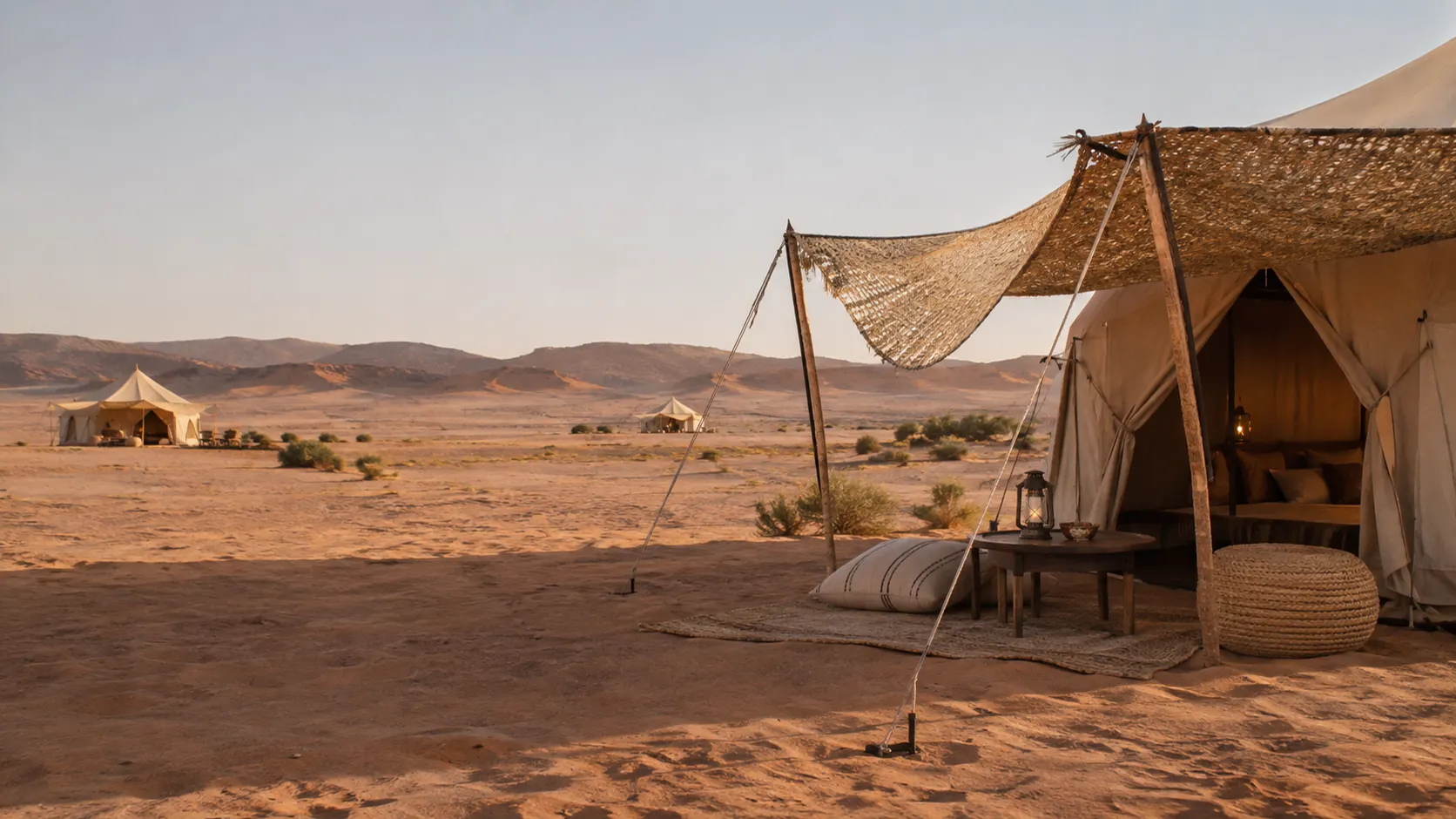
- For how the camp works and what to ask about tents and bedding, see our bivouac page. If you are considering a more comfortable camp, our luxury camps guide lists what to check.
If you would like a telescope, help with the constellations or a night outside the tent, ask us: we will tell you in writing what is possible. When you know your dates, plan your trip and mention the night sky; we will reply with a written quote.
Questions travellers ask
When is the best time for stargazing in Erg Chigaga?
The single biggest factor is the moon. Nights around the new moon are the darkest, so check a moon calendar before you fix your dates. For comfort, autumn to spring suits most travellers, with winter bringing long, often clear nights that are cold. Weather still decides on the night itself, so treat any plan as a good chance, not a promise.
Can you see the Milky Way from the dunes?
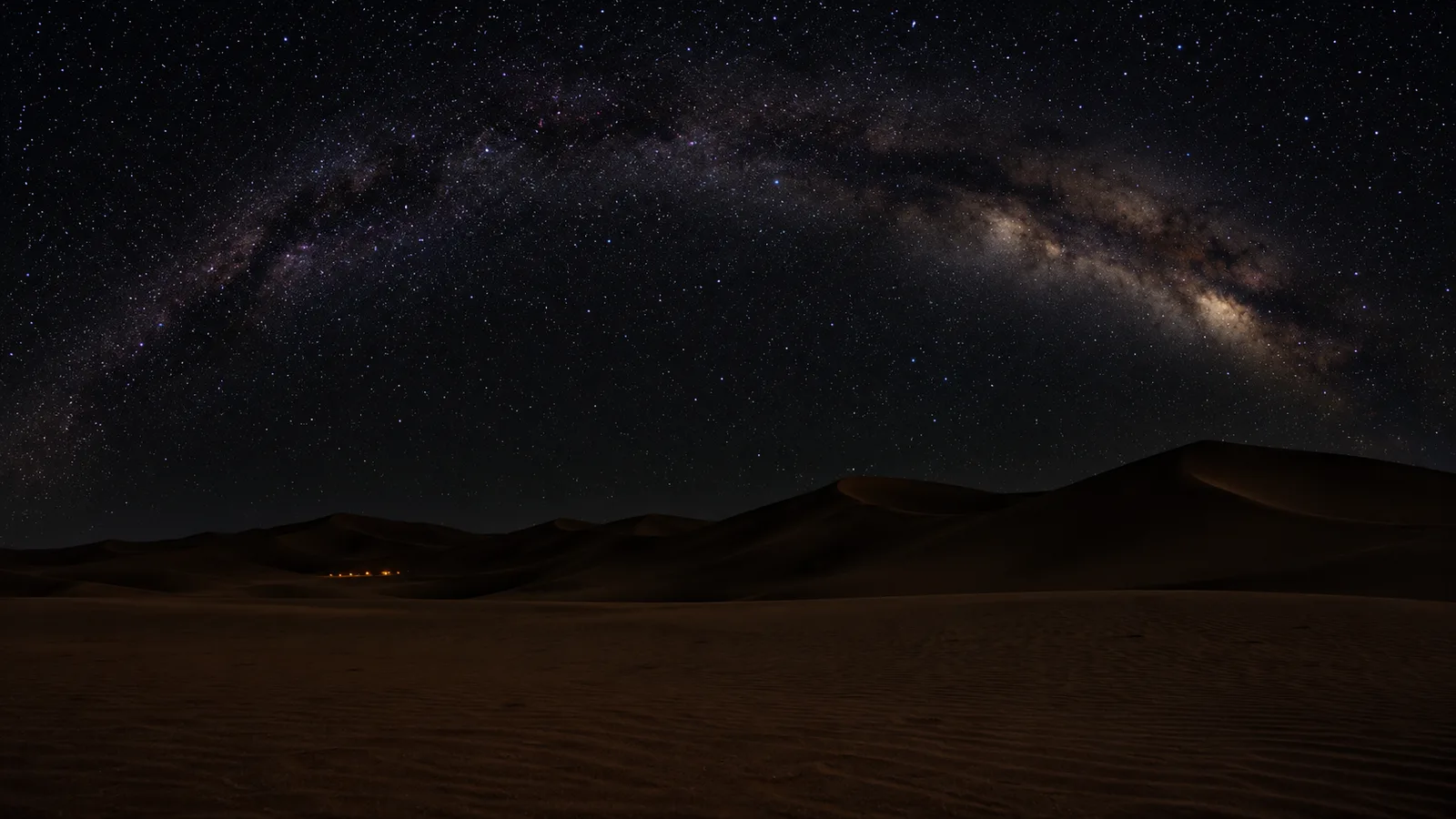
On a clear night with little or no moon, far from camp lights, the Milky Way is usually easy to pick out from a dark desert like this. In the northern hemisphere its brightest region is generally better placed in the warmer months and is low or already set on winter evenings, when a fainter stretch of it runs across the sky instead. Dust or haze can soften it at any time of year.
Is a full moon night a wasted night?
Not at all. A bright moon washes out the fainter stars, but it lights the dunes almost like a dim day, throws long shadows off the ridges and makes a walk near camp easy and beautiful. Only the brightest stars and planets stay visible. If faint stars are your priority, choose dates around the new moon; if you simply want a memorable night in the desert, any phase works.
Do you provide a telescope or an astronomy guide?
We don't promise either on this page. If observing with a telescope or having someone explain the constellations matters to you, tell us when you get in touch and we will say in writing what is possible for your dates. Binoculars of your own are a simple, rewarding alternative.
Can I photograph the stars with my phone?
Often, yes. Many recent phones have a night mode that works well if the phone is perfectly still. Rest it on a small tripod, a bag or the sand, use the self-timer so your finger does not shake it, turn off the flash and give the phone time to finish the shot. Results vary a lot between models, so try it on your first evening.
Can I sleep outside, under the stars, instead of in a tent?
It is a common wish, and whether it can be arranged depends on the camp, the season and the weather on the night. Ask us when you plan: we will tell you honestly what is possible and what bedding you would need, and confirm it in your written quote. In winter, nights in the open are cold.
Sources
Facts on this page were checked against the sources below. Conditions in the desert change — ask us for a current report before you travel.
First published ·Last updated