At a glance
- Duration
- 1 day
- Start
- Foum Zguid
- Vehicle
- Private 4x4 with driver-guide
- Protected area
- Iriqui National Park (created 1994)
- Water in the lake
- Rare and changeable: ask for a current reportconfirmed when you plan
- Drop-off
- Confirmed in your quoteconfirmed when you plan
- Price
- On request
Stops
How the trip unfolds
Timings are approximate and adapted to the season and the state of the pistes.
Morning departure from Foum Zguid
Your driver-guide meets you in Foum Zguid in the morning, while the air is still cool and the light is soft. The exact meeting point and departure time are agreed when you book.
Crossing toward the basin
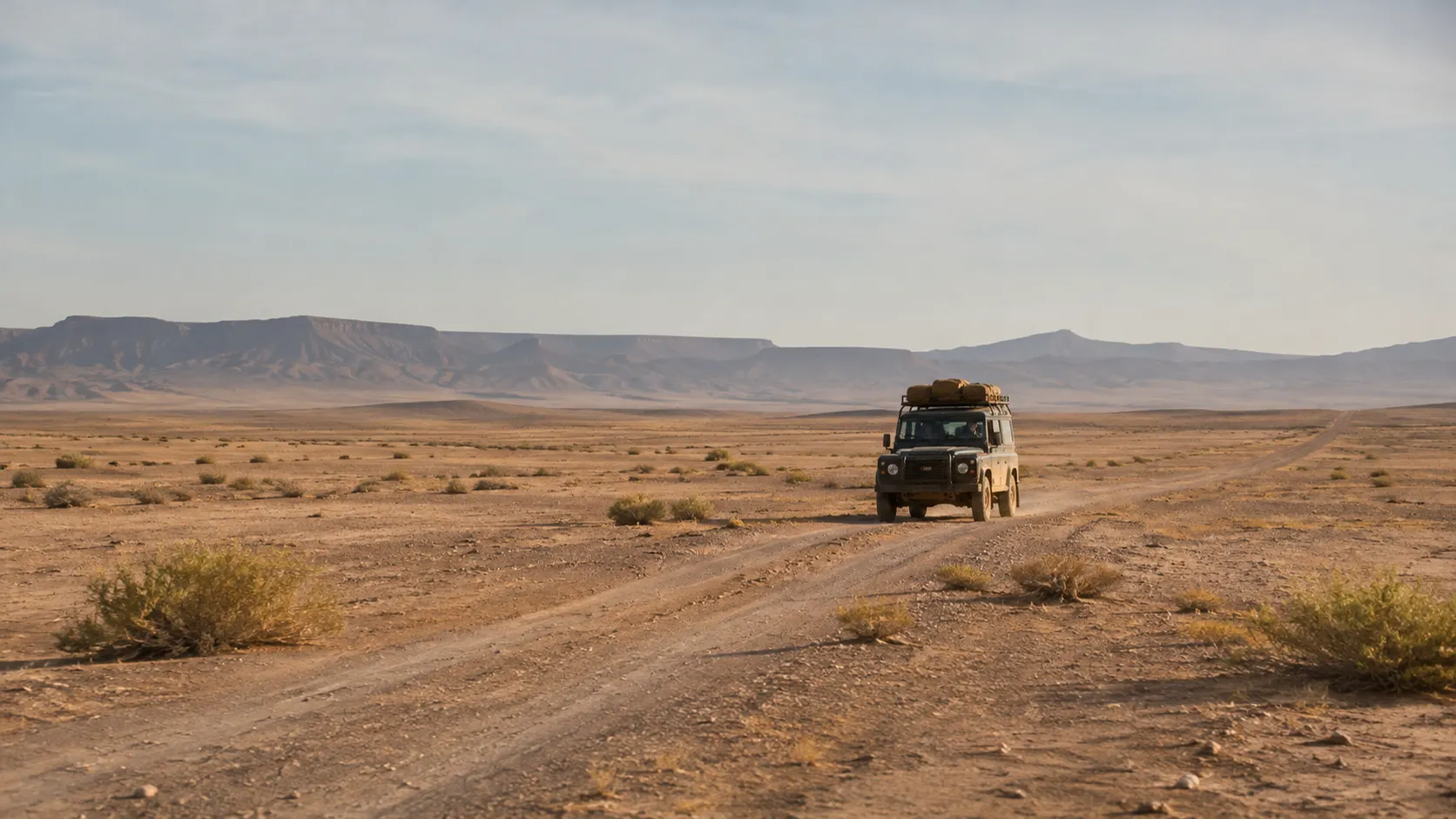
Tarmac soon gives way to piste: hard gravel, ruts and sandy stretches across open, stony country. Stop whenever you want to take a photo or stretch your legs.
On the lakebed
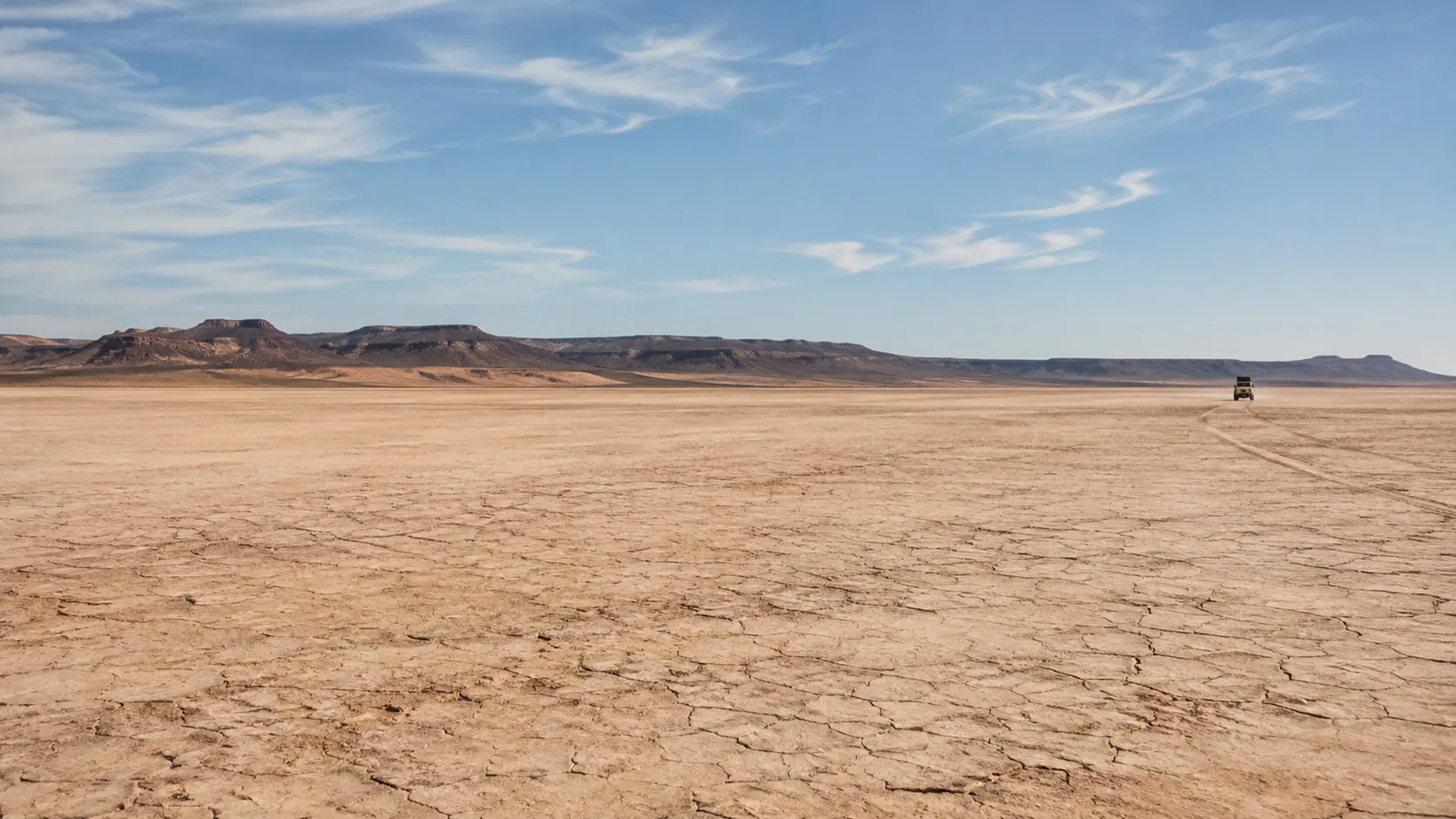
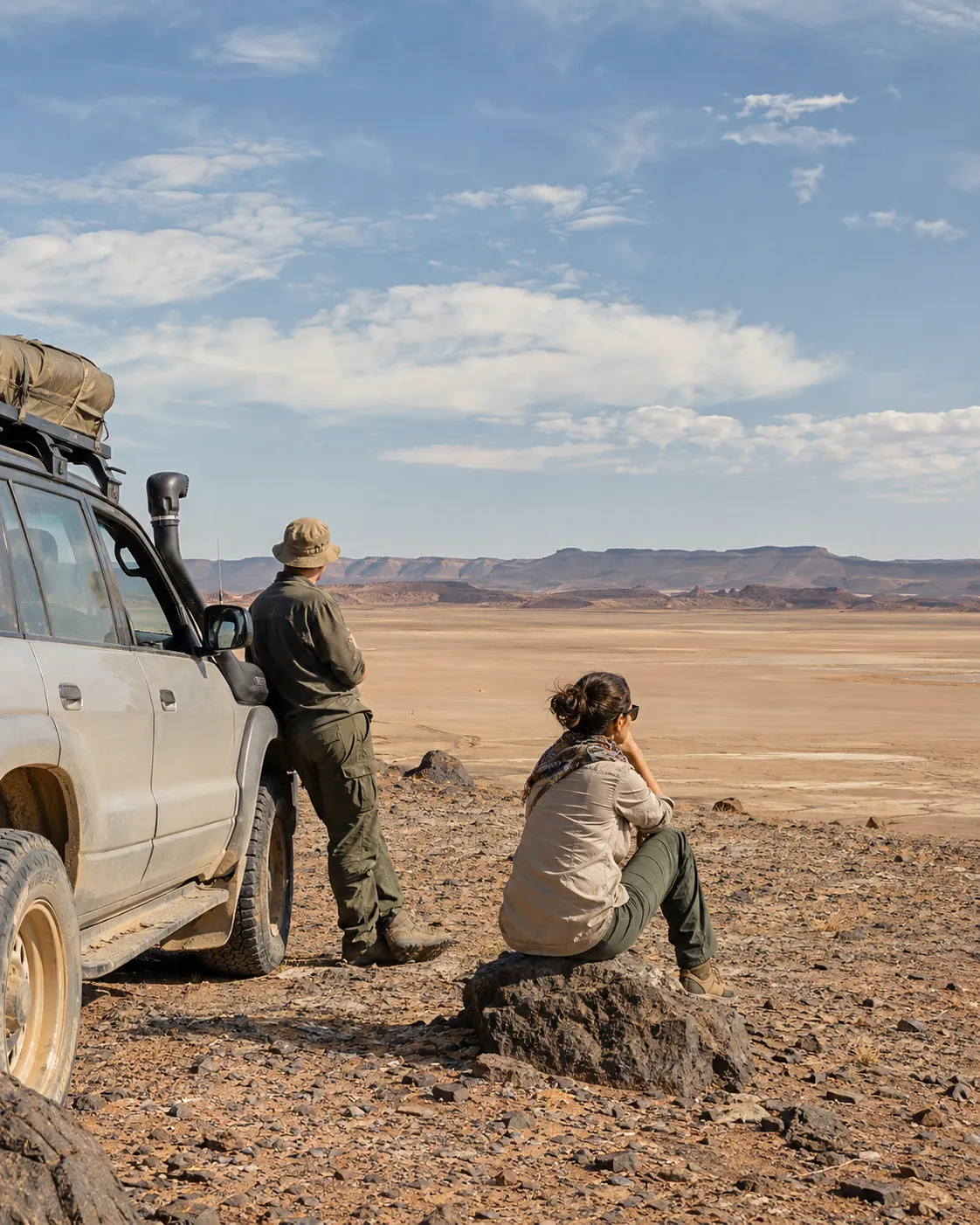
Out on the basin the horizon goes level in every direction. Depending on recent rain the surface can be hard, cracked clay or soft in places; your guide decides where it is safe to drive and where to walk.
Midday break
A shaded pause through the hottest part of the day. When conditions allow, the afternoon can also take in the eroded, coloured hills locals call the Moroccan Colorado; this is confirmed when you plan the day.
Return in the late afternoon
The drive back often has the best light of the day. You return toward Foum Zguid by evening; the drop-off point is confirmed in your written quote.
Who this day trip is for
This is a day for travellers who want to stand in the middle of Lake Iriki rather than look at it from the side of a road. It suits people staying in or passing through Foum Zguid, road-trippers who would rather not take their own car onto desert tracks, photographers, and families who want a real taste of the open desert without spending a night out.
You don’t need any off-road experience. Your driver-guide handles the vehicle, the route-finding and every decision about where it is safe to go. Your part is to look around, ask questions and say when you want to stop.
If you have more time, the lake is also the first great landscape on the way to the dunes. Our 2-day tour to Erg Chigaga crosses the Iriki basin and adds a night at a bivouac in the sand.
What the day feels like
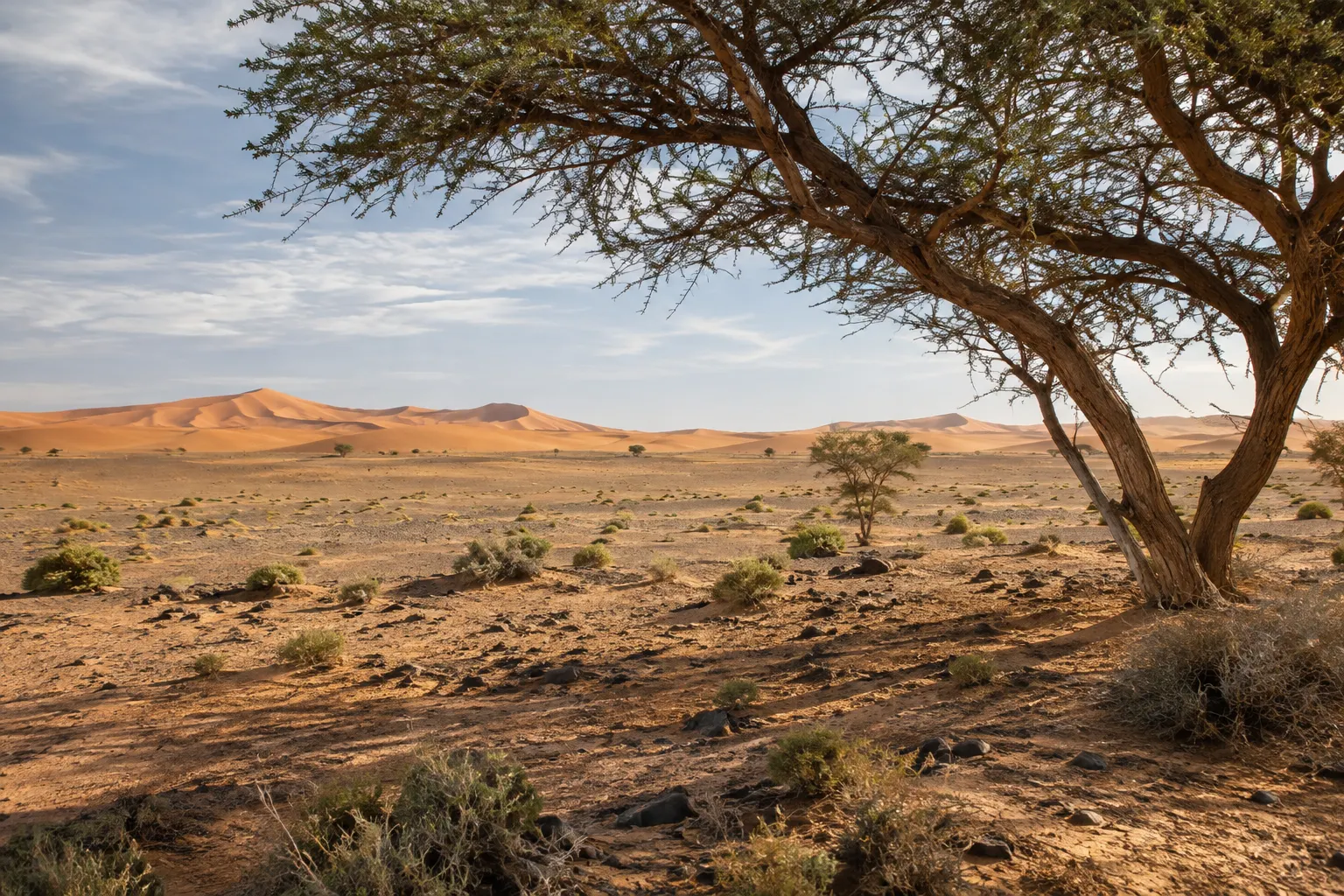
The day starts in Foum Zguid in the morning, when the air is still cool. Within a short while of leaving town, tarmac gives way to piste and the country opens out: stony plain, scattered acacia and scrub, low ridges on the horizon.
The track is a mix of hard-packed gravel, ruts and sandy stretches. It is bumpy in places but, at a sensible pace, not a punishing ride. Expect your guide to slow down, pick a line and occasionally stop to check the ground ahead.
Then the basin. Lake Iriki is an ephemeral lake: for most of recent decades it has been a dry, flat expanse of clay and crust, ringed by sand, scrub and low hills. Standing on it is a strange experience. The horizon goes level in every direction, heat haze blurs the edges, and distances become hard to judge. Many visitors simply walk away from the vehicle for a while and listen to nothing at all.
Midday is for shade and rest. In the afternoon, when conditions allow, the day can take in the eroded, coloured hills that locals call the Moroccan Colorado. Your guide confirms this when you plan the trip, because it depends on the season, the state of the tracks and your own pace. The drive back in the late afternoon is often when the light is at its best.
For the place itself, from its geography to the 2024 rains, read our Lake Iriki guide.
Water, mud and changing conditions
The lake does not look the same every year. Heavy rain in September 2024 sent floodwater into the Iriqui basin; NASA satellite imagery from 10 September 2024 shows water there, and press reports described it as the first in several decades. After rain, parts of the basin and the tracks that lead to it can turn soft, or become impassable for a time.
That is why we never promise a particular view. Before you travel, ask us for a current report on the lakebed and the pistes. On the day, your guide may change the route, skip a section or turn back if the ground isn’t safe. Please trust those calls: a vehicle stuck in wet clay far from town is not the kind of adventure anyone enjoys.
If you are curious about how the route fits together, our map and access guide describes the approach from Foum Zguid in more detail.
Heat and the best season
Southern Morocco is warm for much of the year, and the open basin has no natural shade. The most comfortable months are generally autumn, winter and spring. Winter days are usually pleasant, but early mornings can be surprisingly cold, so pack a warm layer. In summer the midday heat is intense; if you travel then, expect an earlier start, a longer break in the shade and a slower rhythm overall.
Wind is the other variable. Hazy, sandy days can happen at any time of year. They soften the views, but they also make for atmospheric photographs. A scarf over your nose and mouth helps.
What to bring
- A sun hat, sunglasses and high-factor sunscreen.
- Long, light, loose clothing; it protects you far better than shorts and a T-shirt.
- A warm layer for the morning and the drive back, even in the mild months.
- Closed shoes you can walk in on crusty, uneven ground.
- A scarf or buff for dust and wind.
- Any personal medication, and a small first-aid kit if you normally carry one.
- Some cash for small purchases and tips.
- A refillable bottle. Ask when you book what drinking water is carried in the vehicle.
- A power bank for your phone or camera: there is nowhere to charge out on the basin.
Photography on the lakebed
The basin is one of the most photogenic places in the region, but it can also flatten pictures if you shoot at the wrong moment. The low light of morning and late afternoon brings out the texture of the cracked surface and the outline of the hills. At midday everything turns pale and shadowless.
A few practical tips:
- Put a person or the vehicle in the frame. Without something for scale, the emptiness doesn’t read.
- Heat shimmer is strongest when the ground is hot, and it can look like water on the horizon. Enjoy it, but don’t mistake it for the lake filling up.
- Dust gets everywhere. Change lenses inside the vehicle, with your back to the wind.
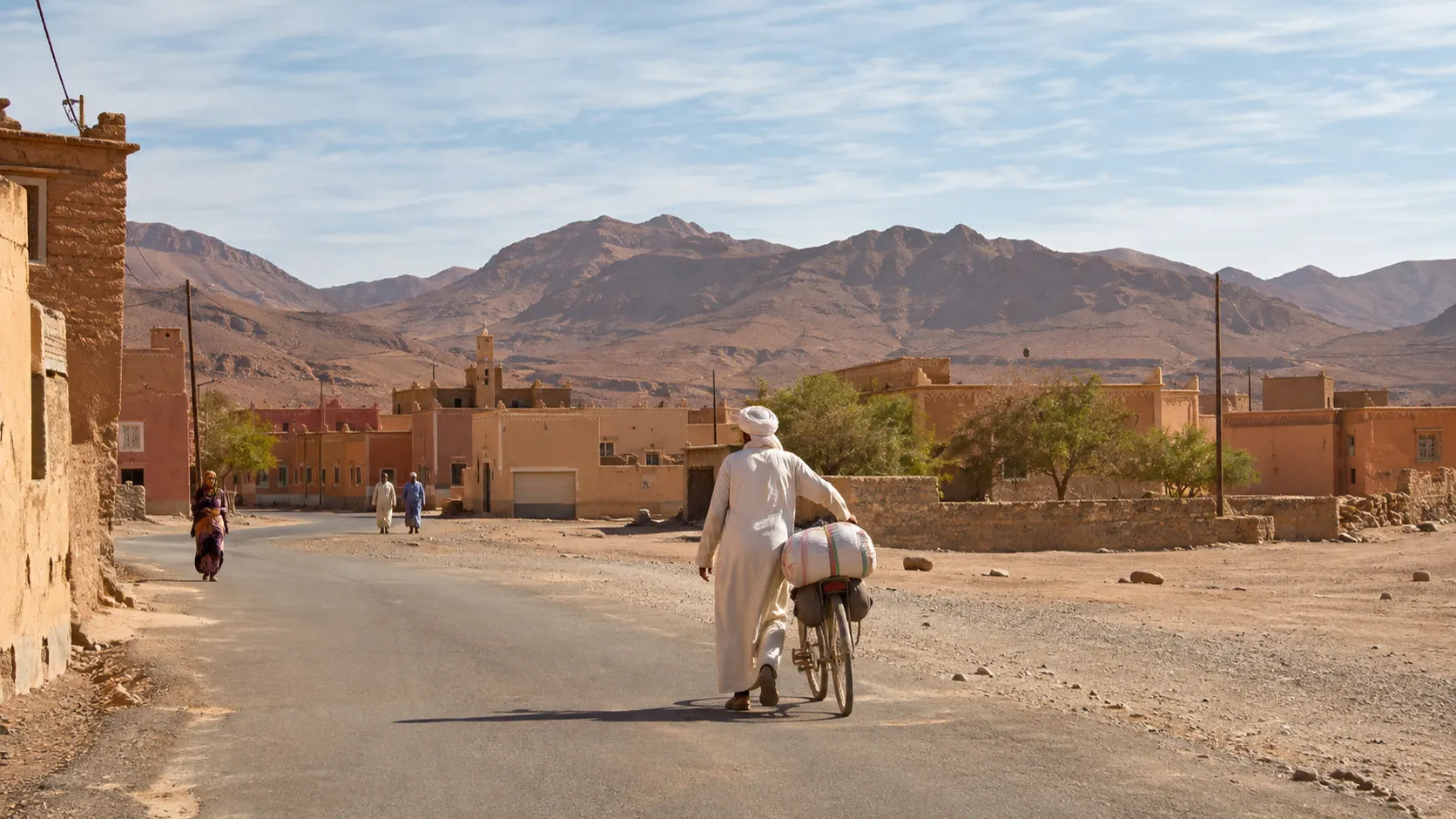
- Always ask before photographing people, including shepherds or families you may pass on the way. A gesture and a smile are enough to ask; accept a no gracefully.
Respecting Iriqui National Park
Lake Iriki lies within Iriqui National Park, created in 1994. It covers roughly 123,000 hectares and protects arid savanna, dunes, salt flats and the temporary wetland of the lake itself. A few simple habits help keep it that way:
- Stay on established tracks. Fresh tyre marks on the crust stay visible for a long time and invite others to follow. Your guide knows which tracks are in use.
- Leave stones, fossils, plants and anything else you find exactly where it is.
- Take all rubbish back to town, including fruit peel and tissues.
- Keep your distance from any animals you see, and never feed them.
- Keep the noise down. The silence is a large part of why people come.
- Drone use is tightly regulated in Morocco. Don’t bring one without checking the rules first, and ask your guide before flying anything.
Children and comfort
Children often love the lakebed: it is a vast space to run around in, with an adult who knows the terrain keeping an eye on things. The real challenges are heat, sun and the time spent in the vehicle on bumpy stretches of piste.
Let us know the ages of any children when you ask for a quote. We will confirm whether a child seat or booster can be provided, and your guide can plan more frequent stops. Bring snacks, a favourite drink and something to do on the drive. Travellers with back problems, pregnancy or reduced mobility should mention it too, so the guide can choose a gentler pace and the smoothest line.
How to request the day trip
There is no instant booking: every day trip is arranged directly with our family team in Foum Zguid. Use Plan my trip or WhatsApp and tell us:
- your preferred date, or a range if you are flexible;
- how many adults and children are travelling, with the children’s ages;
- where you are staying, and whether you are driving in from elsewhere that morning;
- anything you would especially like to see or photograph, and any health or dietary needs.
We reply with a written quote that sets out the price, what is included and the practical details, from the meeting point to the timings and terms, so that nothing comes as a surprise on the day.
Included
- Private 4x4 with a local driver-guide for the day
Not included
- Tips (always at your discretion)
- Drinks other than tea and water
Confirmed in your written quote
We list these separately because we only promise what we can confirm for your dates.
- Meeting point and morning departure time in Foum Zguid
- Whether a midday meal is provided, and what it includes
- Drinking water carried in the vehicle for the day
- Whether the Moroccan Colorado hills can be included, depending on conditions
- Maximum number of travellers per vehicle
- Child seats or boosters for young children
- Languages spoken by your driver-guide
- Drop-off point and approximate return
- Deposit, payment and cancellation terms
- Current state of the lakebed and the tracks leading to it
Gateway town at the Jbel Bani gap
Ephemeral lake basin, Iriqui National Park
Great dune sea, bivouac nights
Questions travellers ask
Will there be water in Lake Iriki when I visit?
Probably not, but nobody can promise either way. Lake Iriki (also spelled Iriqui) is an ephemeral lake that has been a dry basin for most of recent decades. Heavy rain in September 2024 sent floodwater into it, as NASA satellite imagery from 10 September 2024 shows. Conditions change from season to season, so ask us for a current report before you travel.
Do I need any off-road driving experience?
No. Your driver-guide drives the whole day, finds the route and decides where it is safe to go. You simply ride along, stop when you like and ask questions.
What is the best time of year for the day trip?
Autumn, winter and spring are generally the most comfortable. Winter mornings can be cold, so bring a warm layer. In summer the midday heat on the open basin is intense; the day can still run, but with an earlier start and a longer midday break.
Is the day trip suitable for children?
Yes, many children enjoy the open space of the lakebed. Tell us their ages when you ask for a quote so we can confirm child seats and plan more frequent stops. The main things to manage are heat, sun and time in the vehicle.
How much does the Lake Iriki 4x4 day trip cost?
The price is given on request, in a written quote based on your date, the number of travellers and what you would like to include. There are no hidden extras: the quote sets out what is and isn't included.
Can I combine the lake with a night in the dunes?
Yes. Our 2-day tour from Foum Zguid crosses the Iriki basin on the way to the Erg Chigaga dunes and spends the night at a bivouac there, with dinner and breakfast.
Sources
Facts on this page were checked against the sources below. Conditions in the desert change — ask us for a current report before you travel.
- A Deluge for the Sahara — NASA Earth Observatory, consulted 11 November 2026
- In half a century: rare Saharan floods fill dry lake beds in Morocco — Morocco World News, consulted 11 November 2026
- Iriqui National Park — Wikipedia, consulted 11 November 2026
- Iriqui National Park — Lonely Planet, consulted 11 November 2026
First published ·Last updated