At a glance
- Where
- Lower Drâa valley, south of Zagora, at the end of the paved road
- Role
- The usual eastern gateway to Erg Chigaga
- Our desert tours start from
- Foum Zguid, on the western side
- Listed departure cities
- Marrakech, Ouarzazate, Agadir, Zagora, Foum Zguid (on request)
- Start or finish in M'Hamid
- Studied on request, confirmed in the written quoteconfirmed when you plan
- Vehicle
- Private 4x4 with a driver-guide
- Driving times
- Given for your dates in the quoteconfirmed when you plan
The short answer
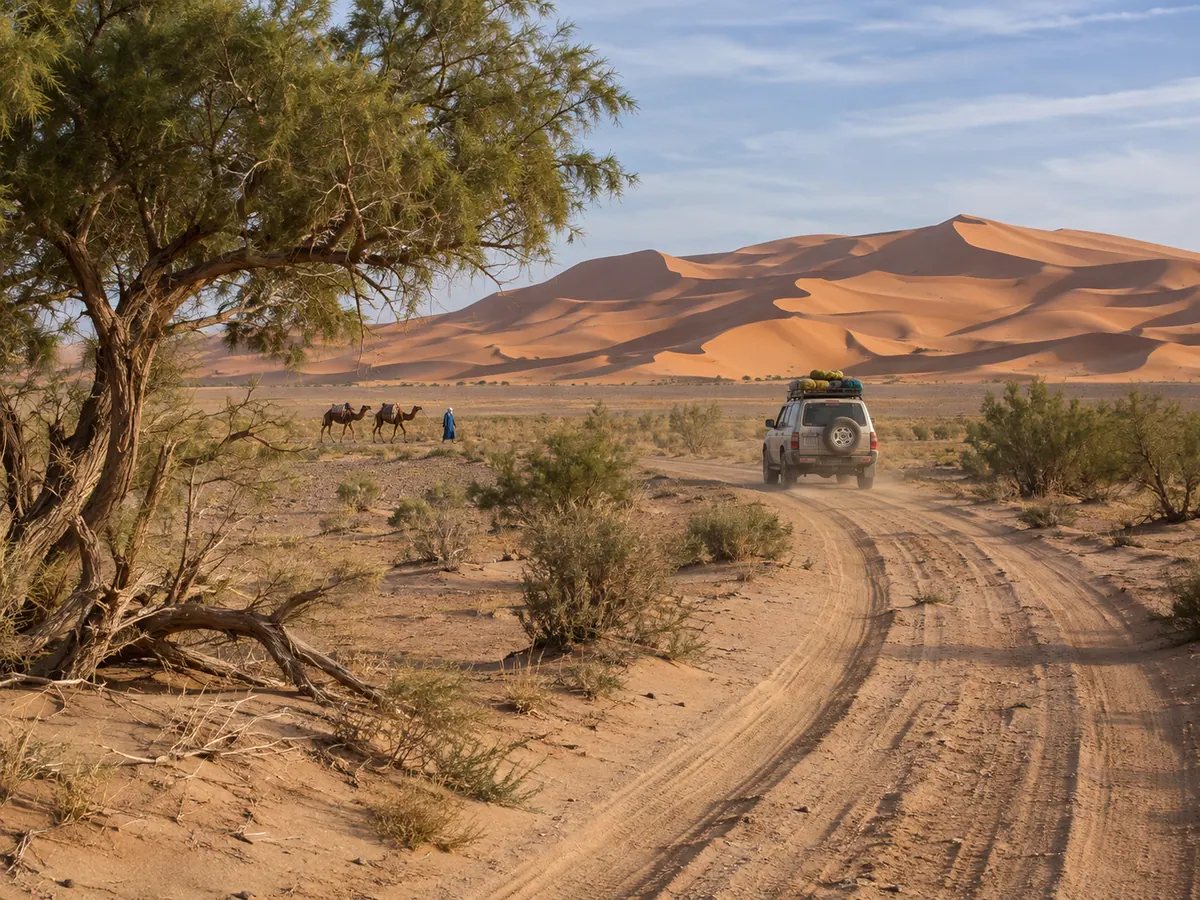
M’Hamid is where the road ends. The paved road that follows the Drâa valley south from Zagora stops here, and beyond the last palm groves the pistes head west towards the dunes of Erg Chigaga. That is why M’Hamid is the best-known gateway to the erg, and why so many desert trips in this part of Morocco start or end there.
It is not the only gateway. On the other side of the desert, Foum Zguid opens the western approach, across the basin of Lake Iriki. That is the side our tours start from. The most distinctive way to see this desert is to link the two: enter on one side, sleep in the dunes, and leave on the other.
Our listed departure cities are Marrakech, Ouarzazate, Agadir, Zagora and Foum Zguid. M’Hamid is not among them, so a start or finish there is studied on request and only confirmed in your written quote.
M’Hamid El Ghizlane in a few lines
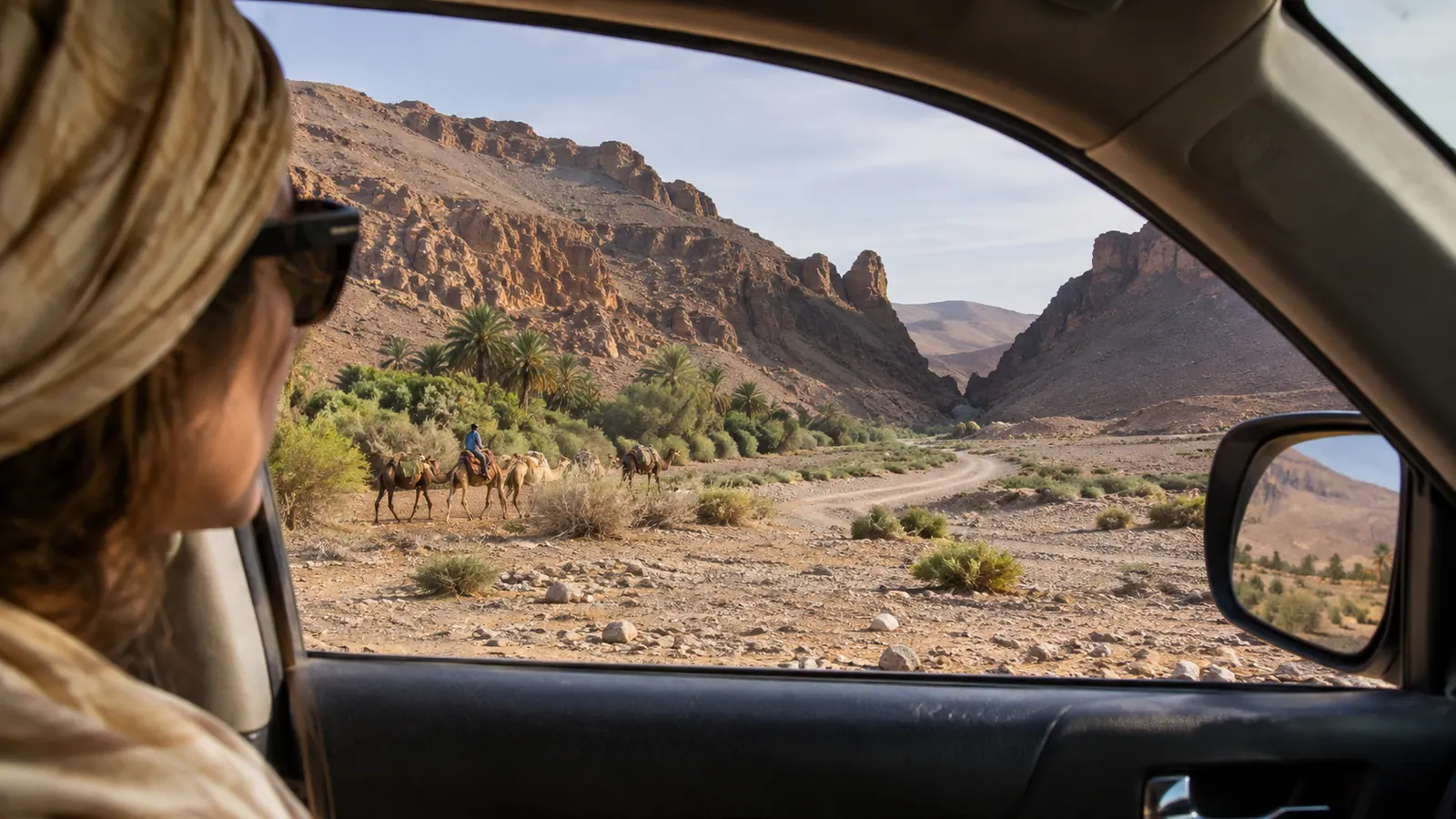
M’Hamid sits in the lower Drâa valley, south of Zagora, in Morocco’s pre-Saharan south. It is a small oasis town: palm groves, earth-coloured houses, a few guesthouses and the shops and services of a place that lives partly from the desert trips that leave from it. Its full name, M’Hamid El Ghizlane, is the one you will see on maps and signs; most people simply say M’Hamid.
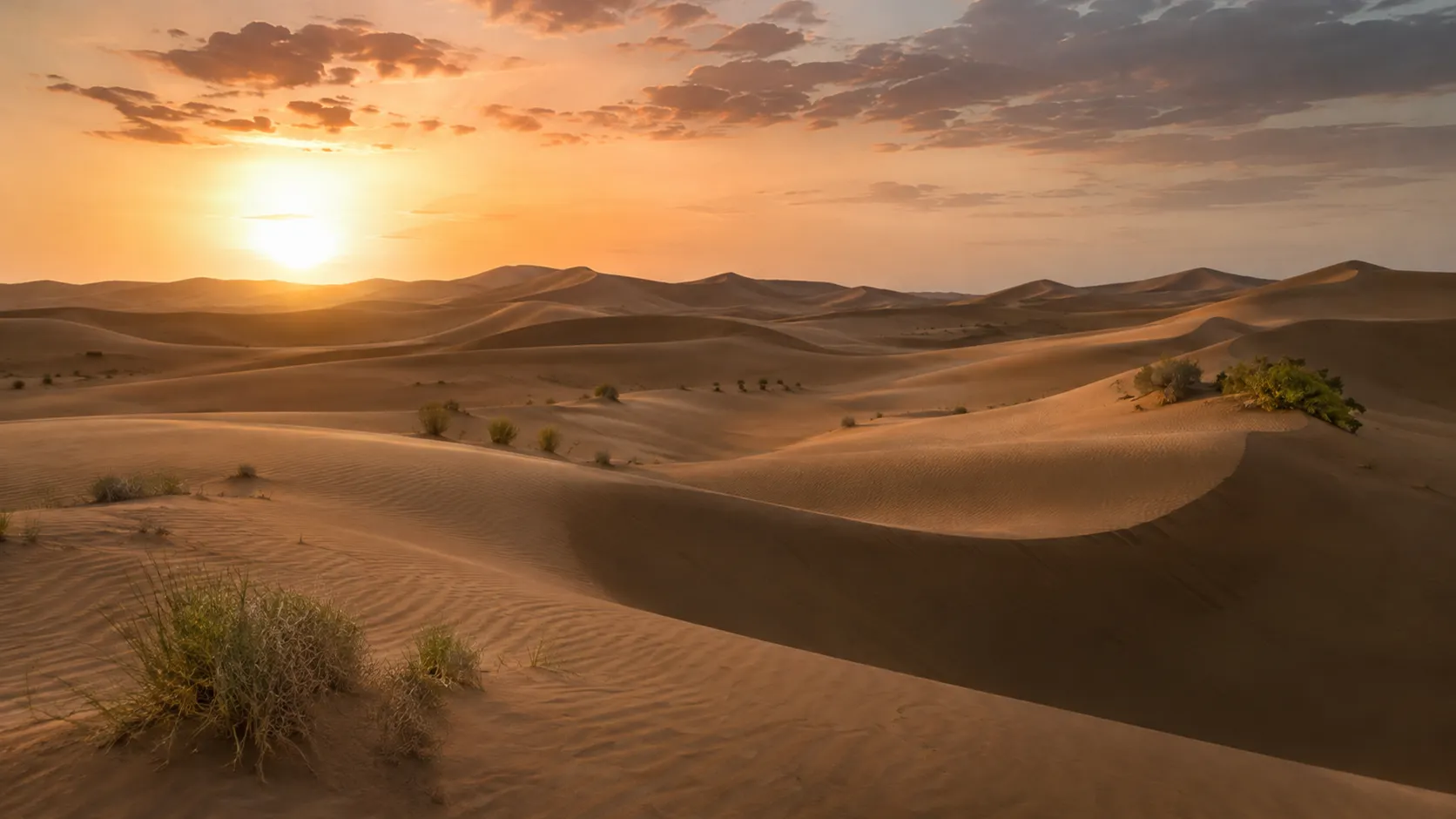
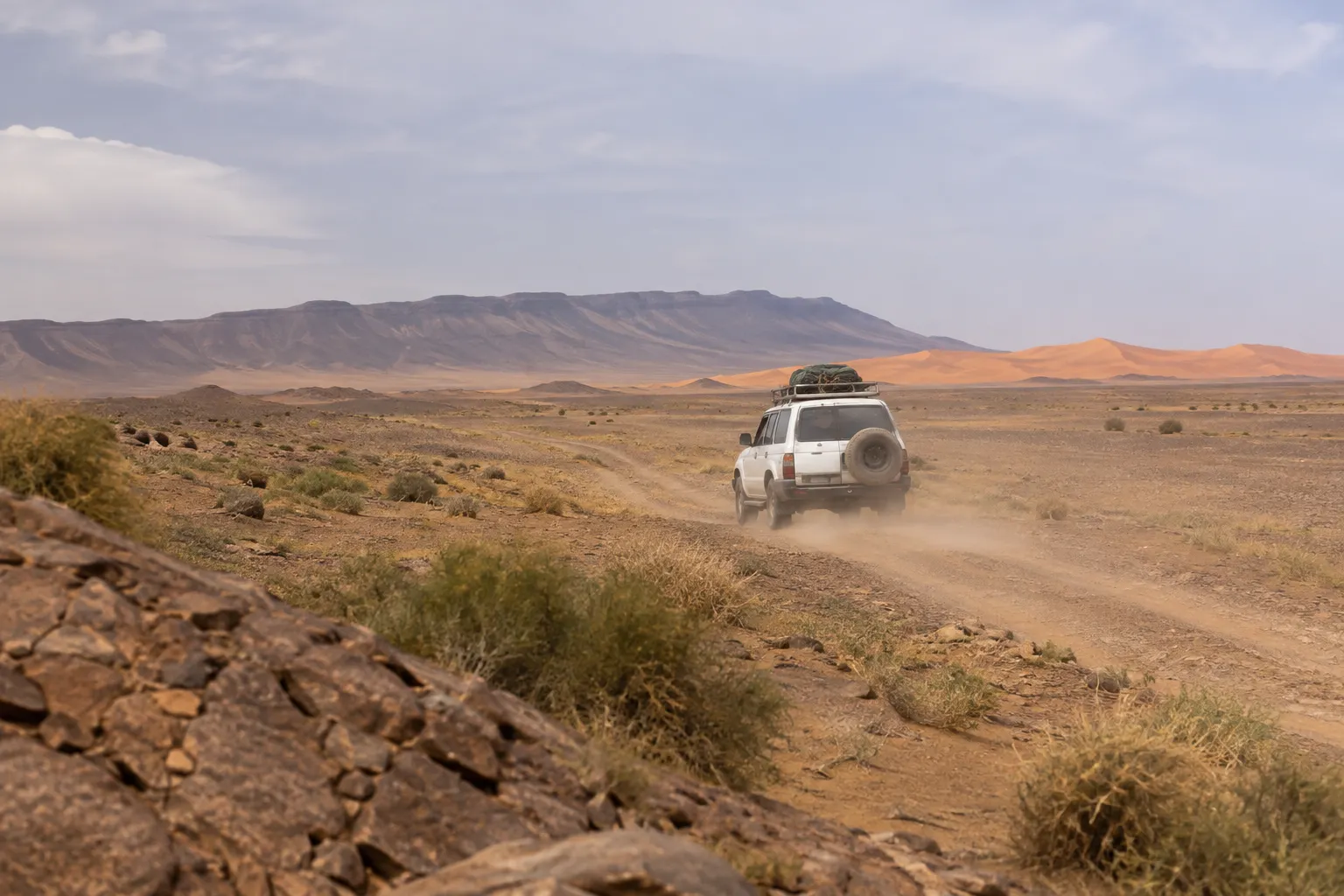
What gives it its character is the threshold. North of town the valley is a road with villages and palm groves along it. South and west, the landscape opens into stony plains, scattered dunes and pistes that need a 4x4. Arriving in M’Hamid feels like reaching the edge of the map, even if the dunes of Erg Chigaga are still some way off.
Getting to M’Hamid
Almost everyone arrives the same way: down the Drâa valley.
- From Marrakech. The road crosses the High Atlas towards Ouarzazate, then turns south down the Drâa valley through Zagora to the end of the tarmac. It is a long drive, and a night on the way is usually wiser than doing it in one go. Our page on trips from Marrakech explains why the mountain crossing shapes the whole plan.
- From Ouarzazate or Zagora. You are already on the right side of the mountains. The road follows the valley south, with palm groves and villages along much of it.
- From Agadir or Tata. M’Hamid is on the far side of the desert from you. Foum Zguid is usually the more natural gateway; see our page on trips from Agadir.
We do not give driving times or distances here: they depend on the season, the road and how often you stop. The organiser gives a realistic timing for your dates in the quote.
Two ways into Erg Chigaga: east or west
Erg Chigaga lies between the two gateways: west of M’Hamid, east of the Lake Iriki basin and Foum Zguid. Both approaches end in the same dunes, but the journey there is different.
| From M’Hamid (east) | From Foum Zguid (west) | |
|---|---|---|
| How you reach the gateway | Down the Drâa valley through Zagora | From the Ouarzazate side via Tazenakht, or from the Agadir and Tata side |
| What the piste crosses | Stony plains and scattered sand towards the dunes | The Jbel Bani gap, open plains, then the flat Lake Iriki basin |
| Feel | Better known, more camps and more traffic in high season | Usually quieter, with the basin as a landscape of its own |
| Suits | Travellers already in the Drâa valley | Travellers coming from Agadir, Tata or Ouarzazate, and anyone curious about the lake |
| With us | Start or finish studied on request | Where our desert tours start |
The eastern side is popular for good reasons: it is easy to reach for anyone touring the Drâa valley, and the dunes are the same dunes. The western side adds the basin of Lake Iriki, an ephemeral lake that has been a dry floor for most of recent decades and received water after heavy rain in September 2024. Conditions change, so ask for a current report before you travel. Our route guide describes that approach stage by stage.
The crossing between the two gateways
The option that makes the most of this desert is the one-way crossing: M’Hamid, Erg Chigaga, the Lake Iriki basin, then Foum Zguid, or the same route in reverse. Instead of driving into the dunes and back out the same way, you traverse the whole of it.
Travelling east to west, the sand comes first. You leave the end of the road, reach the erg in time for the evening light, and sleep in the dunes. The next stage takes you out of the sand onto the basin, then across the plains to the Jbel Bani and Foum Zguid, where the tarmac starts again. Travelling west to east, the order is reversed, and that is the route our two-day tour follows as far as the dunes.
A crossing needs at least one night in the dunes. With two nights, as on our three-day tour, the days on the piste are shorter and there is time to walk on the basin rather than just drive across it.
Loop or one-way: how to choose
The right answer depends less on the desert than on what happens before and after it.
- Where is your car? If you drove a hire car to M’Hamid or Foum Zguid, a loop that brings you back to it is simplest. A one-way crossing leaves it on the wrong side of the desert, so you would need a transfer back, which has to be agreed in advance.
- Where is your luggage? Take only a small bag into the desert. On a one-way trip, your large bags either travel with you or wait somewhere you will pass again; say which in your request.
- Where are you going next? Finishing in Foum Zguid puts you on the road to Tata and Agadir, or back towards Ouarzazate. Finishing in M’Hamid puts you on the road up the Drâa valley. If you are returning to Marrakech, both sides lead back over the mountains, so a crossing can turn the whole trip into a loop without retracing the same road twice.
- How many days do you have? A loop from one gateway into the dunes and back is the shorter plan. A crossing usually needs a little more time once the road at each end is counted.
Transfer options
How you reach the start and leave from the end is part of the plan, not an afterthought.
- Your own way to the gateway. If you are touring the south by hire car or with a driver, you can make your way to M’Hamid or Foum Zguid yourself. The paved roads are manageable; the pistes are not for a hire car.
- A private trip from a city. Departures from Marrakech, Ouarzazate, Agadir and Zagora are offered on request. How the road section is run, and whether a route from Zagora passes through M’Hamid, is set out in the quote.
- Public transport. Buses and shared taxis do run along the Drâa valley, but services are limited and change; check locally before relying on them for a fixed start time.
If you want to start in M’Hamid, tell us how you are getting there and where you want to finish. Whether a M’Hamid start or finish works for your dates, and how any transfer back to your car is arranged, is confirmed in the written quote.
Camps around Erg Chigaga
There are many camps around Erg Chigaga, especially on the side reached from M’Hamid. They range from simple bivouacs to more comfortable camps with larger tents and private bathrooms. Names, standards and what is included vary a great deal, so compare carefully rather than relying on the word “camp” or “luxury”. Our guide to luxury desert camps lists the questions worth asking.
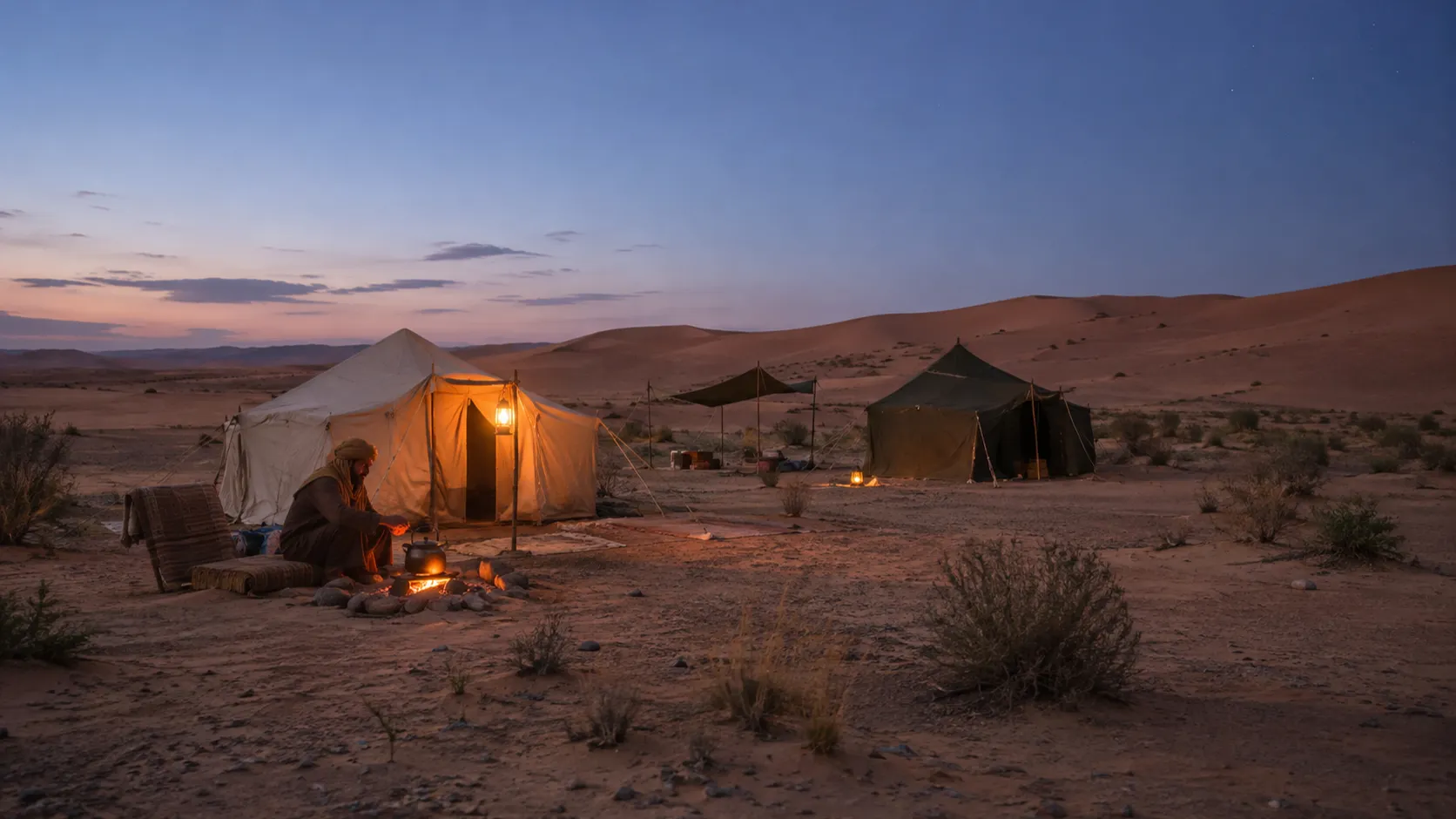
Our tours sleep in a bivouac in the Chegaga dunes. For a crossing that starts in M’Hamid, the camp used is confirmed in the quote. Our page on the bivouac explains what a night in the dunes is like.
Practical logistics before you leave the tarmac
- Fuel and cash. Fill up and carry enough cash before the paved road ends; do not count on finding either in the desert.
- Phone signal. Coverage can be patchy or absent once you are beyond M’Hamid. Tell family your plans before you go.
- Season and heat. The cooler months, from autumn to spring, are the most comfortable. Summer days are very hot, and winter nights in the dunes can be cold.
- After rain. Heavy rain can make some pistes impassable for a few days. Your guide adapts the route or the dates if needed.
- Booking on the spot. M’Hamid has many local agencies and offers. Whoever you travel with, ask for a written description of the route, the camp and what is included before you pay.
If you are still deciding between this desert and the dunes of the east, our Erg Chigaga or Merzouga comparison sets out who each suits.
How to ask for a quote
Send your request through the trip planner. Say where you want to start and finish (for example, M’Hamid to Foum Zguid), how you are reaching the starting point, your dates, the number of adults and children with ages, and where your car or luggage will be.
We reply personally with a written quote: whether the plan works for your dates, the route, where you sleep, a realistic timing for the road and the pistes, what is included and not, and the price and conditions. Nothing is booked until you accept it and we confirm in writing.
Questions travellers ask
Is M'Hamid worth a stop?
Yes, if you are coming down the Drâa valley. It is a quiet oasis town rather than a sight in itself, but it is where the tarmac ends and the desert starts, which gives it a real sense of arrival. A night there before heading into the dunes means you start the pistes rested, in the morning. If you are coming from the Agadir side or already in Foum Zguid, there is no need to make a detour to reach it.
How do I get from Marrakech to M'Hamid?
By road, over the High Atlas towards Ouarzazate, then south down the Drâa valley through Zagora to the end of the paved road. It is a long drive, so most travellers break it with a night on the way. Our page on trips from Marrakech explains how to plan the mountain crossing; the organiser gives a realistic timing for your dates in the quote.
Can I start in M'Hamid and finish in Foum Zguid?
This is the one-way crossing between the two gateways: M'Hamid, Erg Chigaga, the Lake Iriki basin, then Foum Zguid. M'Hamid is not one of our listed departure cities, so a start there is studied on request. Tell us your dates and how you are reaching M'Hamid, and the written quote will say whether it works and how it is organised.
Do your tours leave from M'Hamid?
Not as a standard departure. Our desert tours start from Foum Zguid, on the western side, and departures from Marrakech, Ouarzazate, Agadir and Zagora are offered on request. A start or finish in M'Hamid can be studied case by case and is only confirmed in your written quote.
Can I drive my own car from M'Hamid to Erg Chigaga?
The paved road to M'Hamid is fine for an ordinary car, but the pistes beyond it are not. Many rental contracts exclude off-road driving, and the tracks to the dunes need a 4x4 and someone who knows them, especially after rain. If you drive to M'Hamid, leave the car there and go on with a driver-guide, or plan a loop that brings you back to it.
M'Hamid or Foum Zguid: which gateway is better?
Neither is better for everyone. M'Hamid is the better-known gateway and convenient if you are travelling through the Drâa valley. Foum Zguid, on the west, tends to be quieter and adds the crossing of the Lake Iriki basin. Coming from Agadir or Tata, Foum Zguid is usually more natural; coming down the Drâa valley, M'Hamid is. Crossing from one to the other gives you both.
Sources
Facts on this page were checked against the sources below. Conditions in the desert change — ask us for a current report before you travel.
- A Deluge for the Sahara — NASA Earth Observatory, consulted 11 November 2026
- In half a century: rare Saharan floods fill dry lake beds in Morocco — Morocco World News, consulted 11 November 2026
First published ·Last updated